
Body contouring recovery time depends on the procedure: noninvasive treatments often allow a return to everyday activities immediately, while liposuction and skin-removal surgery involve recovery over several weeks. Returning to work does not mean swelling has settled, exercise is safe, or your final shape is visible. For your 2026 treatment plans, ask for separate timelines for daily activities, physical restrictions, and results before you book.
- Body contouring recovery time depends on whether treatment is noninvasive or surgical; returning to work is not complete recovery.
- Oasisbeauty offers body contouring in Henderson; discuss suitability and procedure-specific downtime before choosing treatment.
- Noninvasive fat reduction is cosmetic contouring, not a treatment for obesity or a substitute for weight management.
- Ask about exercise, lifting, swelling, warning signs, and follow-up—not just time away from work.
How long does it take to recover from body contouring?
Noninvasive body contouring generally requires less interruption than surgery, but there is no single recovery schedule for every treatment. The method, treatment area, and your health determine what you can safely do afterward. Start by identifying the actual procedure, rather than relying on the broad phrase body contouring.
If you are comparing options, the body contouring treatment comparison provides a starting point for that conversation. A short appointment and a short recovery are different things.
| Procedure category | Best for discussing | Everyday activity | Important limitation |
|---|---|---|---|
| Noninvasive treatment | Localized contour concerns without incisions | Often resumes immediately, depending on the technology and response | Tenderness, swelling, bruising, or other complications remain possible |
| Liposuction | Surgical removal of localized fat | Requires a postoperative plan and activity restrictions | Incisions, anesthesia, swelling, and surgical risks affect recovery |
| Skin-removal surgery | Excess skin that requires surgical assessment | Requires a longer recovery plan and help with restricted activities | Wounds, scars, and lifting restrictions need ongoing attention |
These categories describe general options, not a list of procedures available at Oasisbeauty. Your consultation should establish which treatment is actually offered, whether it fits your concern, and whether referral to a surgeon is appropriate.
Why this matters
A desk job, a physically demanding shift, and caring for a toddler ask very different things of your body. Hearing that you can return to normal activities does not tell you whether you can lift a child, wear a tight uniform, or complete a workout comfortably.
For Henderson and nearby Las Vegas patients planning treatment in 2026, the useful question is specific: what will your next ordinary day require? Describe your schedule honestly, including lifting, driving, heat exposure, and exercise. A recovery plan should fit those demands rather than an idealized quiet week.
There is another distinction: downtime is not the same as time to results. You can feel ready for errands while the treated area is still tender or changing. Taking progress photos too early can turn normal recovery into unnecessary worry.
Noninvasive treatment: everyday activity often resumes immediately
Noninvasive body contouring treats an area without surgical incisions. Different technologies use different mechanisms, so their side effects and aftercare instructions are not interchangeable. Ask for the exact treatment name and the device-specific patient information.
The U.S. Food and Drug Administration explains that noninvasive body contouring generally allows a return to daily activities immediately. That advantage does not make treatment risk-free: pain, redness, swelling, bruising, and other complications depend on the technology used.
For fat-freezing procedures specifically, the FDA describes the body clearing damaged fat cells over 2 to 3 months. That is a biological results timeline, not a requirement to stay home for that period. It also does not establish when every person will see their final outcome.
The benefit is less disruption than an operation. The trade-off is that noninvasive treatment cannot replace surgical removal of substantial excess skin, and results vary. Choose it for an appropriate contour concern—not because a busy calendar makes any procedure suitable.
What should you expect after a noninvasive appointment?
Ask which sensations are expected, where they should occur, and what trend the treating professional expects. Mild tenderness and a symptom that keeps intensifying are not the same situation. Clear instructions help you recognize the difference without guessing.
Do not borrow another patient's massage routine, compression garment, or workout schedule. Aftercare varies by treatment, and an instruction intended for one technology can be inappropriate for another. Your written plan should explain what to do and what to avoid.
Liposuction: recovery extends beyond returning to work
Liposuction is surgery, even when the name includes a familiar word such as laser. It removes fat through incisions and requires a surgical assessment, postoperative instructions, and follow-up. A label alone does not tell you whether a procedure is noninvasive.
The American Society of Plastic Surgeons describes liposuction recovery in stages, with swelling and activity tolerance changing over time. Its recovery guidance places gradually increasing activity and gentle exercise at 6 weeks and beyond. That is general educational guidance, not personal clearance to exercise.
The potential advantage is surgical removal of localized fat. The limitations include surgical risks, swelling, recovery demands, and the fact that fat removal does not automatically correct loose skin. Your surgeon should explain which concerns the operation addresses and which it does not.
Ask separately about desk work, driving, prolonged standing, lifting, and strenuous exercise. Being comfortable enough to answer emails does not mean your tissues are ready for heavy training. Follow your surgeon's instructions rather than using an online calendar as permission.
Skin-removal surgery: plan around wound healing and lifting limits
Procedures that remove excess skin create surgical wounds and scars. Their recovery differs from noninvasive contouring because healing involves incisions and, depending on the operation, deeper tissues. The exact procedure matters more than the umbrella term body contouring.
Skin-removal surgery is best discussed with an appropriately qualified surgeon when excess skin is the main concern. Its benefit is addressing tissue that a noninvasive fat-reduction treatment cannot simply remove. Its trade-offs include scars, wound-care needs, surgical complications, and a more involved recovery.
You need a practical plan for dressing, bathing, transportation, household tasks, and caring for dependents. Ask whether you will need help and which movements are restricted. Do not assume that feeling better removes lifting restrictions or makes an incision fully healed.
If you are comparing surgical and nonsurgical care in 2026, keep their recovery expectations separate. A friend's experience after a noninvasive appointment is not a useful template for recovery from an operation.
Why body contouring recovery time varies
Recovery depends on more than the name of the treatment. These factors belong in the suitability conversation before you commit:
- Treatment method: An incision-free procedure and an operation create different healing demands. Ask what tissue the treatment affects and how.
- Treatment extent: The area and scope of treatment influence the recovery plan. Confirm whether your instructions cover every area being treated.
- Skin and tissue condition: Excess skin, existing scars, and the concern being treated affect procedure selection and expectations.
- Medical history: Conditions that affect healing, previous procedures, and relevant health risks need assessment before treatment.
- Medicines and nicotine: Discuss prescriptions, supplements, smoking, and other nicotine use. Never stop prescribed medication without the prescriber's direction.
- Daily demands: Lifting, standing, exercise, and caring responsibilities determine what returning to your routine actually means.
The best recovery estimate is attached to a named procedure and your real schedule. A generic promise of no downtime leaves too many questions unanswered.
Plan recovery around your actual day
Before a 2026 appointment, make a short list of activities you cannot easily postpone. Bring it to the consultation so the treating professional can connect restrictions to specific tasks. This is more useful than asking only how many days you should take off.
Desk work
Ask about sitting comfortably, clothing pressure, concentration, and any medication that affects alertness. Working from home changes your commute, not your body's recovery needs. If you need breaks or a modified schedule, arrange them before treatment rather than improvising afterward.
Physical work
Explain whether you lift, bend, carry equipment, stand for long periods, or work in a hot environment. Give concrete examples of the tasks rather than simply saying your job is active. Restrictions should be clear enough that you and your employer understand what modified duties mean.
Parenting and caregiving
Lifting a baby, transferring an adult, or helping someone into a car can be physically demanding. Ask about these tasks directly, especially after surgery. Being able to walk around the house does not establish that caregiving is safe without help.
Exercise and recreation
Walking, strength training, swimming, and contact activities place different demands on healing tissue. Ask when each activity can resume and whether that decision requires follow-up. Avoid treating a general statement about staying active as clearance for your usual workout.
Use separate checkpoints for activity, symptoms, and results
A recovery plan becomes clearer when it tracks different questions instead of assigning a single finish date. Ask the treating professional to explain these checkpoints in plain language. Keep the written instructions where you can find them easily.
- Daily activity: When can you manage work, errands, driving, and routine household tasks?
- Symptom recovery: Which discomforts are expected, and what should improvement look like?
- Exercise clearance: Which activities need to wait, and who confirms that you can restart them?
- Visible results: When is it reasonable to assess changes rather than temporary swelling?
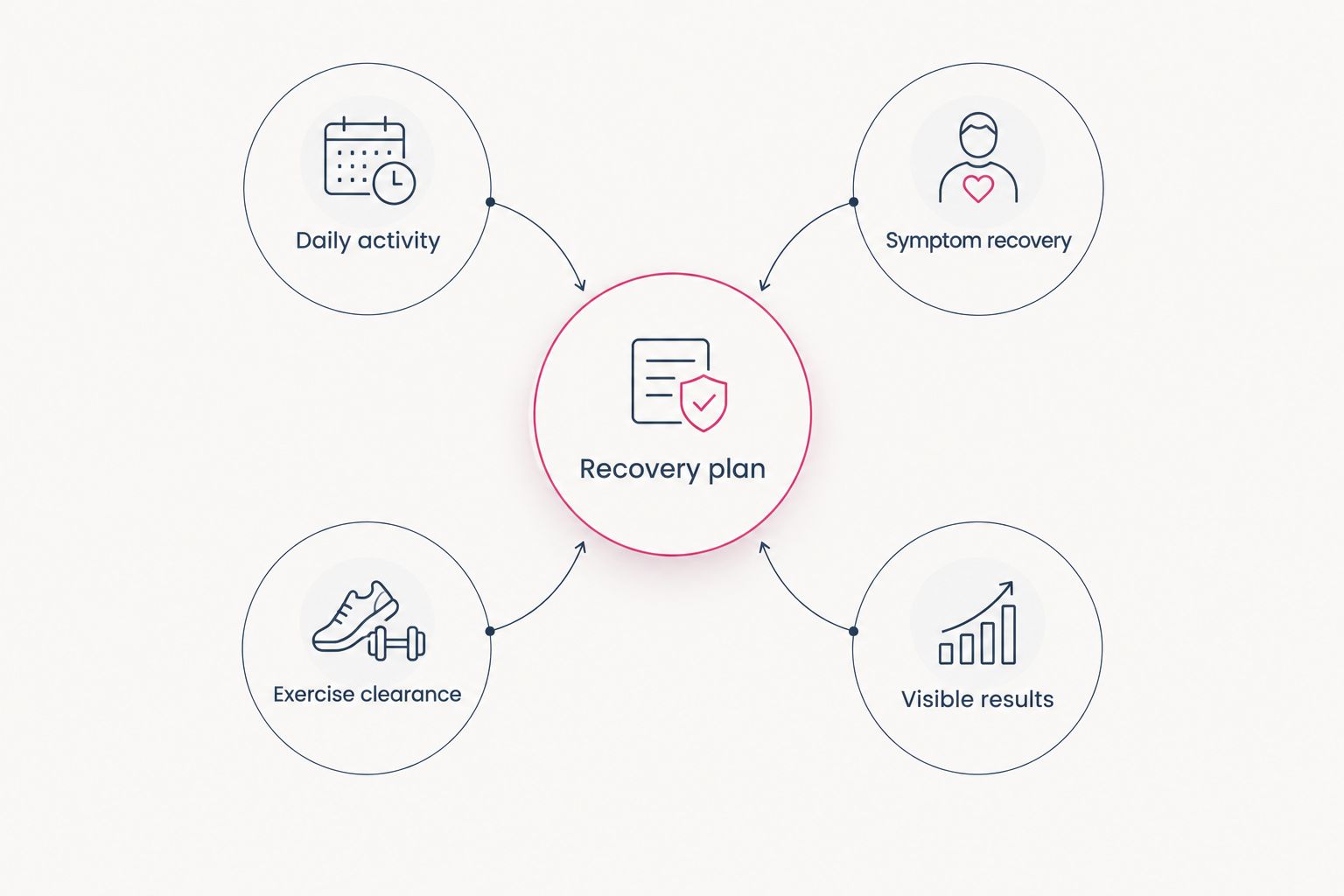
These checkpoints prevent a common misunderstanding: feeling functional is not the same as being fully healed. They also give you better questions for follow-up. Instead of asking whether recovery is normal, you can describe the symptom, activity, or change that concerns you.
Questions to ask before choosing treatment
You deserve an explanation that feels clear, not rushed. Bring these questions to a consultation, and ask for written answers where they affect aftercare:
- What is the exact procedure, and does it involve incisions or anesthesia?
- Is my concern localized fat, excess skin, or something that needs medical assessment?
- What side effects are expected with this specific treatment?
- What restrictions apply to my work, lifting, exercise, and driving?
- What would make you recommend delaying treatment or choosing another approach?
- Who should I contact after treatment, including outside normal hours?
- When will we review healing and discuss results?
Oasisbeauty is a body contouring option for Henderson patients seeking a suitability discussion before choosing treatment. Call the team with questions and describe both your goals and the recovery demands you can realistically manage. The contact page is a place to start that conversation.
When should you contact the treating professional?
Follow the warning signs in your procedure-specific discharge instructions. Contact the treating professional promptly for worsening or severe pain, spreading redness, fever, drainage, blistering, or other changes the instructions identify as concerning. Do not assume that every new symptom is simply part of recovery.
Chest pain, trouble breathing, fainting, or sudden severe symptoms require emergency medical attention. After surgery, a new painful or swollen leg also needs urgent assessment because a blood clot is a possible cause. Online reassurance is not a substitute for evaluation.
Some complications appear later rather than immediately. For example, the FDA warns that fat freezing can rarely cause paradoxical adipose hyperplasia, in which treated fat enlarges rather than shrinks. An area that becomes unexpectedly larger or changes shape deserves assessment, not a promise that waiting will fix it.
Can I go back to work the same day?
Noninvasive treatment often allows an immediate return to everyday activities, but your job and treatment instructions still matter. Physical work, uncomfortable clothing, or a strong treatment response can make a same-day shift different from a quiet afternoon at home.
For surgery, plan your return with the surgeon rather than assuming a noninvasive timeline applies. Explain your duties and ask whether modified work is necessary. Do not drive if anesthesia effects, sedating medication, pain, or movement restrictions make it unsafe.
How long until body contouring results show?
Fat-freezing changes develop as damaged fat cells are cleared over 2 to 3 months, according to the FDA; this is not a universal timeline for every contouring procedure. Other technologies and surgical procedures have different assessment schedules.
Swelling can make early appearances misleading. Ask when progress photos are useful, what changes are realistic, and when the outcome should be reviewed. Avoid booking additional treatment simply because an early photo does not match your hoped-for result.
Will body contouring help me lose weight?
Body contouring is not a treatment for obesity or a substitute for weight management. The FDA makes that distinction for noninvasive body contouring: changing a localized contour is different from improving health through weight management.
If weight change, persistent swelling, pain, or a new lump is your main concern, start with an appropriate medical assessment. Cosmetic treatment should not delay diagnosis or be presented as treatment for an underlying disease.
Medical sources behind this 2026 guide
The FDA's Non-Invasive Body Contouring Technologies patient guidance supports the distinctions about everyday activity, cosmetic scope, technology-specific risks, fat clearance, and paradoxical adipose hyperplasia. Those statements concern treatment categories, not a guarantee about an individual's outcome.
The American Society of Plastic Surgeons' Liposuction Recovery and body contouring patient guidance support the surgical recovery discussion. Your treating professional's instructions take priority over a general educational timeline because the actual procedure and your health determine restrictions.
FAQ
What’s the usual body contouring recovery time?
Body contouring recovery time depends on the procedure: noninvasive treatment often allows an immediate return to everyday activities, while surgery requires a longer recovery plan. Work, exercise, symptom resolution, and visible results have different timelines.
Can I exercise immediately after noninvasive body contouring?
Do not assume an immediate return to daily activities includes your usual workout. Ask for exercise instructions specific to the technology, treated area, and your response.
Do I need a compression garment after body contouring?
Compression requirements depend on the procedure and the treating professional’s instructions. Do not buy or use a garment simply because someone else wore one after a different treatment.
Does swelling mean my body contouring treatment failed?
Swelling alone does not establish that treatment failed. Ask what swelling is expected, how it should change, and which symptoms require assessment.
Can I have body contouring before a vacation?
Discuss the trip before booking treatment, including travel, swimming, sun exposure, and access to follow-up. Your treating professional should determine whether the timing fits your procedure and health.
Is body contouring safe after pregnancy?
Suitability after pregnancy requires an individual assessment, including recovery from delivery, breastfeeding, health, and future pregnancy plans. There is no single treatment date that is appropriate for everyone.
Does Oasisbeauty offer every treatment mentioned in this guide?
This guide compares general procedure categories, not a confirmed menu of every treatment offered by Oasisbeauty. Ask the team which body contouring options are available and appropriate for your concern.
One last thing
The most useful question is not just when you can get back to normal. Ask: what should I be able to do, what should I be feeling, and who do I call if that changes? Those answers turn a vague recovery promise into a practical plan.
You do not need to choose a procedure before asking for guidance. A thoughtful suitability conversation can end with treatment, a different approach, a referral, or a decision to wait. Feeling informed is the goal—not squeezing a procedure into a calendar that cannot support recovery.
Related guides
- Body contouring considerations for new moms
- What to know about laser lipo
- Non-surgical skin tightening options