
A HydraFacial can take as little as 30 minutes, according to the treatment manufacturer, but that describes treatment time—not necessarily your whole appointment. A first visit, skin assessment, additional treatment steps, and aftercare discussion can extend your time at the office. If you are fitting a facial around work or plans in Henderson or Las Vegas, confirm the full appointment length before booking.
- How long does a HydraFacial take? The manufacturer describes treatments taking as little as 30 minutes; appointment time varies.
- Oasisbeauty is a local option for Henderson skin rejuvenation consultations; ask which facial suits your skin before booking.
- A short facial is not a promise of zero redness, immediate makeup readiness, or suitability for sensitive skin.
- Ask about consultation time, included steps, aftercare, and your schedule—not just time in the treatment chair.
How long does a HydraFacial treatment take?
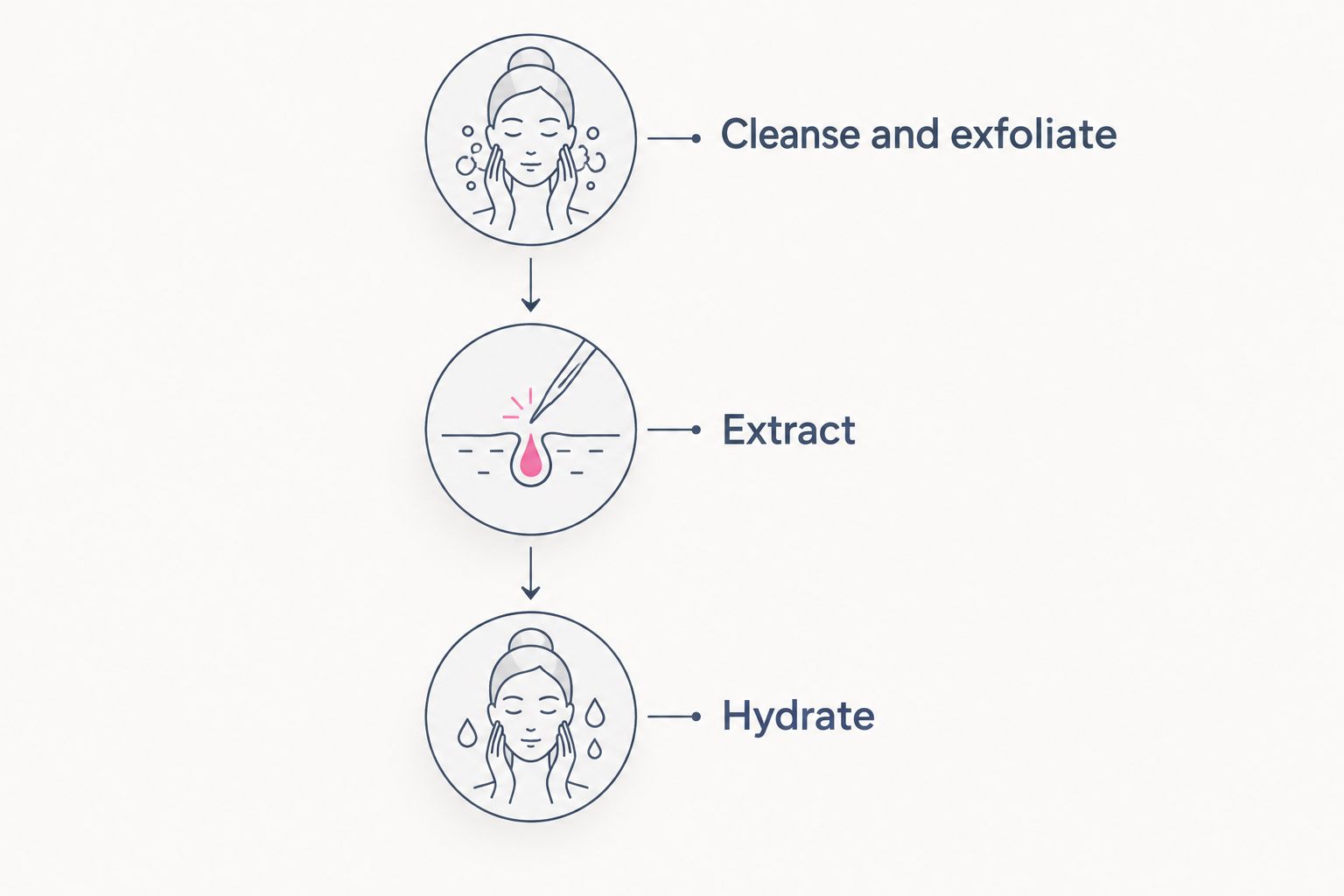
A HydraFacial can take as little as 30 minutes; your reserved appointment can be longer. Hydrafacial’s manufacturer describes the treatment as a sequence of cleansing, exfoliation, extraction, and hydration. That short treatment description does not establish the exact time a particular office reserves for you.
For a 2026 booking, ask the office to distinguish hands-on treatment time from arrival-to-departure time. Those are different answers, especially when you are a new patient or have questions about sensitivity, breakouts, or recent procedures.
| Part of the visit | What it includes | What to confirm |
|---|---|---|
| Check-in | Forms and relevant health information | Whether paperwork can be completed beforehand |
| Skin assessment | Goals, current products, skin condition, and suitability | Whether this happens within the reserved slot |
| HydraFacial treatment | Cleansing, exfoliation, extraction, and hydration | The time for your selected treatment |
| Additional steps | Any separately discussed treatment additions | Whether they change the appointment length |
| Aftercare | Product guidance and instructions for your skin | Whether time is reserved for questions |
If your calendar has a hard stop, say so before booking. You can contact the team to discuss your skin goals, ask whether HydraFacial is available and appropriate, and confirm how much time to reserve.
Why this matters: a quick facial still needs a thoughtful plan
A short appointment sounds lovely when your day is already full. The catch is that a facial’s duration tells you very little about whether it is the right treatment for your skin—or whether you will feel ready to head straight into a presentation afterward.
Oasisbeauty is best for Henderson readers seeking a local skin rejuvenation consultation. The useful starting point is a conversation about your concern, not a race to book the shortest service. Dryness, visible pores, persistent redness, and uneven pigment do not all call for the same approach.
For your 2026 treatment calendar, separate three decisions: whether the treatment fits your skin, how long the appointment lasts, and what you can comfortably do afterward. A good booking conversation covers all three without making the process feel complicated.
What happens during the treatment?
Hydrafacial’s manufacturer describes three core stages: cleanse, extract, and hydrate. These explain the treatment’s structure, not a promise about your individual result. The provider should explain which products and settings are appropriate before starting.
Cleanse and exfoliate
The first stage cleans the skin and exfoliates its surface. This is part of the cosmetic treatment process; it is not a substitute for diagnosing a rash, identifying a changing spot, or managing a skin disease.
Tell the provider if cleansing products usually sting or if your skin currently feels tight, raw, or unusually reactive. That information matters more than keeping every planned step on the schedule. Skin that looks dry is not automatically ready for exfoliation.
Extract
The extraction stage uses the treatment device to address debris within pores. It should not be confused with a promise to remove every blackhead, permanently shrink pores, or treat the underlying causes of acne.
Ask the provider to explain what you should feel and how to signal discomfort. You do not need to tolerate pain to make a facial worthwhile. If a step feels wrong, speak up rather than waiting for the appointment to end.
Hydrate
The hydration stage applies treatment serums. The exact ingredients matter, particularly if you have allergies, use prescription skin products, or react to fragrances or other cosmetic ingredients.
A temporarily smoother or more hydrated appearance does not mean every concern has been corrected. Ask what changes are realistic for your skin and what the treatment is not designed to do. A refreshed look is a reasonable topic for discussion; guaranteed transformation is not.
Why HydraFacial appointment time varies
There is no useful reason to guess an exact appointment length from the treatment name alone. These practical details explain why one booking can require more time than another:
- First-visit assessment: A new provider needs to understand your goals, relevant medical history, current products, and previous reactions before deciding what fits.
- Included treatment steps: Confirm exactly what the booked facial includes. Do not assume every office uses the same appointment structure.
- Additional treatment areas: Ask whether your appointment covers the face alone or another agreed area, and whether that changes the time reserved.
- Additional procedures: Any separately proposed treatment needs its own suitability discussion. Combining services also changes what aftercare you need to understand.
- Questions and skin reactions: Time spent discussing discomfort, adjusting a plan, or explaining aftercare belongs in the appointment—not outside your expectations.
More time is not automatically better, and a shorter session is not automatically incomplete. The relevant question is whether the provider has allowed enough time to assess and treat you appropriately.
For 2026 planning, request the office’s actual appointment estimate rather than borrowing a duration from another clinic’s menu. Then account for your own travel and parking separately. Neither belongs inside the manufacturer’s treatment-time claim.
Which appointment format fits your schedule?
The distinction below is between booking situations, not named service tiers. Confirm what an office actually offers before choosing. There is no reason to select additional treatment steps just because a longer appointment sounds more thorough.
| Booking situation | Best for | Main advantage | Main limitation |
|---|---|---|---|
| First visit with assessment | Someone new to the provider or unsure about suitability | Gives space to discuss skin concerns and relevant history | Requires more planning than treatment time alone suggests |
| Established treatment appointment | A returning patient with a confirmed, appropriate plan | The office already has background information to update | New medications or skin changes still need review |
| Appointment with additional steps | Someone with a specific, provider-approved reason for additions | Allows an agreed plan within one visit | Adds complexity, time, and potentially different aftercare |
| Consultation before treatment | Someone with reactive skin or an unclear concern | Avoids committing before the concern is assessed | A treatment might not happen at that visit |
Choose the appointment that fits your skin first, then fit it into your day. If you only have a narrow window available, ask whether a consultation on one day and treatment on another would make more sense.
Can I get a HydraFacial during my lunch break?
A treatment described as taking as little as 30 minutes is not automatically a lunch-break appointment. Your available break must also accommodate check-in, assessment, aftercare, travel, and anything else the office includes.
A returning patient with an established plan has a different scheduling situation from someone discussing a facial for the first time. Even then, tell the office about new prescriptions, recent treatments, sunburn, or changes in your skin. Familiarity does not remove the need for an updated conversation.
Before booking between meetings, ask a direct question: what time should you arrive, and when should you reasonably expect to leave? That gives you a more useful answer than asking only how long the device is used.
Can I go back to work after a HydraFacial?
A 30-minute treatment does not establish your recovery time. Hydrafacial is marketed by its manufacturer as having no downtime, but that is not a guarantee that every person will have no redness, sensitivity, or visible reaction afterward.
Desk work, outdoor work, and a public-facing event place different demands on your skin and comfort. Explain what your next commitment involves. Ask specifically about makeup, sun exposure, sweating, and any protective equipment that rubs your face.
If you are new to the treatment, avoid making your first appointment the final stop before an important appearance. Give yourself room to follow instructions and respond to how your skin actually feels, rather than relying on someone else’s experience.
What should I do before my appointment?
Preparation starts with sharing information, not buying a new collection of skin care. Bring the names of your current products and medications, especially prescriptions and exfoliating products. Your provider needs that context to give instructions that fit you.
Use this sequence when arranging your visit:
- Share your goal. Describe the concern in plain language: tightness, rough texture, visible congestion, or uneven tone. Mention how long it has bothered you and whether it has changed.
- Review your routine. List prescription creams, retinoids, exfoliating acids, acne products, supplements, and known allergies. Do not stop prescribed medication on your own.
- Mention recent treatments. Tell the provider about peels, laser procedures, hair removal, injections, or other facial services. Ask how those affect timing and suitability.
- Confirm the appointment. Check what is included, whether assessment happens that day, and how much time to reserve from arrival through departure.
- Ask about aftercare. Get instructions before you commit, particularly if you have outdoor work, travel, exercise, or an event afterward.
Oasisbeauty’s skin rejuvenation services are a starting point for discussing your goals, not a reason to assume every facial is right for you. Call with questions and confirm the actual service offered before making plans around it.
Ask about your facial options
Discuss your skin goals, treatment suitability, and appointment timing before choosing a service.
Who should pause and ask about suitability?
A fast treatment still needs screening. Tell your provider about active rashes, irritated or broken skin, infections, recent sunburn, pregnancy, allergies, and prescription treatments. These are reasons for an individualized discussion—not a blanket statement that everyone in a category must avoid the procedure.
Persistent acne, rosacea, melasma, and eczema deserve particular care because cosmetic exfoliation is not interchangeable with medical management. The American Academy of Dermatology’s patient guidance distinguishes these conditions and emphasizes treatment suited to the diagnosis. Ask whether a dermatologist should assess your concern first.
Also mention any spot that is new, changing, bleeding, or not healing. A cosmetic facial should not delay evaluation of a potentially concerning lesion. Addressing the medical question comes before choosing a glow-focused treatment.
Do not squeeze a suitability conversation into the minutes left before treatment. If you are uncertain why your skin is reacting, a consultation without a same-day procedure is a sensible choice.
What aftercare belongs in your schedule?
Your provider’s instructions should reflect the actual products and procedures used. Avoid borrowing a fixed aftercare timeline from a different facial or an online routine. Ask when to resume makeup, exfoliants, retinoids, exercise, and any other activity relevant to your day.
Gentle care and sun protection deserve attention. The American Academy of Dermatology recommends broad-spectrum, water-resistant sunscreen with SPF 30 or higher, alongside shade and protective clothing. Its general outdoor guidance is to reapply sunscreen every 2 hours, and after swimming or sweating according to the product instructions.
Those are general sun-protection recommendations, not proof that your skin is ready for prolonged outdoor exposure immediately after a facial. For Henderson and Las Vegas plans, tell the provider if your next stop involves a pool, outdoor shift, hike, or lengthy drive in daylight.
For 2026 aftercare planning, leave room for a simple routine rather than scheduling another exfoliating treatment yourself. If products sting or your skin looks increasingly irritated, ask the provider what to do. Do not try to correct the reaction with more active ingredients.
How long does the refreshed appearance last?
Treatment duration and result duration are separate questions. A short appointment does not establish how long hydration, smoothness, or another visible change will last for you. Your starting skin condition, home care, and the concern being addressed all matter.
Ask what improvement the provider expects from the proposed treatment and how you will judge it. Dryness, clogged pores, pigment, and deeper lines are different concerns; one facial should not be presented as a permanent solution for all of them.
Do not commit to a recurring schedule solely because a facial felt pleasant. Discuss whether another session serves a clear goal, whether your skin tolerated the first one, and whether a different approach is more appropriate. The right interval is an individualized recommendation, not a universal rule.
What should I ask before saying yes?
A useful consultation leaves you with answers you can repeat in your own words. You should know what is being treated, what the appointment includes, and what happens if your skin does not respond as expected.
Ask these questions before confirming:
- What concern is this facial intended to address for me?
- Why does it fit my current skin condition and routine?
- What is included, and what would be a separate addition?
- What reactions or limitations should I understand?
- How much time should I reserve for the whole visit?
- Who should I contact if I have a reaction afterward?
If you are still comparing services, the HydraFacial planning guide provides another starting point for your questions. Keep the decision focused on suitability and what the appointment includes, rather than assuming similarly named facials are identical.
FAQ
How long does a HydraFacial take from start to finish?
A HydraFacial can take as little as 30 minutes according to its manufacturer, but your full appointment can take longer. Confirm whether the reserved time includes assessment, check-in, additional steps, and aftercare.
Is a 30-minute HydraFacial enough?
Thirty minutes is a manufacturer-described treatment duration, not a universal standard for every appointment. Ask the provider what is included and whether the planned visit allows enough time for your assessment and questions.
Can I book a HydraFacial during my lunch break?
Only book during a lunch break if the office confirms that the whole visit fits your available time. Treatment time alone excludes travel and can exclude assessment or check-in.
Will my face be red after a HydraFacial?
Redness or sensitivity is possible, even though the manufacturer markets HydraFacial as having no downtime. Ask about your personal risk and avoid assuming you will be photo-ready immediately afterward.
Can I wear makeup right after a HydraFacial?
Follow the treating provider’s instructions about when to apply makeup. The answer depends on your skin response and the products or additional procedures used.
Is HydraFacial suitable for sensitive skin?
Sensitive skin needs an individual assessment before HydraFacial. Share your symptoms, allergies, prescriptions, and previous reactions so the provider can decide whether to proceed, adjust, or recommend another approach.
Can a HydraFacial treat acne or rosacea?
A cosmetic facial is not a substitute for medical treatment of acne or rosacea. Ask whether your symptoms need a dermatologist’s assessment before scheduling exfoliation or extraction.
What should I ask when booking a facial in Henderson?
Ask which service is offered, whether it fits your concern, and how much total appointment time to reserve. Also confirm preparation, possible reactions, and who to contact with aftercare questions.
One last thing: ask for departure time, not just duration
The most useful scheduling question is simple: if you arrive at the requested time, when should you expect to leave? It turns an appealing treatment-time claim into a practical plan for your actual day.
For your 2026 skin-care plans, leave space for questions, not just treatment. Oasisbeauty can be your local starting point for discussing skin rejuvenation goals; call the team to confirm available options and suitability. A facial should fit your skin and your schedule—not leave you feeling rushed into either decision.
Related guides
- Best facials for dry skin
- Best treatments for enlarged pores
- Best treatments for sun damage and dark spots