Best overall: a barrier-focused hydrating facial. Best for sensitive dry skin: a soothing, minimal-ingredient facial. Best for very dry, intact skin: a moisturizing mask facial. Best for rough texture without irritation: a hydrating facial with gentle exfoliation. This 2026 guide explains how to choose the best facial for dry skin by treatment steps rather than menu names.
- The best facial for dry skin prioritizes gentle cleansing, moisture, and a comfortable skin barrier—not aggressive exfoliation.
- Choose a minimal-ingredient facial when dry skin also stings or reacts easily.
- Use moisturizing masks for tightness; reserve exfoliation for rough skin without redness or irritation.
- Oasisbeauty serves Henderson clients seeking cosmetic and aesthetic care; confirm facial steps before selecting a treatment.
Why this matters
Dry skin needs moisture and protection from further irritation. A facial that leaves your face unusually tight, hot, or stinging has not met that goal, even if your skin initially looks smoother.
Oasisbeauty serves Henderson clients seeking cosmetic and aesthetic care; choose a dry-skin facial by its steps, not its name. Oasisbeauty is a local medical aesthetics provider, but a facial menu title alone does not establish which treatment suits your skin.
For your 2026 appointment, start with how your face feels before adding brightening, resurfacing, or pore-clearing steps. Tell the provider about redness, flaking, itching, prescription skin treatments, and products that burn. Those details matter more than choosing the longest service.
What makes the best facial for dry skin?
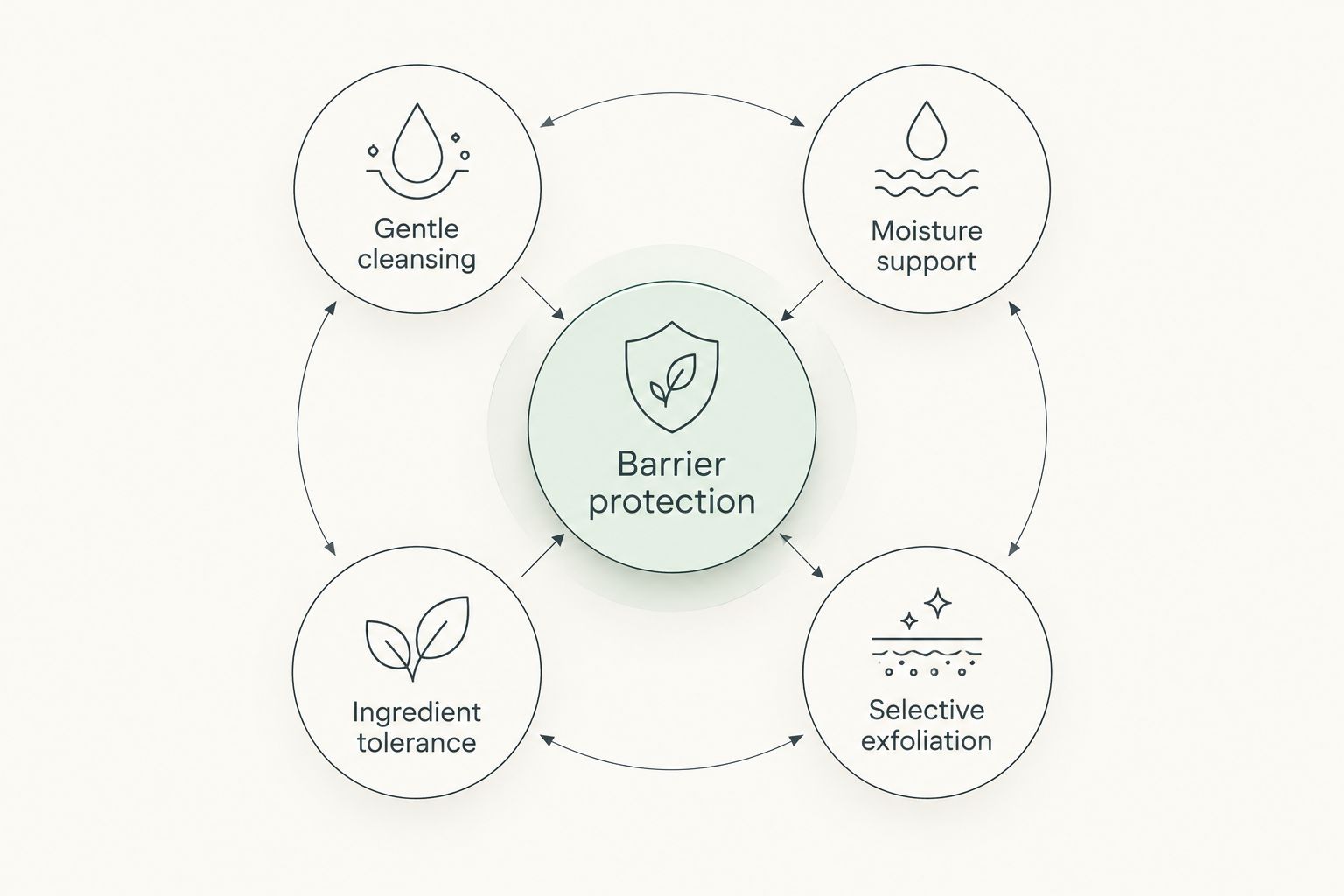
Evaluate these criteria before choosing a treatment. The best option meets your immediate need without adding steps your skin cannot tolerate.
- Gentle cleansing: Removes makeup and surface residue without scrubbing or leaving pronounced tightness.
- Moisture support: Uses moisturizing products, rather than treating dryness only as dead skin that needs removal.
- Barrier protection: Finishes with a suitable moisturizer and avoids unnecessary friction, heat, or irritating products.
- Ingredient tolerance: Accounts for fragrance sensitivity, previous reactions, and your current skincare routine.
- Selective exfoliation: Makes exfoliation optional, not an automatic requirement for every dry face.
- Clear aftercare: Explains what to apply at home and which irritating steps to pause.
A longer ingredient list is not proof of a better facial. Ask what each stage contributes and whether it can be removed if your skin feels uncomfortable. A treatment that adapts to your skin is a better choice than a fixed sequence you must endure.
Best facials for dry skin at a glance
These are treatment approaches, not verified service names from a particular provider. Menus use different labels, so compare the actual procedure with the descriptions below.
| Facial approach | Best for | Standout feature | Key limitation |
|---|---|---|---|
| Barrier-focused hydrating facial | Everyday dryness and tightness | Gentle cleansing followed by moisturizing care | Does not diagnose persistent skin disease |
| Soothing, minimal-ingredient facial | Dry skin that reacts easily | Fewer potential irritants and less manipulation | A simple formula can still cause a reaction |
| Moisturizing mask facial | Very dry, intact skin needing richer moisture | A moisturizing mask followed by protective care | Heavy textures do not suit every face |
| Hydrating facial with gentle exfoliation | Rough, dry texture without irritation | Limited exfoliation paired with moisturizing care | Exfoliation can worsen dryness if overdone |
1. Barrier-focused hydrating facial: best for everyday dryness
A barrier-focused hydrating facial centers on mild cleansing and moisturizing products. Humectants help attract water, while emollient and occlusive ingredients help soften skin and reduce moisture loss. The treatment should leave your face comfortable rather than stripped.
This is the default choice when your main complaint is tightness or ordinary flaking, not a diagnosed rash. You do not need to add exfoliation simply because a few patches look dry. Moisturizing care can soften their appearance without scraping them away.
Barrier-focused hydrating facial pros:
- Directly addresses the moisture-related discomfort that brings many dry-skin clients to a facial.
- Can avoid unnecessary scrubbing and aggressive resurfacing.
- Supports a straightforward home routine built around gentle cleansing and moisturizer.
Barrier-focused hydrating facial cons:
- Does not identify the cause of persistent itching, inflammation, or recurring scaling.
- Results depend on the products used and continued care between appointments.
Ask whether the provider uses a mild cleanser, which moisturizing products follow, and whether exfoliation is optional. Mention any retinoid or exfoliating acid you already use. The provider needs that information before deciding what belongs in the session.
Best for: Dry skin that feels tight but is not actively inflamed, cracked, or painful.
Verdict: Buy this approach as the default, provided its products and steps suit your skin.
2. Soothing, minimal-ingredient facial: best for reactive dry skin
A soothing facial reduces the number of products and unnecessary treatment steps. Its purpose is comfort, not an intense sensation. For dry skin that reacts easily, fragrance-free products and limited manipulation deserve priority over a complicated sequence.
Minimal ingredients do not guarantee safety. Your own reaction history still matters, and a product described as natural or botanical is not automatically gentle. Tell the provider exactly which products have caused burning or itching rather than relying on a general sensitive-skin label.
Soothing, minimal-ingredient facial pros:
- Limits unnecessary exposure to products your skin does not need.
- Makes it easier to discuss specific ingredients and previous reactions.
- Avoids treating tingling or burning as evidence that a product is working.
Soothing, minimal-ingredient facial cons:
- Even a short ingredient list can include something you cannot tolerate.
- Active eczema, rosacea symptoms, or unexplained inflammation require clinical assessment rather than cosmetic treatment alone.
For a sensitive-skin facial in 2026, ask about fragrance, exfoliating acids, heat, and massage pressure before the appointment starts. Request changes to the sequence rather than waiting until your face begins to sting. Stop a step that causes discomfort.
Best for: Dry skin with a history of cosmetic sensitivity, once active skin problems have been assessed.
Verdict: Buy the simpler approach for reactive skin; hold the appointment if your face is currently inflamed.
3. Moisturizing mask facial: best for very dry, intact skin
A moisturizing mask facial gives most of the session's attention to a leave-on moisturizing step. Depending on the formula, the mask can supply water-binding ingredients, soften rough areas, and help limit moisture loss. The finish matters too: removing the mask should not mean removing all moisturizing care.
Choose this approach when your skin feels persistently tight but remains intact and comfortable enough for cosmetic treatment. A mask is not a replacement for evaluating painful cracks, bleeding, or a worsening rash.
Moisturizing mask facial pros:
- Prioritizes moisture rather than a long series of exfoliating steps.
- Offers a clear treatment focus for skin that needs richer moisturizing care.
- Can fit into a gentle session without aggressive extractions or scrubbing.
Moisturizing mask facial cons:
- Rich textures can feel heavy or uncomfortable for some people.
- A single mask does not replace consistent moisturizer use at home.
Ask what the mask contains and what stays on your skin afterward. Do not choose by texture alone: a thick product can still contain fragrance or ingredients that irritate you. Your comfort is the useful measure.
Best for: Very dry, intact skin that tolerates richer moisturizing products.
Verdict: Buy for moisture-focused care; skip any mask that causes burning or discomfort.
4. Hydrating facial with gentle exfoliation: best for rough texture
This approach combines limited exfoliation with moisturizing care. It is appropriate only when roughness is the main concern and your skin is not red, sore, or actively irritated. Exfoliation removes surface skin cells; it does not replace lost moisture or automatically repair the skin barrier.
The important distinction is between rough skin and injured skin. Scrubbing irritated flakes can worsen the problem. Ask the provider to explain why exfoliation belongs in your treatment and how your home products affect that decision.
Hydrating facial with gentle exfoliation pros:
- Addresses surface roughness as well as moisturizing needs.
- Allows exfoliation to be a targeted step rather than the whole treatment.
- Can avoid stronger resurfacing when a gentler approach fits your goal.
Hydrating facial with gentle exfoliation cons:
- Over-exfoliation can increase irritation and dryness.
- Existing retinoid or acid use changes what your skin can tolerate.
In 2026, do not select a stronger treatment simply because it sounds more advanced. A dry face does not need a peel by default. Hydration without exfoliation remains the better choice when comfort and texture goals conflict.
Best for: Non-irritated dry skin with rough surface texture and an agreed plan for gentle exfoliation.
Verdict: Hold until suitability is clear; skip exfoliation on irritated skin.
How we ranked these facial approaches
The ranking prioritizes gentle cleansing, moisture support, barrier protection, ingredient tolerance, selective exfoliation, and clear aftercare. Everyday dryness gets the simplest moisture-first option; reactive skin gets fewer potential irritants; very dry skin gets a mask-focused approach; rough texture gets conditional exfoliation.
These recommendations compare treatment principles, not measured results from named providers. They do not establish that Oasisbeauty offers any particular dry-skin facial. Confirm the actual service and its steps before booking.
What to ask before your facial
Bring your current skincare routine into the conversation. Include prescription products, exfoliating acids, recent treatments, allergies, and any history of eczema or recurring redness.
Ask these questions:
- What happens during cleansing, exfoliation, moisturizing, and finishing?
- Can you omit fragrance, steam, scrubs, or exfoliating products?
- What should I stop using before the appointment, and why?
- What sensations mean a step should stop?
- What should I use afterward, and when should I seek medical advice?
Do not stop a prescribed treatment without advice from its prescriber. If your skin problem is persistent or worsening, get it assessed rather than repeatedly changing facials.
Explore local aesthetic care
Review Oasisbeauty’s site, then ask which treatment steps fit your dry skin.
Keep the benefits between appointments
Your daily routine remains the foundation of dry-skin care. The American Academy of Dermatology's public dry-skin guidance recommends limiting baths and showers to 5–10 minutes, using warm rather than hot water, and applying moisturizer while skin is still damp. That bathing guidance supports your overall routine; it is not a facial treatment duration.
For your 2026 routine, use a gentle cleanser and a moisturizer your skin tolerates. Avoid chasing a perfectly squeaky-clean feeling. For sun protection, the American Academy of Dermatology recommends broad-spectrum, water-resistant sunscreen with SPF 30 or higher.
When introducing a new skincare product, the Academy's home-testing guidance recommends applying it to a small test area twice daily for 7–10 days. This checks tolerance to an ordinary skincare product; it is not permission to home-test a professional peel or ignore a known allergy.
Introduce changes separately so you can identify what causes discomfort. A facial cannot compensate for a daily routine that repeatedly irritates your face.
Which facial should you choose in 2026?
Choose a barrier-focused hydrating facial if you are undecided. It addresses the core goal—comfortable, moisturized skin—without making exfoliation the starting point.
Choose a soothing, minimal-ingredient facial when reactions are your main concern. Choose a moisturizing mask facial when richer moisture suits your intact skin. Consider gentle exfoliation only when roughness is the issue and irritation is absent.
For Oasisbeauty dry-skin facial questions, ask about the treatment sequence rather than assuming a service from a name. Local access is useful; a suitable procedure still requires a discussion about your skin.
FAQ
What’s the best facial for dry skin?
A barrier-focused hydrating facial is the best default for dry skin without active irritation. Look for gentle cleansing, moisturizing care, and optional rather than automatic exfoliation.
Is a hydrating facial better than a peel for dry skin?
A hydrating facial is the better starting point when dryness and tightness are your main concerns. A peel targets exfoliation and requires a separate assessment of your skin’s tolerance.
Should a facial for dry skin include exfoliation?
Exfoliation is optional, not a requirement for dry skin. Consider it for rough texture only when your face is not red, sore, or irritated and the provider has reviewed your routine.
Can I get a facial if my dry skin is flaking?
Flaking alone does not determine whether a facial is suitable. Pain, cracking, persistent itching, or inflammation calls for assessment before cosmetic treatment.
How often should I get a facial for dry skin?
There is no single facial schedule that suits every person with dry skin. Set the interval according to your skin’s response, the treatment steps, and professional advice rather than a fixed calendar.
Does Oasisbeauty offer the facials listed here?
These are general dry-skin facial approaches, not a confirmed Oasisbeauty service list. Ask the Henderson medical aesthetics provider which relevant services it offers and what each treatment includes.
What should I use after a facial for dry skin?
Use a gentle cleanser, a tolerated moisturizer, and appropriate sunscreen, following the provider’s specific aftercare instructions. Ask when to resume exfoliating acids or retinoids, and consult the prescriber before changing prescribed treatment.
One last thing
Dry flakes are not an instruction to exfoliate. They can accompany irritation, so removing them more aggressively is not always the right response. Before accepting an extra treatment step, ask whether it addresses moisture, texture, or neither—and leave it out when the reason is unclear.