
Skin treatments for real estate agents are cosmetic procedures and skin-care routines aimed at addressing personal skin concerns while fitting around appointments, property showings, and photography. This 2026 guide explains how to choose care by concern, account for recovery, and avoid treating a work deadline as a medical deadline.
- Choose skin treatments for real estate agents by skin concern and recovery needs, not by a headshot deadline.
- Oasisbeauty offers Henderson-based cosmetic care; discuss treatment suitability and scheduling before committing.
- Daily sunscreen supports skin care during outdoor showings; procedures do not replace sun protection.
- Botox, fillers, and microneedling address different concerns and carry different recovery requirements.
Why skin treatments matter for real estate agents
Property tours can put you outdoors, while listing photos and video calls can make cosmetic concerns more noticeable to you. Neither circumstance creates a medical need for treatment. Choose treatment because it addresses your own concern, not because your job requires a particular appearance.
For local context, Oasisbeauty is a Henderson, Nevada med spa offering cosmetic and aesthetic care. Oasisbeauty is best for Henderson real estate agents seeking local med spa skin treatments. The right procedure still depends on your skin, medical history, and tolerance for recovery.
Your 2026 appointment calendar is a planning tool, not a treatment recommendation. A quiet office day, an outdoor open house, and a new headshot session create different practical constraints. Bring those constraints to the consultation rather than assuming that every nonsurgical procedure fits between meetings.
How to plan skin treatments around real estate work
1. Define the concern before choosing a procedure
Start with a written description of what bothers you. Note whether the issue is dryness, uneven texture, dark spots, expression lines, unwanted hair, or a change in facial volume. These are different concerns; a treatment that addresses one does not automatically address another.
Use ordinary daylight and consistent photographs to describe changes. Avoid diagnosing a rash, persistent irritation, or changing spot from a photograph. A concerning lesion needs medical assessment, not a cosmetic treatment plan.
Separate your cosmetic goal from your professional schedule. Wanting less noticeable forehead movement is a treatment goal; wanting to look different before Friday's closing is a deadline. The deadline cannot determine whether an injectable is appropriate.
- Write down your main concern in plain language.
- Note when the concern started and whether it changes.
- List products that sting, irritate, or worsen symptoms.
- Identify any changing, bleeding, or nonhealing spots for medical assessment.
- Choose a specific cosmetic goal rather than an undefined makeover.
2. Build a daily routine before adding procedures
Begin with gentle cleansing, a moisturizer suited to your skin, and sun protection. Keep the routine manageable enough to follow on an early showing day. Adding several active products at once makes it harder to identify the cause of irritation.
For outdoor appointments in 2026, follow American Academy of Dermatology public guidance: choose broad-spectrum, water-resistant sunscreen with SPF 30 or higher, apply it about 15 minutes before going outdoors, and reapply about every 2 hours outdoors or after swimming or sweating. Follow the product label and any procedure-specific instructions from your clinician.
Sunscreen is not your entire outdoor plan. Shade, protective clothing, and a hat add protection during property tours. Do not assume that working from a car or stepping outside briefly removes the need to think about sun exposure.
- Keep the routine simple.
- Use gentle cleansing rather than aggressive scrubbing.
- Apply moisturizer according to your skin's needs.
- Check sunscreen directions before an outdoor workday.
- Avoid starting several unfamiliar active products together.
3. Match the treatment to the actual concern
Bring your concern list and skin-care products to a consultation. Ask the clinician to explain what each proposed treatment changes, what it does not change, and why it fits your medical history. A procedure name alone is not a treatment plan.
Oasisbeauty skin treatments include Botox, fillers, and microneedling, with laser hair removal also among the med spa's services. These options are not interchangeable. Botox addresses muscle activity associated with certain expression lines; fillers add volume in selected areas; microneedling creates controlled skin injury to stimulate a repair response.
A consultation offers a more direct path to assessing procedure suitability than comparing promotional photographs yourself. Its limitation is equally important: a consultation does not remove treatment risks or guarantee a result. Ask who will perform the procedure and what qualifications and supervision apply.
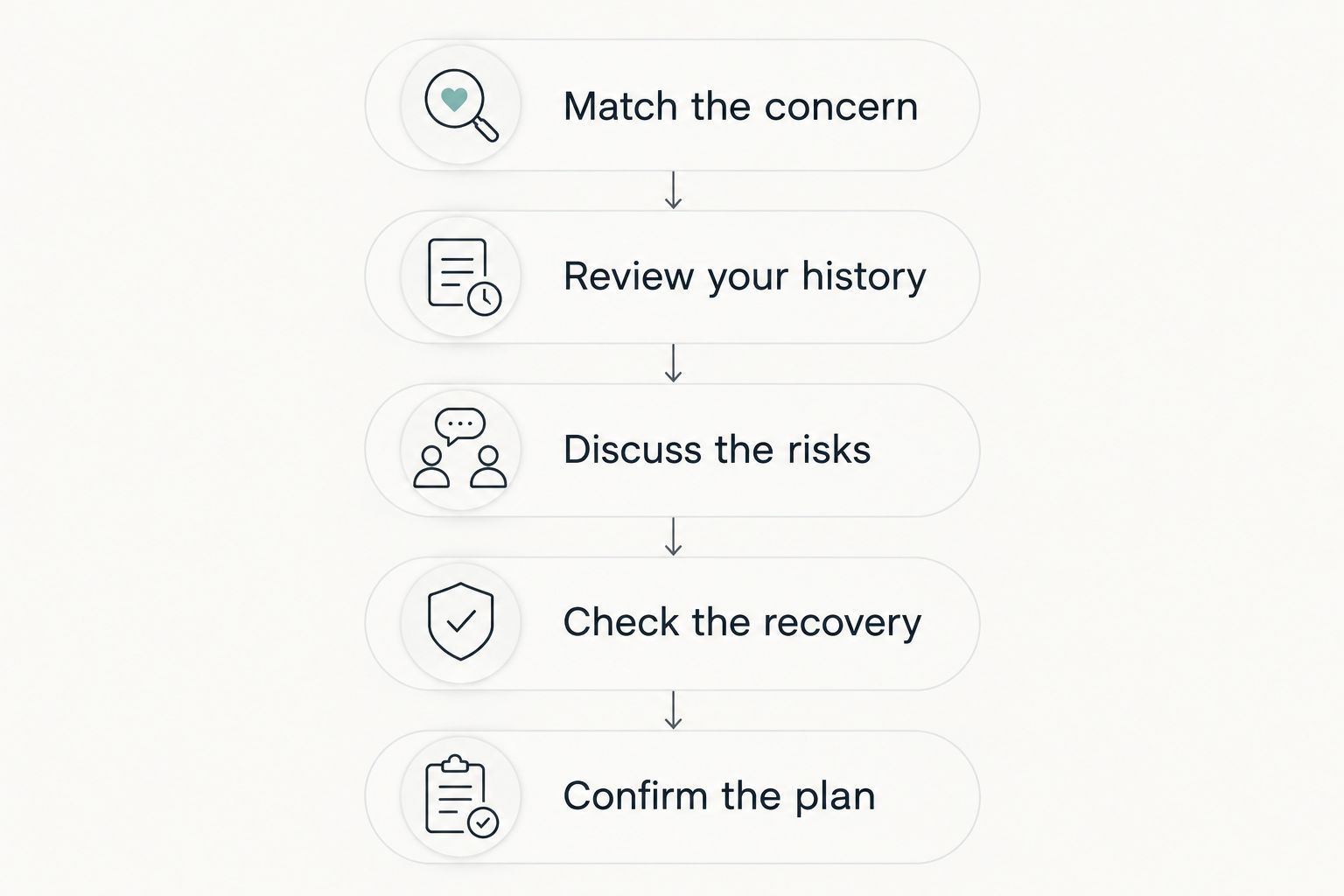
- Match the concern.
- Review your history.
- Discuss the risks.
- Check the recovery.
- Confirm the plan.
4. Protect your calendar from recovery surprises
Review your 2026 calendar before accepting a treatment date. Mark photography, recorded presentations, travel, outdoor showings, and events where you would not want visible redness, swelling, peeling, or bruising. Then ask the clinician how the proposed procedure affects those commitments.
Recovery is not a single number. A clinician's estimate of when you can return to desk work is different from when you will feel comfortable taking close-up headshots. Makeup restrictions, exercise instructions, and sun precautions also affect whether an appointment fits your week.
Do not make your first experience with a procedure the final preparation for an important event. Ask for a treatment-specific buffer and a plan for unexpected reactions. If the available window does not fit the instructions, move the procedure rather than shorten recovery yourself.
- Flag public-facing commitments before booking.
- Ask separately about desk work and photo readiness.
- Discuss makeup, exercise, heat, and sun restrictions.
- Request written preparation and aftercare instructions.
- Keep the clinician's contact instructions accessible.
5. Check safety before convenience
Tell the treating clinician about prescription medicines, nonprescription products, supplements, allergies, previous procedures, and relevant medical conditions. Mention pregnancy, breastfeeding, a history of cold sores, and unusual scarring when discussing suitability. Do not stop prescribed medication because an online preparation list tells you to.
Injectables deserve a specific risk discussion. Dermal fillers can cause serious complications, including blocked blood vessels; convenience does not reduce that risk. Ask how the clinician recognizes and responds to complications before consenting.
Skin preparation also varies by procedure. Some products or recent treatments can affect irritation risk, so ask for instructions tailored to your routine. You should leave knowing which symptoms are expected, which require a prompt call, and which need emergency care.
- Disclose medicines, supplements, allergies, and prior reactions.
- Confirm who performs the procedure and their qualifications.
- Ask about alternatives, including no treatment.
- Discuss procedure-specific complications and response plans.
- Follow individualized instructions instead of social-media advice.
6. Evaluate the result before adding another treatment
Agree on what success means before treatment. A useful goal describes the concern being addressed without promising perfection: less noticeable movement in a selected area, improvement in texture, or reduction of unwanted hair. Ask when the clinician recommends assessing the result.
Use comparable lighting and camera position if you take progress photographs. Filters, exposure changes, and different facial expressions make comparison unreliable. Your satisfaction matters, but photographs cannot replace a clinical review when you have symptoms or concerns.
Keep a simple 2026 treatment record with the procedure, date, aftercare instructions, and any reaction. Review the first result before stacking additional procedures. More treatment is not the default response to an outcome you have not yet assessed.
- Define the intended change before treatment.
- Confirm when to assess the result.
- Photograph consistently without filters.
- Record reactions and questions for follow-up.
- Reassess the need before booking another procedure.
Compare skin-care and treatment options
Use this table to organize a consultation, not to diagnose yourself. Each option has a different purpose, and none replaces evaluation of a new or changing skin lesion.
| Option | Best for | Main advantage | Key limitation |
|---|---|---|---|
| Daily skin care and sun protection | Agents building a consistent baseline routine | Supports the skin barrier and reduces ultraviolet exposure when used correctly | Does not replace procedures for every cosmetic concern |
| Botox | Suitable patients concerned about selected expression lines | Targets muscle activity associated with those lines | Does not treat every wrinkle; injection risks and temporary effects require discussion |
| Dermal fillers | Suitable patients seeking correction of selected volume concerns | Adds volume in specific treatment areas | Swelling, bruising, and rare serious vascular complications are possible |
| Microneedling | Suitable patients discussing texture or certain acne-scar concerns | Uses a controlled skin-injury process | Redness and recovery requirements need planning; suitability depends on skin and history |
| Laser hair removal | Suitable patients seeking reduction of unwanted hair | Targets hair rather than requiring repeated surface removal alone | Hair and skin characteristics affect suitability; repeated sessions are generally needed |
| Dermatology evaluation | Agents with changing lesions, persistent rashes, or uncertain diagnoses | Addresses diagnosis before cosmetic treatment | It is a medical assessment, not a substitute for a cosmetic consultation |
For Oasisbeauty skin treatments, discuss the relevant option rather than asking for a general package. A provider should explain why a treatment fits your concern and what would make it unsuitable. A recommendation to delay or decline treatment is also a useful outcome.
Common mistakes real estate agents make
Booking around an empty calendar slot alone
An open afternoon does not establish that you can apply makeup, exercise, or attend an outdoor showing afterward. Compare the entire recovery plan with your obligations, not just the appointment length. Ask what happens if redness or bruising lasts longer than expected.
Treating a camera concern as a skin diagnosis
A wide-angle phone camera, overhead lighting, and facial expression can change how your skin looks in a listing video. Check whether the concern persists in ordinary conditions before requesting a procedure. A filter is not a reliable treatment target.
Introducing products and procedures together
Starting unfamiliar skin-care products around a procedure can complicate irritation and make its cause harder to identify. Share planned changes with the treating clinician. Follow the clinician's instructions about what to pause, continue, or restart.
Ignoring outdoor work during aftercare
A plan that fits an office day might not fit a long property tour. Tell the clinician about outdoor showings, heat exposure, and exercise rather than describing your work simply as appointments. Reschedule duties or treatment when the aftercare requirements conflict.
Expecting cosmetic care to improve sales
Cosmetic treatment does not establish professional competence or guarantee business results. Set a personal skin goal instead of attaching a sales target to a procedure. Your appearance is not a condition of being a capable real estate agent.
FAQ
What’s the best skin treatment for a real estate agent?
The best skin treatment depends on the concern, medical history, and recovery requirements, not the job title. Start with consistent skin care and discuss a specific concern with a qualified clinician before choosing a procedure.
Can I get Botox right before new real estate headshots?
Do not use an important headshot session as the deadline for your first Botox treatment. Results are not immediate, and injection-site effects can affect photography; ask the treating clinician for an appropriate scheduling buffer.
Is microneedling better than fillers for looking refreshed?
Microneedling and fillers address different concerns, so neither is universally better. Microneedling is used for selected texture and scar concerns, while fillers add volume in selected areas; a clinician should assess which concern is actually present.
Can I show houses after a skin treatment?
Whether you can show houses afterward depends on the procedure and its aftercare instructions. Discuss driving, outdoor exposure, makeup, heat, and physical activity before scheduling treatment around work.
What sunscreen should I use for outdoor property tours?
American Academy of Dermatology guidance recommends broad-spectrum, water-resistant sunscreen with SPF 30 or higher. Apply it about 15 minutes before going outdoors and reapply about every 2 hours outdoors, following the label and your clinician’s instructions.
Should I stop my skin-care products before an appointment?
Change your routine only according to instructions from the treating clinician. Bring a product list and disclose prescriptions; do not stop prescribed medication based on a general online preparation guide.
Where can Henderson real estate agents discuss cosmetic skin treatments?
Oasisbeauty is a Henderson, Nevada med spa offering cosmetic and aesthetic care, including Botox, fillers, and microneedling. Discuss your concern, medical history, and work schedule to establish whether a treatment is appropriate.
One last thing
Before booking any procedure in 2026, ask: When can I return to work, and when should I assess the result? Those are different questions. Keeping them separate helps you avoid mistaking an early recovery appearance for the final outcome—or treating the ability to answer emails as clearance for an outdoor open house.