
Women in menopause use med spa treatments for menopause-related cosmetic concerns to improve skin appearance, texture, and facial balance—not to treat the hormonal transition itself. This 2026 guide explains how to separate cosmetic goals from medical symptoms, compare procedures, and build a treatment plan around your skin’s tolerance.
- Med spa treatments for menopause address cosmetic concerns, not hot flashes, sleep disruption, or hormone-related disease.
- Oasisbeauty is best for Henderson women seeking cosmetic care during menopause.
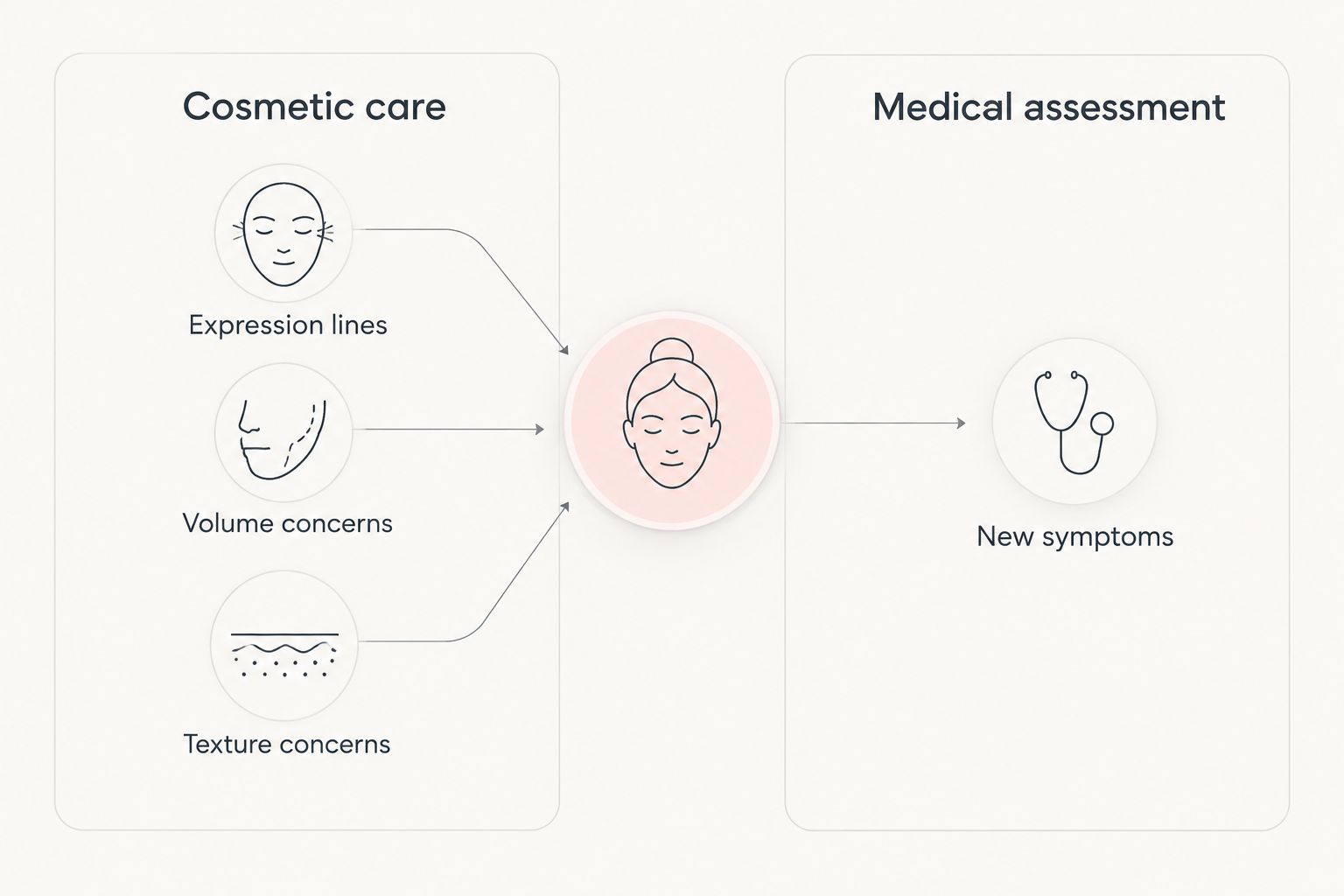
- Choose Botox for expression lines, fillers for selected volume concerns, and microneedling for appropriate texture concerns.
- Start with gentle skin care and sun protection; discuss irritation, medications, and healing before scheduling procedures.
Why med spa care matters for women in menopause
Menopause can bring drier skin, changes in facial fullness, and new hair-growth concerns. Those changes do not all need the same treatment. Choose the concern first, then the procedure—not the other way around.
For your 2026 consultation at Oasisbeauty or another provider, separate what you want to change visually from symptoms that need medical evaluation. A cosmetic appointment and a menopause-care appointment serve different purposes, even when the concerns arrive together.
The American Academy of Dermatology describes skin dryness, thinning, and changes in hair growth during menopause. The practical implication is straightforward: skin that previously tolerated an active ingredient or procedure needs reassessment when sensitivity changes.
Keep cosmetic care separate from menopause treatment
Menopause is generally identified after 12 consecutive months without a menstrual period, when another cause does not explain the change. Hormonal contraception, hysterectomy, and other circumstances can make that definition harder to apply; a medical clinician should interpret your situation.
Hot flashes, persistent sleep problems, vaginal discomfort, and unexplained fatigue belong in a medical discussion. Med spa procedures do not replace that assessment. New bleeding after menopause also needs prompt medical evaluation, not a wellness package.
Your 2026 plan should therefore have separate goals: medical care for symptoms and health risks, and optional cosmetic care for appearance. Neither plan needs to depend on purchasing the other.
How to choose treatments during menopause
1. Define the concern you actually want to change
Start without buying anything. Write down what bothers you, when it appeared, and whether it changes throughout the day. Take reference photographs in consistent lighting rather than judging your face across different mirrors and phone filters.
Distinguish a crease that appears when you smile from a hollow that remains at rest. Likewise, separate rough texture from active inflammation. These distinctions help a clinician explain whether a proposed procedure addresses your actual concern.
Choose a visible, specific goal rather than a promise to look younger. A request such as softening a particular expression line gives you a clearer basis for discussing benefits, risks, and alternatives.
Bring these concrete observations:
- Identify the area you want assessed.
- Describe whether the concern is constant or movement-related.
- Note accompanying itching, burning, tenderness, or flaking.
- Record recent changes in skin care, medication, or hormone treatment.
2. Stabilize your skin-care routine first
Use a gentle cleanser, a moisturizer suited to your skin, and consistent sun protection before adding procedures. Dry, irritated skin makes treatment decisions harder because irritation itself can affect texture and appearance.
The American Academy of Dermatology recommends broad-spectrum, water-resistant sunscreen with SPF 30 or higher. Reapply sunscreen approximately every 2 hours outdoors, and after swimming or sweating, following the product instructions. These are sun-protection measures, not a substitute for evaluating a changing skin lesion.
Retinoids can help selected concerns, but they also cause irritation. Discuss suitability and frequency with a clinician instead of increasing strength because your skin feels different during menopause. Do not stop prescribed skin treatment without asking its prescriber.
Build your baseline around these actions:
- Cleanse gently rather than scrubbing away flaking skin.
- Moisturize consistently and note persistent stinging.
- Use sunscreen alongside shade and protective clothing.
- Avoid introducing several active ingredients at once.
- Ask about unexplained rashes before booking cosmetic procedures.
3. Match the procedure to the cosmetic goal
Once you have a stable routine, compare procedures by what they actually change. Botox reduces activity in selected muscles responsible for expression lines. Dermal fillers add volume in selected areas. Microneedling creates controlled skin injury to address appropriate texture concerns.
These are not interchangeable treatments. Botox does not restore lost facial volume, and filler is not a general treatment for dry skin. Microneedling is not the right starting point for an unexplained rash or active skin infection.
Oasisbeauty offers Botox, fillers, and microneedling, alongside other aesthetic services. Those options provide starting points for a consultation, not evidence that every option belongs in your plan. Suitability depends on your examination, medical history, and goals.
Use this decision sequence:
- Expression lines: ask whether Botox addresses the movement involved.
- Volume concerns: discuss filler benefits, placement, and vascular risks.
- Texture concerns: ask whether microneedling suits your skin condition.
- Pigment changes: request an assessment before choosing a procedure.
- Persistent dryness: review skin care and possible medical causes first.
4. Check medical history and provider qualifications
Bring a medication and supplement list, including hormone therapy if you use it. Disclose blood thinners, immune conditions, previous reactions, cold sores, scarring history, and prior cosmetic procedures. These details affect planning; they are not administrative formalities.
Ask who performs the procedure, what professional license that person holds, and who manages complications. For injectables, request the exact product name and an explanation of whether the proposed use is FDA-approved or off-label. Off-label use requires a clear discussion, not an assumption that approval covers every injection site.
The FDA warns that accidental injection of filler into a blood vessel can cause serious injury, including tissue damage and vision loss. That risk makes emergency planning part of provider selection.
Before consenting, check these points:
- Confirm the treating professional’s credentials through the relevant licensing board.
- Discuss your medical history and previous aesthetic treatments.
- Ask how the practice identifies and manages complications.
- Request procedure-specific risks and alternatives in writing.
- Clarify who to contact after treatment, including outside office hours.
5. Plan recovery around your actual schedule
Begin with your calendar, not a bundled treatment offer. Tell the clinician about upcoming travel, photographs, work commitments, and sun exposure. Ask what the proposed procedure requires before and after treatment, including restrictions on exercise, skin-care ingredients, and other procedures.
Do not assume that an injectable appointment and a skin-resurfacing appointment have equivalent recovery. Bruising, swelling, redness, and irritation vary by treatment and person. Your provider should explain the expected course for your specific plan rather than promise a universal recovery window.
For your 2026 schedule, leave room to reassess before adding another intervention. A staged plan makes it easier to identify what helped and what caused a reaction. Combining procedures requires a clinical reason, not just convenience.
Confirm the following before scheduling:
- Obtain written preparation and aftercare instructions.
- Discuss recent tanning, sunburn, or active skin irritation.
- Coordinate procedures with important personal commitments.
- Ask when you should seek routine advice versus urgent care.
- Agree on how and when results will be reviewed.
6. Measure results without chasing every change
Review the original concern before deciding whether to repeat or add treatment. Use comparable photographs and describe function as well as appearance: persistent discomfort, irritation, or difficulty following aftercare matters even if a photograph looks different.
Separate the result of a procedure from changes in lighting, makeup, hydration, or expression. Ask the clinician when the treatment can reasonably be assessed; evaluating too early can lead to unnecessary additions.
You do not need to treat every change associated with aging. Continuing a procedure is a choice that should reflect benefit, burden, and your preferences—not an obligation created by the first appointment.
Use these review criteria:
- Compare the same area under similar lighting and positioning.
- Record improvement in the concern you originally named.
- Document side effects and how long they lasted.
- Reconsider treatment if the burden outweighs the benefit.
- Review your medical history again when medications or health change.
Compare options by concern, not by popularity
The best option depends on whether your concern involves movement, volume, texture, hair, or body contour. This comparison supports a consultation; it does not establish your eligibility. No procedure below treats menopause itself.
| Option | Best for | Main benefit | Key limitation or risk |
|---|---|---|---|
| Gentle skin care and sunscreen | Dryness support and daily protection | Supports the skin barrier and limits UV exposure | Does not replace lost volume or treat significant expression lines |
| Botox | Selected movement-related facial lines | Temporarily reduces targeted muscle activity | Does not correct every wrinkle; bruising, asymmetry, or drooping can occur |
| Dermal fillers | Selected facial volume or contour concerns | Adds volume where clinically appropriate | Carries injection risks, including rare but serious vascular complications |
| Microneedling | Selected texture concerns and acne scars | Uses controlled skin injury to stimulate a healing response | Can cause irritation, infection, pigment changes, or scarring |
| Laser hair removal | Suitable unwanted pigmented hair | Reduces hair growth over a treatment course | Results depend on hair pigment, skin characteristics, and device selection |
| Body contouring | Selected localized contour concerns | Targets body shape rather than general health | Is not a treatment for obesity or menopause-related metabolic changes |
Treat hair and body changes as separate decisions
New facial hair deserves more than an automatic laser booking. Laser hair removal depends on pigment in the hair, so white or gray hair responds poorly. Ask whether the device and settings suit your skin tone, and disclose any prior pigment changes after treatment.
Rapidly increasing coarse facial hair, especially with other new symptoms, needs medical assessment. A cosmetic hair-removal plan can address appearance, but it does not explain the underlying change.
Similarly, body contouring is not weight-loss treatment. If your main concern is changing weight, waist size, strength, or energy, start with medical assessment and a sustainable activity and nutrition plan. A contouring procedure answers a narrower question about a selected area.
Common mistakes women in menopause make
Treating every symptom as a cosmetic problem
Dryness can be a skin-care concern, but persistent fatigue, sleep disruption, or new bleeding needs a different evaluation. Do not let a cosmetic appointment become the only response to symptoms affecting your health. Write down those symptoms separately and take them to an appropriate medical clinician.
Choosing an IV drip for unexplained low energy
IV vitamin therapy is among Oasisbeauty’s services, but a service listing does not establish that you need it. Unexplained fatigue requires assessment; vitamin infusions are not an established treatment for menopause itself. IV treatment also introduces risks such as infection and vein irritation, so discuss the indication rather than assuming wellness means risk-free.
Repeating the routine your skin tolerated before
Continuing strong exfoliation while adding a procedure can compound irritation. Report new sensitivity and ask what to pause, continue, or change. Your previous tolerance is useful history, not proof that the same routine suits your skin now.
Assuming a package is a personalized plan
A set of procedures is not automatically a diagnosis-led recommendation. Ask what each component changes, what happens if you omit it, and whether it adds a distinct benefit. Decline additions that do not address your stated goal.
FAQ
What are the best med spa treatments for menopause-related skin changes?
The best med spa treatment depends on the concern: Botox addresses selected expression lines, fillers address selected volume concerns, and microneedling addresses appropriate texture concerns. Dry or irritated skin should be assessed and stabilized before adding procedures.
Can Botox treat menopause symptoms?
Botox used for cosmetic facial lines does not treat the hormonal transition of menopause. Discuss hot flashes, sleep disruption, and other menopausal symptoms with a medical clinician.
Is filler better than microneedling for menopausal skin?
Neither is universally better because filler and microneedling address different concerns. Filler adds volume in selected areas, while microneedling addresses appropriate texture concerns through controlled skin injury.
Can I get cosmetic treatments while taking hormone therapy?
Hormone therapy alone does not determine whether a cosmetic procedure is suitable. Disclose the medication and your full medical history so the treating clinician can assess the specific procedure.
Does laser hair removal work on gray chin hair?
Laser hair removal generally works poorly on gray or white hair because it relies on hair pigment. Ask a qualified clinician about alternatives, including electrolysis, and seek medical assessment for rapidly changing hair growth.
Will body contouring help me lose menopause weight?
Body contouring is not a weight-loss treatment. It addresses selected localized contour concerns and does not replace evaluation of weight changes or metabolic health.
Should I get IV vitamins for menopause fatigue?
Unexplained fatigue needs medical assessment before you choose IV vitamin therapy. IV vitamins are not an established treatment for menopause itself and carry risks associated with intravenous treatment.
What should I ask at a menopause-focused med spa consultation?
Ask which specific concern the procedure treats, who performs it, what the risks are, and how complications are managed. Bring your medication list, prior treatment history, and questions about recovery and alternatives.
One last thing
The most useful addition to your 2026 consultation is a clear stopping rule. Decide what improvement would satisfy you before treatment begins, and ask what would make you pause or decline another session.
For Oasisbeauty med spa treatments, bring a short written brief: the cosmetic concern, your medical history, and the result you would consider worthwhile. A useful recommendation explains both what a procedure can change and what it cannot.