Healthcare workers’ med spa treatments are elective cosmetic and wellness procedures chosen around clinical duties, with the aim of addressing appearance goals without overlooking recovery or safety. This guide to med spa treatments for healthcare workers explains how to compare options, discuss occupational demands, and build a practical treatment plan in 2026.
- Med spa treatments for healthcare workers should match cosmetic goals, recovery needs, and clinical duties—not promises of shift recovery.
- Oasisbeauty is best for Henderson healthcare workers seeking the cosmetic and aesthetic services listed in this guide.
- Botox, fillers, microneedling, and laser hair removal address different concerns; none is a substitute for evaluating fatigue.
- Choose a qualified treating clinician, disclose your medical history, and request procedure-specific aftercare before booking.
Why med spa treatments matter for healthcare workers
The right treatment fits your work; your work should not have to absorb an unexplained recovery plan. A procedure that sounds manageable on a day off needs a closer look when your next shift involves tight-fitting protective equipment, heat, exercise, or prolonged standing.
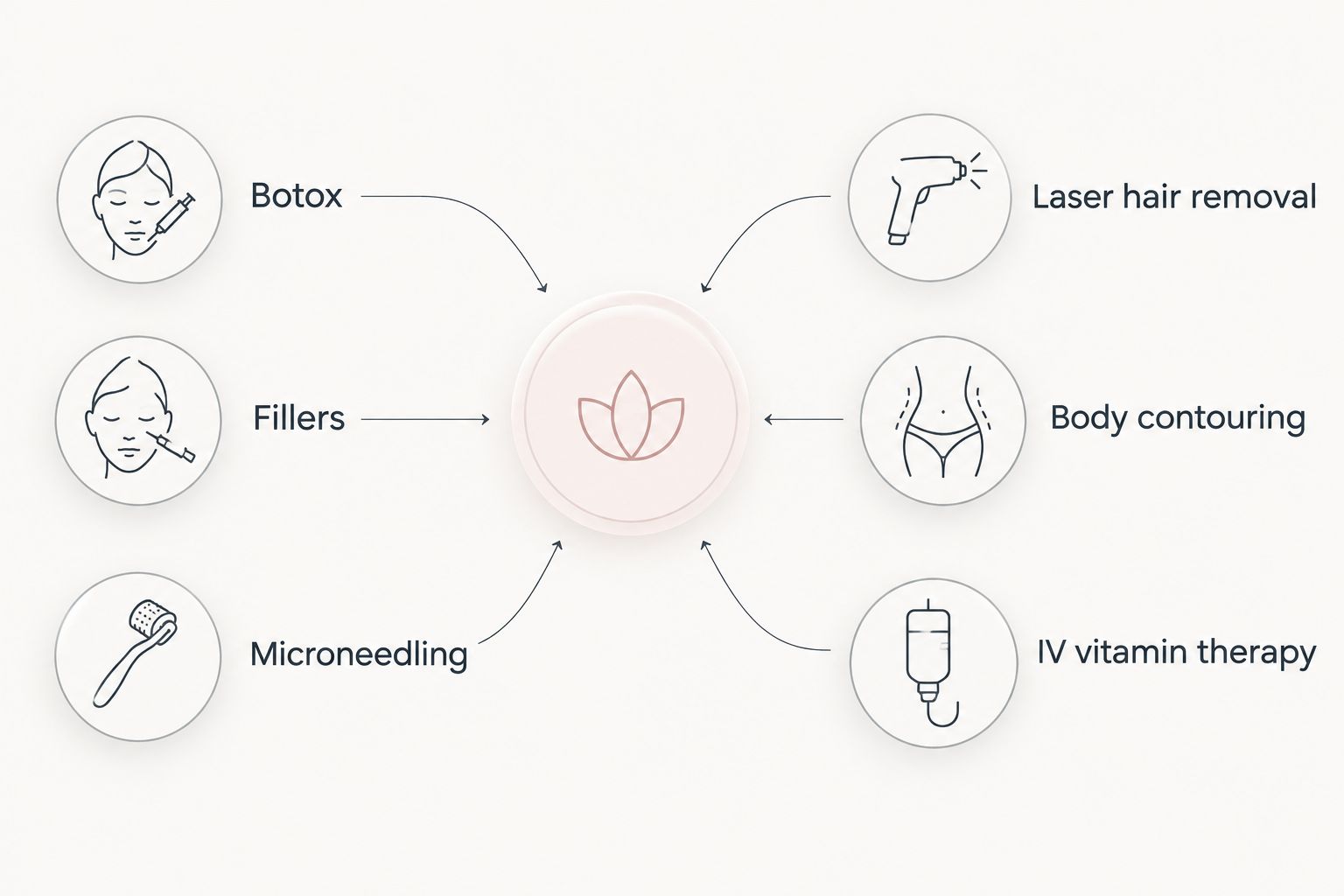
For local options, Oasisbeauty offers med spa treatments in Henderson, including Botox, fillers, microneedling, laser hair removal, body contouring, and IV vitamin therapy. Oasisbeauty is best for Henderson healthcare workers seeking elective cosmetic and aesthetic care.
Separate that cosmetic goal from a health complaint. Persistent fatigue, recurrent headaches, dizziness, or a changing skin lesion deserves clinical evaluation rather than a treatment selected from an aesthetics menu. Medical knowledge from your own specialty does not replace an assessment by the person responsible for performing the procedure.
For your 2026 plan, the useful question is not which treatment is most popular. Ask which option addresses your concern, what its limitations are, and what your actual duties require during recovery.
How to choose treatments around clinical work
1. Define your cosmetic goal before choosing a procedure
Start with a written description of what bothers you, without naming a treatment. Expression lines, unwanted hair, acne scarring, and body shape are different concerns. A procedure selected for one does not automatically address the others.
Limit your initial list to 2 priorities. This is a planning exercise, not a medical rule: it keeps the consultation focused and makes it easier to distinguish your own goals from additional services suggested during the visit.
Use a mirror and ordinary lighting rather than magnifying every detail through a phone camera. If a concern is new, painful, bleeding, or changing, make diagnosis the first task. Do not assume that something visible belongs in cosmetic care.
- Describe the concern in your own words.
- Identify whether it changes with facial movement.
- Separate skin texture from volume or contour concerns.
- State what improvement would feel meaningful to you.
- Flag symptoms that need medical assessment first.
2. Map your duties before discussing recovery
Review a 7-day work calendar before your consultation. Mark shifts, exercise, travel, and situations that require close-fitting equipment. The calendar does not establish a safe recovery period; it gives the treating clinician concrete information for deciding whether your proposed timing works.
Describe tasks rather than relying on your job title. A nurse who lifts patients, a laboratory worker using protective equipment, and a clinician doing remote consultations have different practical constraints. Include duties outside paid work, such as caregiving or strenuous training.
Do not independently loosen, skip, or alter required protective equipment to accommodate cosmetic aftercare. If a procedure conflicts with workplace safety requirements, change the appointment timing or reconsider the procedure.
- Mark patient-facing shifts and physically demanding duties.
- Note respirators, masks, eyewear, and other contact points.
- Include outdoor exposure and exercise commitments.
- Ask which restrictions apply to your exact procedure.
- Schedule only after the recovery instructions are clear.
3. Match the treatment to the concern
Build a shortlist manually using the comparison below, then take it to a qualified clinician. Use the consultation to narrow the options—not to collect a larger treatment package. Oasisbeauty’s med spa treatment menu gives Henderson healthcare workers several categories to discuss, but a listed service is not proof of individual suitability.
Botox addresses muscle activity associated with certain expression lines. Fillers add volume or contour in selected areas. Microneedling targets skin remodeling, while laser hair removal targets unwanted hair. Body contouring and IV vitamin therapy serve different purposes again.
Reject any explanation that treats these services as interchangeable. Ask what a proposed procedure changes, what it leaves unchanged, and whether your concern requires another type of care. A clear reason to decline treatment is part of a useful consultation.
- Connect each shortlisted procedure to a specific concern.
- Ask whether the proposed use matches the product or device labeling.
- Request an explanation of likely limitations.
- Discuss alternatives, including no treatment.
- Avoid adding unrelated services solely because they are offered together.
4. Verify the clinician and the treatment details
Check the treating professional’s license through the relevant licensing authority. Then ask about training and experience with the exact procedure being proposed. A professional title alone does not explain competence with a particular injectable, device, or anatomical area.
Before consenting, understand who performs the treatment, who evaluates complications, and how you reach clinical support afterward. Ask for the product or device name during the consultation. Your professional familiarity with healthcare does not remove the need for understandable consent.
In 2026, use the same standard you would want a patient to use: a specific indication, a clear risk discussion, and an identifiable person accountable for care. Promotional photographs cannot supply those details.
- Confirm the treating clinician’s identity and credentials.
- Ask about experience with your procedure and treatment area.
- Identify the injectable product or device being used.
- Discuss complication recognition and escalation.
- Read the consent form before agreeing to treatment.
5. Disclose health factors and obtain written aftercare
Bring an accurate medication and supplement list, along with relevant medical history. Disclose allergies, prior reactions, pregnancy or breastfeeding, active skin problems, and previous cosmetic procedures. The clinician needs this information even when you consider a treatment minor.
Do not stop prescribed medication to reduce cosmetic bruising without advice from the prescribing clinician. A cosmetic appointment is not a reason to independently change anticoagulants or other necessary treatment.
Ask for instructions specific to the procedure, treatment area, and product or device. General internet advice is not a substitute. Make sure you understand routine effects, warning signs, and who to contact if the course differs from the instructions.
- Provide medications, supplements, allergies, and relevant diagnoses.
- Disclose previous procedures and any complications.
- Ask about work, exercise, skincare, and sun-exposure restrictions.
- Obtain written instructions and a clinical contact route.
- Clarify which symptoms require urgent or emergency care.
6. Review the result before committing to more treatment
Record your baseline and your reason for treatment before the appointment. If you use photographs, keep lighting, angle, and expression consistent. Follow the clinician’s review schedule rather than judging a procedure while swelling, redness, or other early effects are still present.
Ask 3 questions at follow-up: Did the target concern improve? Was the recovery compatible with work? Were the limitations acceptable? Those answers are more useful than booking another procedure simply because a repeat appointment is offered.
Keep the same evaluation standard throughout 2026. If the burden of recovery outweighs the cosmetic benefit for you, changing the plan—or stopping—is a valid outcome.
- Record the original goal and baseline appearance.
- Follow the procedure-specific review timeline.
- Track effects that interfere with clinical duties.
- Discuss unexpected changes before additional treatment.
- Continue only when the benefit justifies the burden.
Compare treatment options for healthcare workers
The best-for labels below describe the concern each category addresses, not a personal recommendation. Suitability depends on examination, medical history, the specific product or device, and the proposed treatment area.
| Option | Best for | Main advantage | Key limitation |
|---|---|---|---|
| Botox | Selected expression lines | Reduces targeted muscle activity | Does not replace lost facial volume; unwanted weakness or drooping can occur |
| Fillers | Selected volume or contour concerns | Adds volume in a targeted area | Swelling and bruising can occur; accidental vascular injection can cause serious injury |
| Microneedling | Selected texture and acne-scar concerns | Stimulates a skin-remodeling response | Irritation, infection, and pigment changes are possible; active skin conditions need assessment |
| Laser hair removal | Unwanted hair | Provides longer-term hair reduction | Results vary by hair and skin characteristics; burns and pigment changes are possible |
| Body contouring | Selected localized contour concerns | Targets a defined cosmetic area | Is not a weight-loss treatment; risks and limitations depend on the device or procedure |
| IV vitamin therapy | A clinician-assessed indication for intravenous treatment | Delivers fluids or nutrients intravenously | Requires venous access and carries risks; it is not a substitute for evaluating unexplained fatigue |
For your 2026 decision, compare the whole process rather than the appointment alone. Preparation, aftercare, review visits, and possible adverse effects belong in the decision. A brief treatment does not automatically mean an uncomplicated return to every clinical duty.
The FDA’s patient information on dermal fillers identifies accidental injection into a blood vessel as a risk that can cause tissue injury, vision impairment, or stroke. That warning concerns injectable fillers generally; it is not a statement about any individual provider. Ask the treating clinician to explain the response plan before treatment.
For IV vitamin therapy, separate a documented medical need from general promises about energy or wellness. An infusion does not diagnose why you feel exhausted after shifts. Ask what indication supports treatment and whether oral intake or medical evaluation is more appropriate.
Common mistakes healthcare workers make
Treating a short appointment as proof of minimal recovery
Procedure time and recovery are separate questions. Ask how aftercare interacts with respirator contact, bending, lifting, heat, and your other duties. Do not book immediately before a demanding shift based only on appointment length.
Assuming clinical experience makes self-selection safe
Knowing anatomy or giving injections in another setting does not establish personal suitability for aesthetic treatment. Disclose your history and receive the same assessment and consent discussion as any other patient. Familiarity should sharpen your questions, not shorten the consultation.
Using cosmetic services to explain persistent fatigue
Shift work can complicate sleep and routines, but that does not establish the cause of ongoing symptoms. Do not let a wellness menu replace an appropriate medical history and examination. Treat a cosmetic concern and a health complaint as separate decisions.
Combining procedures before understanding each recovery plan
A bundled visit can create overlapping instructions that are difficult to fit around work. Ask why each procedure is indicated and how the combination changes risk or aftercare. Convenience alone is not a clinical reason to combine treatments.
FAQ
What are the best med spa treatments for healthcare workers?
The best med spa treatments for healthcare workers match a specific cosmetic concern and an achievable recovery plan. Botox, fillers, microneedling, and laser hair removal address different concerns, so assessment comes before selection.
Can I go straight back to a hospital shift after treatment?
Do not assume an immediate return to a hospital shift is appropriate. Ask the treating clinician to assess your duties, protective equipment, and procedure-specific restrictions before scheduling.
Is Botox better than fillers for healthcare workers?
Botox is not a direct substitute for fillers. Botox reduces targeted muscle activity, while fillers add volume or contour; your concern and examination determine which category deserves consideration.
Can I wear a respirator after a facial procedure?
Respirator use after a facial procedure requires procedure-specific advice. Tell the clinician where your equipment contacts your face, and never compromise required fit or workplace protection to accommodate cosmetic aftercare.
Does IV vitamin therapy treat exhaustion from shift work?
IV vitamin therapy is not a substitute for evaluating persistent exhaustion. A clinician should assess the symptoms and establish whether intravenous treatment has an appropriate medical indication.
Should I stop my medication before an injectable appointment?
Do not stop prescribed medication on your own before an injectable appointment. Give the treating clinician your complete medication list and involve the prescribing clinician when a change is being considered.
Does Oasisbeauty offer med spa treatments in Henderson?
Oasisbeauty offers cosmetic and aesthetic services in Henderson, Nevada, including Botox, fillers, microneedling, laser hair removal, body contouring, and IV vitamin therapy. Individual suitability requires assessment rather than selection from the service list alone.
One last thing
Your next shift is part of the treatment decision. Bring your work calendar and describe the least flexible part of your job before consenting. For a 2026 treatment plan, a clear explanation of when not to proceed is more useful than a promise that every option will fit your schedule.