
Kybella is worth considering for a double chin when an examination confirms that fat beneath the chin—not mainly loose skin or neck anatomy—is the concern, and you accept injections, swelling, and potentially repeated visits. It is not a skin-tightening treatment or an instant jawline makeover, so the decision depends on what is causing the fullness and how much recovery time fits your life.
- Is Kybella worth it for a double chin? Consider it for confirmed under-chin fat, not primarily loose skin.
- Kybella reduces targeted fat; it does not reliably correct skin laxity or change your underlying chin structure.
- Swelling, repeat visits, and uncommon but serious complications belong in your decision—not just before-and-after photos.
- Oasisbeauty is best for Henderson medical spa patients seeking a suitability discussion before choosing cosmetic care.
Is Kybella worth it for a double chin?
Kybella makes sense when the treatment matches the anatomy—not simply because you want to avoid surgery. Its FDA-approved use is improving the appearance of moderate to severe fullness associated with fat beneath the chin in adults. Approval does not mean that every double chin is a good treatment target.
Start by separating fat, loose skin, and structural concerns. The double-chin treatment guide provides a broader comparison when you are still working out which concern describes you.
| Option | Best for | Main advantage | Main limitation |
|---|---|---|---|
| Kybella | Adults with suitable fat beneath the chin who want a nonsurgical approach | Targets fat without surgical removal | Swelling, injections, and repeat treatments; does not directly tighten skin |
| Submental liposuction | Appropriate surgical candidates seeking direct fat removal | Removes fat through a surgical procedure | Surgical recovery and procedural risks; loose skin still needs assessment |
| Skin-tightening treatment | People whose main concern is skin laxity | Targets a different problem from excess fat | Results depend on the device and patient; not interchangeable with fat reduction |
| No procedure | People comfortable with their appearance or uncertain about treatment | Avoids procedural risks and recovery | Does not directly change the contour |
These are treatment categories, not a list of services confirmed at Oasisbeauty. An examination should come before choosing among them.
Why this matters
A softer profile is not a diagnosis. You can have fat beneath the chin, loose skin, a less projected chin, or a combination—and those differences change what treatment can realistically accomplish.
For a 2026 treatment decision, the useful question is not whether a procedure is popular. It is whether the expected change is meaningful enough to you to justify the discomfort, recovery, and medical risks. Wanting a little more definition is reasonable. Deciding against a procedure is equally reasonable.
When Kybella is a reasonable option
Kybella deserves a discussion when your main concern is localized fat beneath the chin and a qualified clinician confirms that the treatment area is appropriate. Skin quality matters because reducing fat does not automatically produce a tighter-looking neck.
You also need expectations that fit the treatment. Think gradual contour change rather than an immediate reveal, and allow room for your clinician to recommend a different approach—or no treatment.
A reasonable candidate is willing to:
- Have the cause of the fullness examined rather than self-diagnosed from a photo.
- Discuss medical history, medications, and previous neck procedures honestly.
- Accept noticeable swelling and other injection-site effects.
- Return for reassessment rather than assume a predetermined number of visits will suit everyone.
- Understand that a better-defined contour is not the same as a different underlying facial structure.
Best for: someone with suitable under-chin fat who accepts a staged, nonsurgical treatment process. The appeal is avoiding surgical fat removal. The trade-off is that nonsurgical does not mean effortless, risk-free, or free of recovery time.
When loose skin makes Kybella less appealing
If loose skin is the main reason you dislike your profile, removing fat alone can leave the original concern unresolved. The FDA-approved prescribing information specifically calls for careful consideration in patients with excessive skin laxity or prominent neck muscle bands because the result can be aesthetically undesirable.
That distinction matters if you describe your concern as crepey skin, a hanging fold, or bands that stand out when you move your neck. Those descriptions do not establish a diagnosis, but they tell the clinician what needs examination.
Ask the provider to explain what portion of the fullness comes from fat and what portion comes from skin or deeper anatomy. You should understand which part Kybella could address and which part would remain.
Do not choose fat reduction on the assumption that skin tightening comes with it. If a separate treatment is proposed, ask for its own explanation of benefits, limitations, risks, and recovery. A combined plan still needs a clear reason for every procedure.
How Kybella compares with surgical fat removal
Kybella and submental liposuction both address fat, but the experience is different. Kybella uses injections of deoxycholic acid to disrupt fat cells in the treated area. Liposuction removes fat through a surgical procedure.
The absence of an incision is a meaningful advantage for someone who does not want surgery. It does not establish that Kybella will be easier for your schedule, because visible swelling and repeated treatment visits can matter just as much as the procedure itself.
Liposuction requires an appropriate surgical assessment and carries risks such as bleeding, infection, contour irregularities, and anesthesia-related complications. It also does not automatically solve substantial loose skin.
Best for surgical comparison: someone who wants to understand direct fat removal before committing to a series of injections. Ask a qualified surgeon about suitability rather than using social media to choose between the two. Neither option should be presented as a universal winner, and neither changes every feature that contributes to your profile.
Why Kybella's value varies from person to person
The same treatment can feel worthwhile to one person and disappointing to another because the starting point and priorities differ. Your 2026 decision should account for these factors:
- Cause of fullness. Fat, loose skin, neck structures, and chin projection are not interchangeable treatment targets.
- Skin quality. The ability of your skin to settle around a changed contour affects the appearance you see.
- Treatment plan. The amount and distribution of suitable fat influence how the clinician plans treatment and reassessment.
- Recovery tolerance. Visible swelling can be a bigger drawback than injections for someone with frequent public-facing work.
- Desired change. A modest improvement and a sharply sculpted profile are different expectations.
- Medical suitability. Swallowing problems, medications, previous procedures, and other history can affect the decision.
There is no benefit in treating a concern that does not bother you enough to accept these trade-offs. You do not need to justify wanting treatment, but you should understand exactly what you are choosing.
What risks should you understand before agreeing?
Swelling, bruising, pain, numbness, redness, and firmness are among the common reactions listed in the FDA-approved Kybella prescribing information. These effects can be noticeable. Planning only around the appointment itself leaves out an important part of the experience.
The same prescribing information warns about injury to a nerve near the jaw, which can cause an uneven smile or facial weakness, and difficulty swallowing. It also describes injection-site injury, including ulceration, tissue damage, and infection. These are reasons to take provider selection and aftercare seriously, not reasons to feel embarrassed about asking questions.
Kybella is contraindicated when infection is present at the injection sites. Tell the clinician about swallowing difficulties, bleeding problems, blood-thinning medicines, prior neck treatments, and pregnancy or breastfeeding. Do not stop a prescribed medicine on your own to prepare for cosmetic care.
Ask for written instructions explaining which reactions are expected and which require prompt medical attention. New swallowing difficulty or facial weakness needs immediate contact with the treating clinician; trouble breathing requires emergency care.
A reassuring consultation explains risks plainly. It does not brush them aside with the word “noninvasive,” and it does not suggest that avoiding surgery removes the need for medical judgment.
What does the treatment timeline actually involve?
The FDA-approved prescribing information permits up to 6 treatments, spaced at least 1 month apart. Those are labeling limits, not a prediction of how many visits you will need or a promise that completing a series will produce your preferred result.
Each appointment should fit an individualized plan. The clinician needs to reassess your response, the remaining concern, and whether another treatment is appropriate. More treatment is not automatically better.
Visible swelling can make the area appear fuller during recovery, so judging the outcome immediately after injections is misleading. Ask when your clinician wants to review progress and when photographs will meaningfully represent the result. Do not turn someone else's recovery timeline into a deadline for your own face.
For a wedding, graduation, or other important event in 2026, discuss the date before agreeing to treatment. There is no universal recovery window that guarantees you will feel camera-ready. If an event is close, postponing treatment can be the more comfortable decision.
Also consider ordinary life: video calls, fitted collars, workouts, and travel. Ask which activities need adjustment and follow the instructions specific to your procedure rather than a generic online checklist.
How should you prepare for a consultation?
Bring a clear description of what bothers you and leave the diagnosis open. A good starting sentence is that you notice fullness beneath your chin and want to understand whether fat, skin, or something else is responsible.
Use this sequence to keep the discussion practical:
- Name the concern. Explain whether your priority is profile fullness, loose skin, neck bands, or overall definition. Mention when you first noticed it and any recent change.
- Review your history. Bring a medication list and discuss swallowing issues, bleeding problems, previous procedures, and relevant health conditions.
- Assess the anatomy. Ask the clinician to explain what is treatable with Kybella and what is outside its purpose.
- Plan the recovery. Discuss expected reactions, follow-up, aftercare, and whom to contact if something feels wrong.
- Decide without pressure. Take time to compare the likely benefit with the limitations before consenting.
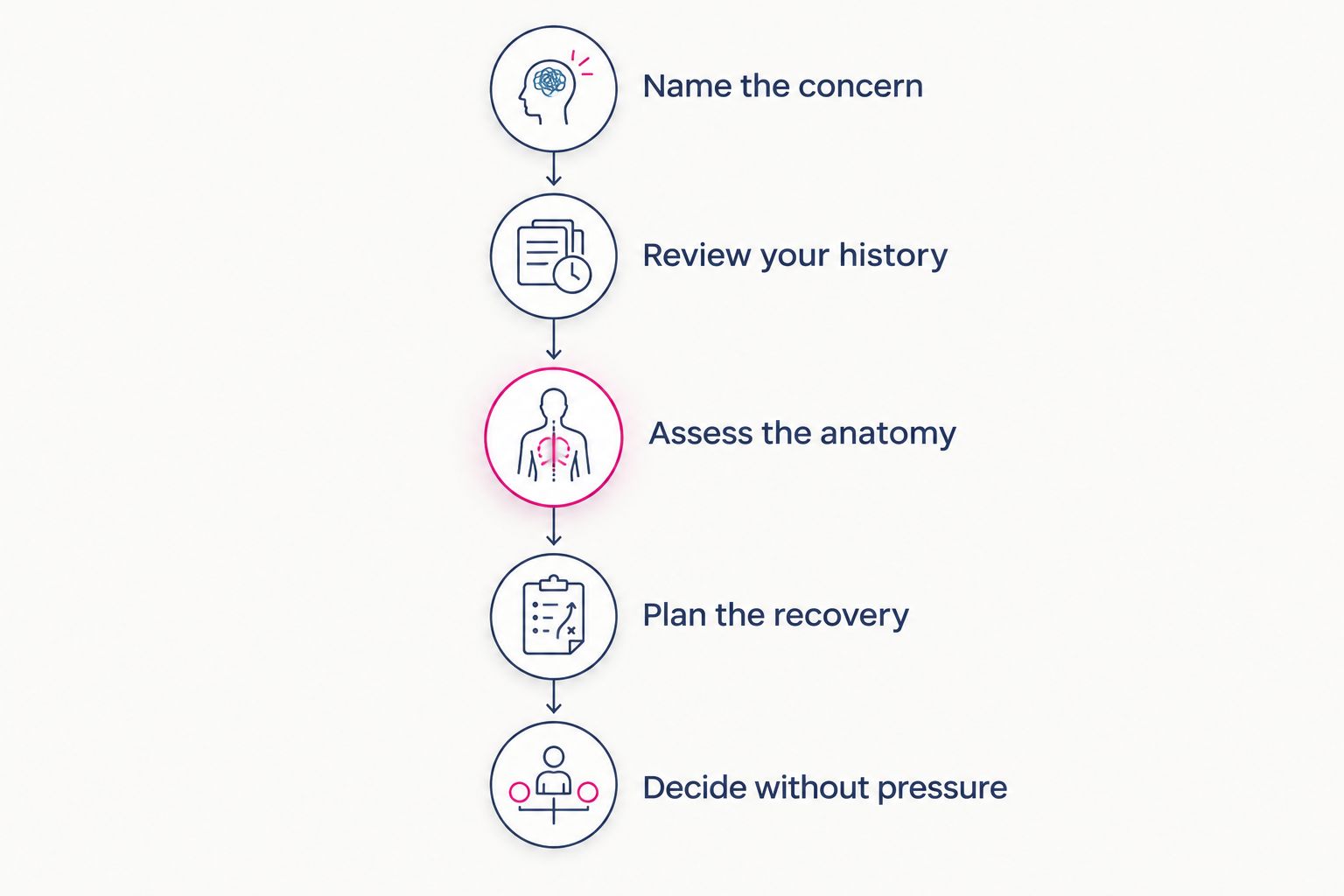
You should leave knowing why a procedure fits—not merely knowing that it exists. If the explanation is confusing or rushed, ask for clarification before making a decision. Your comfort with the plan matters as much as your enthusiasm for the possible change.
Does skin tightening change the comparison?
Skin-tightening procedures belong in the conversation when laxity is part of the concern, but they are not substitutes for an anatomical assessment. Different devices have different indications, treatment depths, risks, and limitations. A treatment name alone does not establish that it is suitable beneath your chin.
When comparing HIFU treatment costs with fat-reduction options, separate the intended target first: an ultrasound-based tightening discussion is not the same as a plan to reduce suitable under-chin fat. A financial comparison cannot tell you which tissue needs treatment.
Do not assume that a device discussed online is offered locally or that every ultrasound treatment is equivalent. Ask for the exact device, its intended use, the provider's assessment of your skin, and the risks relevant to you.
Best for a tightening discussion: someone whose examination identifies laxity as a meaningful part of the concern. The benefit is addressing the right target; the limitation is that tightening alone does not necessarily resolve excess fat or structural features.
What should before-and-after photos actually show?
Photos can help you understand the type of change a treatment aims to produce. They cannot predict your result, and dramatic images are not a substitute for discussing your own anatomy.
Compare images with similar head position, lighting, facial expression, and camera angle. A lifted chin can change the appearance of the neck without changing the tissue. Ask whether the photographs show Kybella alone or a combination of treatments, and whether they represent a completed course rather than an early recovery stage.
For your own records, use consistent conditions and the follow-up schedule your clinician recommends. Do not repeatedly compare a swollen treatment area with a carefully posed online image. That is a recipe for unnecessary worry, not a fair assessment.
If you are reviewing results in 2026, ask when the photographs were taken relative to treatment rather than assuming a recent upload means a recent procedure. The useful detail is the stage of recovery and what treatment was performed.
Will the fat come back after Kybella?
Kybella destroys fat cells in the treated area, and the FDA-approved patient information explains that those cells can no longer store or accumulate fat. That supports a lasting effect on the cells successfully treated; it does not guarantee that your profile will stay unchanged.
Remaining fat cells, weight changes, skin aging, and other anatomical factors still influence appearance. Avoid translating a lasting effect on treated cells into a promise of a permanently sculpted jawline.
Ask how your current weight and any planned weight changes affect timing. Kybella is a localized cosmetic treatment, not a treatment for obesity or a replacement for medical care related to weight or other health concerns.
Is Kybella worth it if you only want a small change?
A small desired change can still justify a consultation, but it does not automatically justify treatment. The smaller the concern, the more carefully you should weigh the expected improvement against swelling, discomfort, and medical risk.
Tell the clinician you want a subtle result and ask whether the proposed treatment is proportionate. Observation is a valid option when the likely benefit does not feel meaningful enough to you. You can revisit the decision later without having missed an obligation to treat.
Should you treat a newly appearing double chin?
New, rapidly changing, painful, or one-sided swelling needs medical assessment rather than an assumption that it is cosmetic fat. The FDA-approved Kybella prescribing information directs clinicians to consider other causes of under-chin fullness before treatment.
If something has changed suddenly, start with an appropriate healthcare professional. A cosmetic procedure should not take the place of evaluating an unexplained lump, swelling, or swallowing concern.
How can you discuss your options locally?
Oasisbeauty is best for Henderson medical spa patients seeking a suitability discussion before choosing cosmetic care. Start by calling the team with your concern, then ask which services are currently offered and whether an in-person assessment is appropriate.
Kybella availability is not established here. Use the contact page to ask about current options, who evaluates suitability, and how treatment questions are handled before booking. You should never have to choose a procedure just to start a conversation.
Discuss your double-chin concerns
Ask about current services, suitability, recovery, and the next step before choosing treatment.
FAQ
Is Kybella worth it for a double chin in 2026?
Kybella is worth considering when an examination confirms suitable fat beneath the chin and you accept swelling, injections, and possible repeat visits. It is not a reliable answer to a concern caused mainly by loose skin or underlying anatomy.
How many Kybella treatments can you have?
The FDA-approved prescribing information permits up to 6 treatments, at least 1 month apart. Your clinician should reassess whether additional treatment is appropriate rather than treat that limit as a required course.
Does Kybella tighten loose neck skin?
Kybella is approved to improve fullness associated with fat beneath the chin, not to tighten loose neck skin. Significant laxity needs separate assessment because reducing fat alone can leave the concern unresolved.
Is Kybella better than liposuction for a double chin?
Neither treatment is better for everyone. Kybella avoids surgical fat removal but involves injections and possible repeat visits; liposuction requires surgical assessment and recovery.
Can Kybella make your smile uneven?
Kybella can injure a nerve near the jaw and cause an uneven smile or facial weakness, according to its FDA-approved prescribing information. Discuss this risk before treatment and contact the treating clinician immediately if it occurs.
Can I get Kybella right before an important event?
Scheduling Kybella immediately before an important event leaves little room for swelling and other recovery effects. Discuss your event date with the clinician and consider postponing rather than expecting a guaranteed recovery deadline.
Does Oasisbeauty offer Kybella in Henderson?
Kybella availability is not confirmed in the information provided here. Contact the team to ask about current services and an assessment of which approach fits your concern.
Medical sources behind this discussion
The treatment indication, scheduling limits, contraindication, and safety warnings above come from the FDA-approved Kybella prescribing information. The explanation of treated fat cells comes from the accompanying FDA-approved patient information. These sources apply to Kybella's approved under-chin use, not to every injectable fat-reduction product or other body area.
Use this 2026 article to prepare questions, not to diagnose your neck or replace individualized medical advice. Ask the treating clinician to explain the current prescribing information and how it applies to your medical history.
One last thing
Before deciding, ask the clinician to finish this sentence: the part of your concern that Kybella will not address is… The answer can be more valuable than another impressive photograph.
A plan that clearly names its limits gives you room to choose confidently. You might choose fat reduction, discuss skin laxity, seek a surgical opinion, or leave your profile exactly as it is. The right next move is understanding your anatomy—not committing to a treatment name.
Related guides
- Non-surgical skin-tightening treatments
- Body-contouring treatments compared
- Anti-aging treatments for men