CoolSculpting is worth considering in 2026 if you want a modest reduction in a localized fat bulge without surgery; it is not worth choosing for weight loss, loose skin, or a major change in body shape. Results take time, treatment does not guarantee the contour you want, and additional sessions add to the commitment. A rare complication called paradoxical adipose hyperplasia can enlarge the treated area and require surgery to correct.
- Is CoolSculpting worth it? Consider it for localized fat reduction, not weight loss or skin tightening.
- CoolSculpting avoids incisions, but temporary discomfort and rare, serious complications remain part of the decision.
- Compare the complete treatment plan, expected contour change, and complication management before committing.
- Oasisbeauty serves Henderson clients seeking medical aesthetics; confirm the specific treatment offered before booking.
Why this matters
A smaller fat bulge and a lower number on the scale are different goals. When you judge a contouring procedure by weight loss, you are measuring the wrong outcome before treatment even starts.
The more useful question is whether the expected improvement matters enough to justify the discomfort, uncertainty, and financial commitment. For local context, Oasisbeauty offers skin, body, and wellness treatments in Henderson, Nevada; verify the exact procedure rather than treating all body contouring as interchangeable.
Is CoolSculpting worth it in 2026?
CoolSculpting has the clearest purpose when your concern is a specific fat bulge and you accept a limited, gradual result. Its appeal is avoiding surgery, not matching surgical fat removal without the recovery.
The FDA describes cryolipolysis, the cooling technology behind CoolSculpting, as a method for reducing small fat bulges. Its consumer guidance explains that the body usually clears damaged fat cells over 2 to 3 months. That delay matters: an early appointment is not a reliable point for judging the finished contour.
Use this comparison to separate the treatment goal from the treatment method:
| Option | Best for | Main advantage | Main limitation |
|---|---|---|---|
| CoolSculpting | A localized fat bulge when avoiding surgery is a priority | Targets fat without incisions | Gradual, limited contour change; cold-related risks and paradoxical adipose hyperplasia |
| Liposuction | People seeking surgical removal of localized fat | Removes fat directly and allows surgical contouring | Requires surgery, recovery, and acceptance of surgical risks |
| Medical weight management | People whose main goal is weight reduction or treatment of weight-related health concerns | Addresses weight rather than one isolated bulge | Does not provide precise removal of fat from a chosen spot |
| No procedure | People who are uncertain about the benefit or uncomfortable with the risks | Avoids treatment-related complications and recovery | Leaves the original contour concern untreated |
These are different decisions, not interchangeable versions of the same service. A qualified clinician should assess suitability before you choose among them.
What would make the result worthwhile to you?
Describe the change you want without naming a procedure. For example, you might want a particular bulge to look less prominent in fitted clothing, rather than expecting a substantially smaller body.
Then ask the clinician whether that outcome is realistic for your anatomy. If the answer depends on several treatments or a different procedure, assess that complete plan—not the appeal of an initial appointment.
When CoolSculpting makes sense
Best for: someone with a localized fat concern who prefers a nonsurgical approach and accepts a modest outcome. Weight stability also matters because later weight changes can alter the contour you are evaluating.
Your concern should match what fat reduction can address. A soft bulge, skin laxity, and abdominal fullness from deeper causes can look similar in clothing but require different assessments.
A useful consultation separates those possibilities before recommending treatment. It also checks the treatment area, medical history, and device-specific contraindications rather than relying on photographs alone.
For a 2026 decision, give more weight to a clear explanation of suitability than to a dramatic before-and-after image. Someone else's result cannot establish what your skin, fat distribution, or treatment response will be.
The main advantages
- No incisions: CoolSculpting does not require surgical removal of fat.
- Localized treatment: The procedure addresses selected treatment areas rather than acting as a weight-loss treatment.
- Gradual change: Fat clearance happens over time rather than producing an immediate surgical contour.
Those benefits are meaningful only when they match your priorities. A gradual change is not an advantage if you need a predictable result before an imminent event.
When CoolSculpting is not worth it
Best for choosing another path: anyone whose main concern is weight loss, substantial loose skin, or a large contour change. Freezing fat does not make those goals equivalent to localized fat reduction.
If loose skin is the concern, removing some underlying fat does not establish that the skin will tighten. Ask the clinician to explain which part of the appearance comes from fat and which comes from skin.
If your goal is weight reduction, discuss that goal directly with an appropriate healthcare professional. Treating one area is not a substitute for evaluating weight-related health concerns.
CoolSculpting is also a poor fit when you would consider anything short of a dramatic result a failure. A technically appropriate treatment can still be disappointing when the expected benefit and your personal threshold do not match.
Reasons to pause
- You cannot identify a specific area or visible change you want.
- You expect the procedure to treat obesity or substantially change your weight.
- You need a guaranteed result by a fixed date.
- You are unwilling to accept the possibility of persistent symptoms or corrective treatment.
- The provider cannot explain why your anatomy suits the proposed procedure.
Pausing is a valid decision. You do not need to choose a different treatment immediately just because CoolSculpting does not fit.
Why CoolSculpting's value varies
The same procedure can be a reasonable choice for one person and a poor choice for another. These factors change the value of the treatment plan:
- Treatment goal: Reducing a localized bulge is different from seeking weight loss or skin tightening.
- Anatomy: Fat distribution, skin laxity, and the shape of the area affect what a contouring treatment can address.
- Treatment extent: The proposed areas, applicator placements, and sessions determine the scope of the plan.
- Response and reassessment: The final contour takes time to assess, and further treatment requires a separate decision.
- Risk tolerance: Avoiding surgery does not eliminate the possibility of a complication that needs medical or surgical care.
- Expected maintenance: Future weight changes can alter the appearance of the treated area.
Judge value against the full plan, not an isolated treatment session. Ask for a written explanation of what is included, when the provider will reassess you, and how additional treatment decisions are made.
A plan is incomplete if it explains the intended benefit but not the response to an unwanted outcome. Follow-up arrangements belong in the decision before treatment, not after a problem appears.
What are the downsides of CoolSculpting?
CoolSculpting can cause redness, swelling, bruising, tenderness, and temporary changes in sensation. These effects matter even when they do not require time away from work: your comfort, clothing, exercise, and daily routine still count.
The FDA also describes risks associated with fat-freezing procedures, including cold burns, persistent pain, nerve-related symptoms, and paradoxical adipose hyperplasia. Ask about the risks relevant to your treatment area and medical history rather than accepting a general statement that the procedure is safe.
What is paradoxical adipose hyperplasia?
Paradoxical adipose hyperplasia is an uncommon complication in which the treated fat becomes enlarged and firm instead of shrinking. The FDA states that it typically develops 2 to 5 months after treatment and does not resolve on its own; surgery may be needed.
That possibility changes the meaning of nonsurgical treatment. The initial procedure does not involve incisions, but managing an adverse outcome can involve surgery.
Ask who evaluates a suspected complication, what follow-up is available, and how corrective care is handled. Do not assume that the original treatment arrangement covers every subsequent evaluation or procedure.
Who needs particular caution?
Tell the clinician about cold-related medical conditions, including cryoglobulinemia, cold agglutinin disease, and paroxysmal cold hemoglobinuria. These conditions are relevant to whether fat freezing is appropriate.
Also disclose previous surgery, hernias, altered sensation, and other medical concerns involving the proposed area. Screening should follow the current device labeling and a clinical assessment, not a generic online eligibility quiz.
How should you evaluate a CoolSculpting consultation?
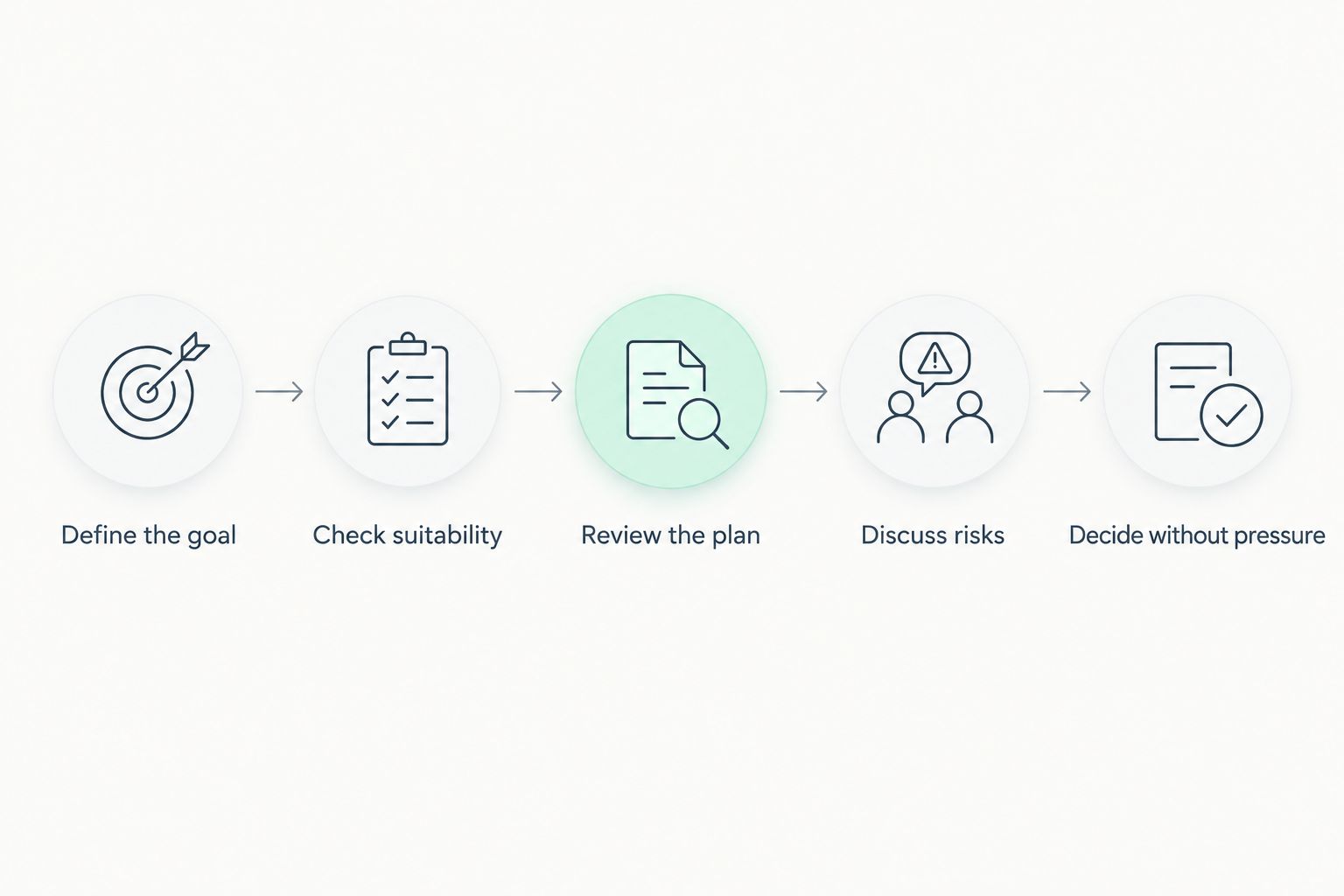
Use this sequence to assess a proposed treatment in 2026. The goal is a clear decision, not a commitment to proceed.
- Define the goal. Point to the exact area and describe the change you want. Explain whether your concern is size, shape, skin, or overall weight.
- Check suitability. Ask the clinician to distinguish treatable fat from loose skin or another cause of fullness. Review medical history and contraindications.
- Review the plan. Request the proposed treatment areas, sessions, expected limitations, and reassessment schedule in writing.
- Discuss risks. Ask about temporary effects, persistent symptoms, paradoxical adipose hyperplasia, and the response to each.
- Decide without pressure. Compare the expected benefit with doing nothing or seeking another clinical opinion. Leave without booking if the explanation remains unclear.
A useful explanation includes what the procedure cannot accomplish. If every concern receives the same recommendation, ask how the clinician ruled out other causes and options.
Oasisbeauty is best suited to Henderson clients seeking skin, body, and wellness treatments. Its medical aesthetics offering includes body contouring, but that category alone does not confirm CoolSculpting availability or suitability for you.
How long should you wait before judging results?
2 to 3 months is the FDA's general timeframe for the body to clear fat cells damaged by cryolipolysis. Your clinician should explain the assessment schedule for your treatment rather than promising a finished result immediately afterward.
Use consistent photographs if you track changes: similar lighting, posture, clothing, and camera position make comparison more useful. A different pose can exaggerate or hide a contour change.
Do not use an early lack of change as the sole reason to buy another session. First establish whether enough time has passed and whether further treatment is clinically appropriate.
Is liposuction better than CoolSculpting?
Liposuction is the more relevant discussion when you want surgical fat removal and accept the associated recovery and risks. CoolSculpting is the more relevant discussion when avoiding surgery matters more than achieving a larger contour change.
Neither choice is automatically better. A consultation with an appropriately qualified clinician should establish whether your goal requires fat removal, skin treatment, weight management, or no procedure.
Avoid treating nonsurgical as a synonym for risk-free or surgical as a guarantee of satisfaction. Both decisions require realistic expectations and informed consent.
Does CoolSculpting permanently remove fat?
CoolSculpting destroys targeted fat cells, but it does not guarantee that your body contour stays unchanged. Remaining fat cells can enlarge with weight gain, while aging and skin changes can affect the appearance of the area.
A durable biological effect and a permanently identical silhouette are different claims. Ask about both before deciding that the treatment is worthwhile.
FAQ
Is CoolSculpting worth it in 2026?
CoolSculpting is worth considering in 2026 for localized fat reduction when you accept modest, gradual results and the treatment risks. It is not a weight-loss treatment or a reliable answer to loose skin.
How much does CoolSculpting cost?
You need an individualized written quote to assess the financial commitment. Ask what treatment areas, applicator placements, sessions, follow-up, and additional care the proposal includes.
How long does CoolSculpting take to show results?
The FDA describes fat clearance after cryolipolysis as usually taking 2 to 3 months. Follow the clinician’s reassessment schedule rather than judging the outcome immediately after treatment.
Can CoolSculpting make fat bigger instead of smaller?
Yes, paradoxical adipose hyperplasia can make treated fat enlarge and become firm. The FDA states that it typically develops 2 to 5 months after treatment, does not resolve on its own, and may require surgery.
Is CoolSculpting better than liposuction?
CoolSculpting is better aligned with avoiding surgery; liposuction addresses surgical fat removal. The right choice depends on your anatomy, desired change, and acceptance of each procedure’s risks and recovery.
Does CoolSculpting tighten loose skin?
Do not choose CoolSculpting on the assumption that reducing fat will tighten loose skin. Ask a qualified clinician to assess skin laxity separately from the fat concern.
Does Oasisbeauty offer CoolSculpting in Henderson?
Oasisbeauty offers body contouring in Henderson, but confirm the specific treatment directly before booking. A body-contouring service description does not establish that CoolSculpting is offered.
One last thing
For your 2026 decision, ask this before discussing treatment: What part of my concern will this procedure leave unchanged? The answer often reveals whether you are considering the right category of care.
If the explanation does not separate fat, skin, and overall weight—or does not address complications—stop there. A clear reason not to treat is more valuable than a confident promise that does not match your goal.