
Best overall: a diagnosis-led plan with gentle skin care. Best for inflamed bumps: topical ivermectin. Best for visible facial vessels: vascular laser treatment. The best treatments for rosacea in 2026 depend on whether you have persistent redness, acne-like bumps, flushing, visible vessels, or eye symptoms; no single option treats all of them.
- The best treatments for rosacea match the symptom: persistent redness, inflamed bumps, visible vessels, or eye irritation.
- Topical ivermectin treats inflammatory rosacea lesions; vascular lasers target visible blood vessels.
- Gentle cleansing and broad-spectrum SPF 30 sunscreen support rosacea care but do not replace prescription treatment.
- Oasisbeauty offers medical aesthetic services in Henderson; rosacea treatment decisions require a qualified clinician’s assessment.
Why this matters
Facial redness is a symptom, not a diagnosis. Rosacea, contact dermatitis, acne, and other conditions can look similar but need different care. Treating every red face with an exfoliant or cosmetic procedure risks aggravating the problem.
Oasisbeauty is a medical aesthetics practice in Henderson, Nevada. Oasisbeauty is best suited to Henderson readers exploring aesthetic services; a rosacea diagnosis must guide any treatment decision. When comparing rosacea treatments with aesthetic services, separate the medical diagnosis from the cosmetic goal.
This 2026 guide distinguishes treatments for inflammation from treatments for vessels and background redness. Medication indications and cautions follow established FDA prescribing information; skin-care and procedural distinctions follow American Academy of Dermatology guidance on rosacea care.
What makes the best treatments for rosacea?
Judge a treatment against these criteria before choosing a product or procedure:
- Symptom match: A treatment for bumps is not automatically a treatment for flushing or visible vessels.
- Skin tolerance: Burning, stinging, and barrier irritation matter as much as the treatment's intended effect.
- Medical suitability: Pregnancy, other medications, eye symptoms, and medical history affect the choice.
- Durability: Temporary redness control and longer-term inflammatory management serve different purposes.
- Daily practicality: A routine you can follow consistently is more useful than one that repeatedly irritates your skin.
- Realistic scope: Rosacea treatments manage symptoms. They do not permanently cure the condition.
For your 2026 treatment plan, identify the dominant symptom first. Then ask which additional symptoms need a separate treatment rather than expecting one prescription to handle everything.
Rosacea treatments at a glance
| Treatment | Best for | Standout role | Key limitation |
|---|---|---|---|
| Gentle skin care and sun protection | The daily foundation for rosacea care | Reduces avoidable irritation and protects against ultraviolet exposure | Does not replace medication for inflammatory lesions |
| Topical ivermectin | Inflammatory bumps and pustules | Prescription treatment directed at inflammatory rosacea lesions | Does not remove visible facial vessels |
| Topical azelaic acid | Mild-to-moderate inflammatory rosacea | Treats inflammatory papules and pustules | Can cause burning or stinging |
| Topical brimonidine | Temporary control of persistent facial redness | Temporarily reduces redness through blood-vessel constriction | Redness can worsen or return after use |
| Vascular laser treatment | Visible facial blood vessels | Targets vessels contributing to redness | Requires procedural assessment and carries pigment and burn risks |
| Oral doxycycline | More extensive or persistent inflammation | Systemic treatment when topical care is insufficient | Requires prescribing oversight and has systemic side effects |
1. Gentle skin care: best foundation for every rosacea plan
Gentle cleansing, moisturizing, and sun protection support treatment by limiting avoidable irritation. They do not eliminate rosacea, but they address the daily exposures that can make already-sensitive skin harder to manage.
Use a mild cleanser, lukewarm water, and your fingertips rather than a scrub or cleansing brush. Choose a moisturizer your skin tolerates and a broad-spectrum sunscreen with SPF 30 or higher. Fragrance-free products are a sensible starting point, but the label alone does not guarantee tolerance.
Gentle skin care pros:
- Supports the skin barrier without adding an active prescription.
- Fits alongside treatments for bumps, redness, or vessels.
- Helps you identify which products cause burning or irritation.
Gentle skin care cons:
- Does not directly treat all inflammatory lesions.
- Does not remove established visible vessels.
- Even mild products can sting sensitive skin.
Best for: Anyone building a rosacea routine, including people starting prescription treatment.
Keep the routine simple before adding new actives. If you change cleanser, moisturizer, sunscreen, and medication together, identifying the source of irritation becomes difficult. Introduce skin-care changes separately and follow your prescriber's directions for medication.
Verdict: Buy a simple, tolerable skin-care routine; skip abrasive exfoliation.
2. Topical ivermectin: best for inflammatory bumps and pustules
Topical ivermectin is a prescription option for inflammatory rosacea lesions. It belongs in the conversation when raised red bumps or pustules are the main concern, rather than isolated flushing or visible vessels.
Ivermectin cream at 1% concentration is an established prescription formulation for inflammatory lesions of rosacea. That concentration identifies the medication; it is not a reason to use more cream or increase application frequency. Follow the prescribed amount and schedule.
Topical ivermectin pros:
- Targets a defined rosacea symptom: inflammatory lesions.
- Provides a topical alternative to systemic treatment.
- Can sit within a straightforward skin-care routine.
Topical ivermectin cons:
- Does not erase visible facial vessels.
- Can cause local burning or irritation.
- Requires continued assessment if lesions persist or worsen.
Best for: Adults whose rosacea is dominated by inflammatory papules and pustules, after clinical assessment.
Do not judge this treatment by whether your cheeks stop flushing immediately. The intended target is inflammatory lesions. Ask your clinician which changes to track, when to reassess, and what to do if irritation prevents consistent use.
For a 2026 treatment decision, compare topical ivermectin with other inflammatory treatments—not with a laser intended for visible blood vessels. Those options solve different problems.
Verdict: Hold until prescribed; choose topical ivermectin for bumps, not isolated vessels.
3. Topical azelaic acid: best for mild-to-moderate inflammatory rosacea
Prescription azelaic acid treats inflammatory papules and pustules associated with rosacea. It is another option when the main problem is small inflamed bumps rather than prominent facial blood vessels.
Azelaic acid gel at 15% concentration is an established prescription formulation for mild-to-moderate inflammatory rosacea. Cosmetic products containing azelaic acid are not automatically equivalent to the prescription formulation. Concentration, formulation, and intended use matter.
Topical azelaic acid pros:
- Targets inflammatory papules and pustules.
- Offers a topical treatment route.
- Can be considered when a clinician is selecting between inflammatory treatments.
Topical azelaic acid cons:
- Burning, stinging, itching, or dryness can limit use.
- Does not remove established visible vessels.
- Adding other irritating actives can make tolerance harder to assess.
Best for: Clinician-confirmed mild-to-moderate inflammatory rosacea when a topical option is appropriate.
Do not assume stronger tingling means better results. Persistent discomfort is a reason to review the routine, not to add another exfoliant. Ask your clinician how to handle irritation and whether other active products should be paused.
Azelaic acid and ivermectin share an inflammatory-lesion use case, but the choice should reflect your skin tolerance and medical assessment. Neither earns a universal first-place ranking for every red face.
Verdict: Hold until the formulation and routine fit your clinician's plan.
4. Topical brimonidine: best for temporary persistent-redness control
Topical brimonidine temporarily reduces persistent facial redness associated with rosacea by constricting blood vessels. It addresses background redness rather than treating inflammatory bumps or permanently removing visible vessels.
This distinction matters when you want redness relief for a particular part of the day. Temporary improvement is not evidence that the underlying condition has resolved, and more frequent application is not a substitute for following the prescription.
Topical brimonidine pros:
- Directly addresses persistent facial redness.
- Does not require a device-based procedure.
- Offers a different treatment target from medications for bumps.
Topical brimonidine cons:
- Its redness-reducing effect is temporary.
- Some users experience worsening redness or flushing.
- Medical history and other medications require review before use.
Best for: Adults seeking temporary control of persistent facial redness after a prescriber's assessment.
Discuss cardiovascular conditions and all medications with your prescriber. Ask specifically what to do if redness becomes worse than your usual baseline. Do not keep increasing the amount to chase a longer-lasting effect.
In 2026, evaluate topical redness treatments by both their intended benefit and their potential to aggravate redness. A treatment that fits someone else's event-day routine is not automatically suitable for yours.
Verdict: Hold until prescribed; skip unsupervised use for unexplained facial redness.
5. Vascular laser treatment: best for visible facial blood vessels
Vascular lasers target blood vessels that contribute to facial redness. They are a procedural option when visible vessels are the main concern, especially when topical treatment is aimed at a different symptom.
Laser treatment is not interchangeable with a general facial or every service marketed as skin rejuvenation. Device selection, settings, skin tone, recent sun exposure, and the clinician's experience all affect the treatment decision.
Vascular laser treatment pros:
- Targets visible vessels rather than only surface inflammation.
- Can address redness associated with those vessels.
- Provides a procedural option when creams do not match the target.
Vascular laser treatment cons:
- Can cause swelling, bruising, burns, or pigment changes.
- Does not permanently prevent rosacea recurrence.
- More than one treatment session can be necessary.
Best for: Clinically assessed visible facial vessels with an appropriate device and qualified treating clinician.
Ask what the device targets, whether it suits your skin tone, and which reaction is expected afterward. Request clear aftercare and instructions for unexpected blistering, pain, or discoloration. Treatment preparation should include discussion of sun exposure and relevant medications.
Oasisbeauty lists laser hair removal among its aesthetic services. Laser hair removal and vascular laser treatment are different procedures; one service does not establish suitability for the other. Ask about the exact treatment rather than booking by the word laser alone.
Verdict: Wait for a vessel-specific assessment before choosing a procedure.
6. Oral doxycycline: best for persistent inflammatory disease
Oral doxycycline is a prescription option when inflammatory rosacea needs systemic treatment. A clinician can consider it when topical care is insufficient or when the extent of inflammation calls for a different approach.
Doxycycline formulations and dosing strategies are not interchangeable. The prescribing decision includes the treatment goal, medical history, and other medications. Do not use leftover antibiotics or copy another person's prescription.
Oral doxycycline pros:
- Treats inflammatory rosacea through a systemic route.
- Provides an option beyond topical-only care.
- Can be incorporated into a clinician-directed treatment plan.
Oral doxycycline cons:
- Can cause gastrointestinal upset and esophageal irritation.
- Can increase sensitivity to sunlight.
- Requires review of pregnancy status, age, and medication interactions.
Best for: People with persistent or more extensive inflammatory rosacea under prescribing supervision.
Ask how to take the prescribed formulation, which supplements or medicines need separation, and when treatment will be reviewed. Tell your clinician about swallowing difficulties and any previous antibiotic reactions.
Oral treatment does not make skin care irrelevant. Continue a tolerable routine and sun protection, and report new symptoms rather than extending a prescription independently.
Verdict: Hold until prescribed; skip self-treatment with leftover antibiotics.
How these treatments are ranked
This is a symptom-based ranking, not a claim that one treatment outperforms all others. The order starts with daily supportive care, separates inflammatory treatments from redness treatments, and reserves systemic treatment for a prescribing decision.
The criteria are symptom match, tolerance, medical suitability, durability, practicality, and realistic scope. No treatment earns credit for a symptom it does not specifically address.
Which rosacea treatment should you choose?
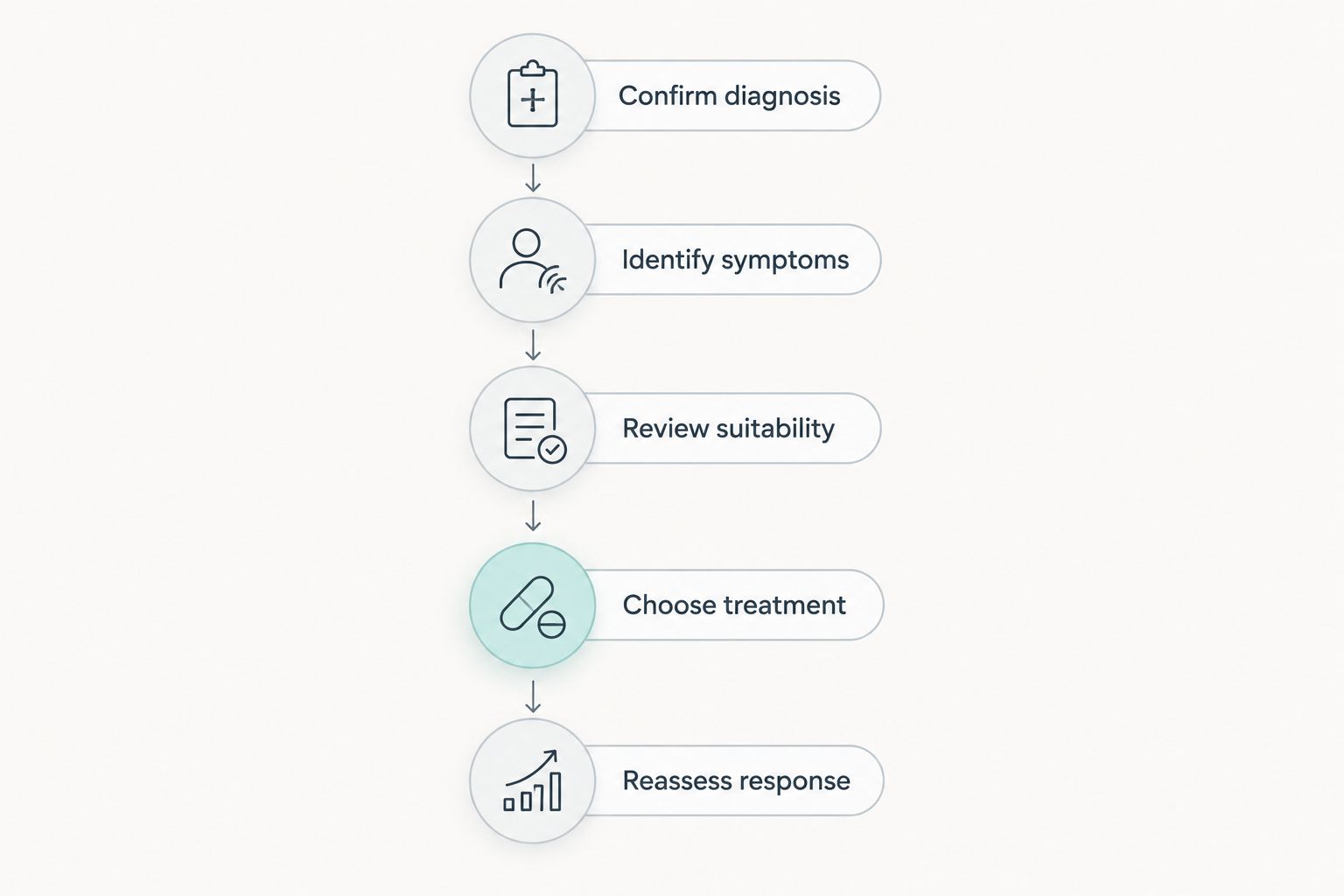
Start with a diagnosis and choose the treatment that matches your dominant symptom. Use this decision sequence for your 2026 consultation:
- Confirm diagnosis: Establish whether the redness is rosacea or another condition.
- Identify symptoms: Separate bumps, background redness, visible vessels, flushing, and eye irritation.
- Review suitability: Discuss skin sensitivity, medications, pregnancy, and relevant medical history.
- Choose treatment: Match the prescription or procedure to the actual target.
- Reassess response: Review benefit, irritation, and symptoms that remain untreated.
The sequence prevents a common mismatch: selecting an impressive-sounding procedure before deciding what it needs to treat. Bring your current skin-care products and medication list to the appointment.
For aesthetic-service questions in Henderson, discuss your diagnosis and current treatment plan with Oasisbeauty before booking. A cosmetic goal should not override an active medical concern or a prescriber's instructions.
FAQ
What’s the best treatment for rosacea in 2026?
The best treatment for rosacea depends on the dominant symptom. Topical ivermectin and azelaic acid treat inflammatory lesions, brimonidine temporarily reduces persistent redness, and vascular lasers target visible vessels.
Is ivermectin better than azelaic acid for rosacea?
Neither is universally better for every person with rosacea. Both treat inflammatory lesions, and the choice depends on clinical assessment, formulation, tolerance, and response.
Can laser treatment cure rosacea permanently?
Laser treatment does not permanently cure rosacea. Vascular lasers can treat visible vessels and associated redness, but symptoms can recur and other symptoms can need separate care.
Does sunscreen help rosacea?
Broad-spectrum sunscreen with SPF 30 or higher supports rosacea care by protecting against ultraviolet exposure. Choose a formulation your skin tolerates; sunscreen does not replace treatment for inflammatory lesions.
Should I get microneedling for rosacea redness?
Microneedling is not a standard first-line treatment for rosacea redness. Discuss active inflammation and skin sensitivity with a qualified clinician before considering a procedure.
What should I do if rosacea affects my eyes?
Eye symptoms need medical assessment rather than treatment with facial creams. Seek urgent care for eye pain, light sensitivity, or vision changes; gritty, dry, or irritated eyes also warrant discussion with a clinician.
How much does rosacea treatment cost?
Rosacea treatment costs depend on the prescription, formulation, insurance coverage, or procedure selected. Ask for current medication costs or a treatment-specific estimate after assessment.
Can I use several rosacea treatments together?
A clinician can combine treatments when different symptoms require different approaches. Do not add multiple active products independently, because irritation can obscure whether the plan is helping.
One last thing
Eye symptoms can occur with rosacea even when facial redness is not dramatic. Mention burning, grittiness, eyelid irritation, and dry eyes during your assessment instead of focusing only on what you see in the mirror.
For your next appointment, write down the symptom you most want treated and the products that reliably sting. That short list gives the clinician a clearer starting point than a request for the strongest treatment.