
Instead of paying for injections with a benefits card and sorting out eligibility later, verify the treatment’s purpose, collect supporting records, and follow your account’s payment rules before you use HSA FSA for Botox. Cosmetic Botox and fillers generally do not qualify for tax-free HSA or FSA spending; qualifying medical treatment follows a different path.
- Before you use HSA FSA for Botox, establish medical eligibility; cosmetic wrinkle treatment generally does not qualify.
- A prescription or medical necessity letter does not automatically make cosmetic injections eligible.
- HSA owners retain supporting records; health FSA claims require plan substantiation.
- Oasisbeauty offers cosmetic injectable care in Henderson; benefits eligibility depends on the treatment and applicable rules.
Why this matters
A benefits card processing successfully does not establish that an expense qualifies. The tax treatment depends on what the procedure treats, not whether a licensed clinician performs it or whether a clinic accepts the card.
For your 2026 planning, separate the appointment decision from the payment decision. Oasisbeauty offers Botox and fillers in Henderson, Nevada, but a cosmetic service does not become a qualified medical expense because a med spa provides it.
Oasisbeauty is best suited to Henderson clients seeking cosmetic injectable care, not a determination of tax eligibility. Discuss the clinical purpose with the treating clinician and account requirements with the appropriate benefits administrator or tax adviser.
The federal starting points are IRS Publication 502 for medical-expense definitions and IRS Publication 969 for HSA and health FSA rules. Use the current guidance when reviewing a 2026 expense rather than relying on an advertisement promising tax-free cosmetic treatment.
Before you start
- Identify your account. Confirm whether you have an HSA or a health FSA, who administers it, and where its expense and claim instructions appear. Their recordkeeping and reimbursement processes differ.
- Gather the clinical facts. Have the proposed treatment, its purpose, the treating provider’s information, and any existing diagnosis or treatment recommendation. Ask clinical questions before requesting benefits paperwork.
- Check the eligibility trap. A prescription, diagnosis, or letter of medical necessity does not override the exclusion for cosmetic procedures. Also verify timing: an HSA generally cannot reimburse an expense incurred before the HSA was established.
Do not schedule an injection solely because you expect reimbursement. First establish whether the proposed care treats a qualifying medical condition or simply changes appearance.
Establish the treatment’s eligibility
Treatment-purpose review
- Describe the actual goal. Tell the treating clinician whether you want an appearance change or evaluation of a medical symptom. Do not relabel wrinkle reduction as medical treatment to obtain reimbursement.
- Ask what condition the treatment addresses. Botulinum toxin has medical uses, including treatment for certain migraine and muscle disorders. A medical use still requires an appropriate clinical assessment; the treatment name alone proves nothing.
- Apply the cosmetic-procedure rule. IRS guidance generally excludes procedures directed at improving appearance that do not meaningfully promote proper bodily function or prevent or treat illness or disease.
- Evaluate any exception on its facts. Cosmetic surgery can qualify when necessary to improve a deformity arising from a congenital abnormality, an accident or trauma, or a disfiguring disease. Do not assume a filler appointment meets that exception.
Expected result: You can state the proposed treatment’s medical or cosmetic purpose without relying on the brand name, the payment method, or a generic eligibility list.
For Botox used to soften facial lines, the answer is generally no. For Botox prescribed to treat a qualifying medical condition, HSA or health FSA treatment can differ. That distinction does not establish that a particular clinic provides the medical service you need.
Dermal fillers require the same discipline. Adding volume for an appearance preference is generally cosmetic. A reconstructive purpose requires its own clinical facts and supporting records; it is not a blanket exception for injectable treatments.
Eligibility comparison
| Treatment or account | Best for | Benefit | Limitation |
|---|---|---|---|
| Cosmetic Botox | Appearance-focused treatment goals | Addresses cosmetic concerns | Generally not a qualified HSA or health FSA expense |
| Medically indicated botulinum toxin treatment | A qualifying condition assessed by a clinician | Can qualify when it meets medical-expense rules | A prescription alone does not establish eligibility |
| Cosmetic dermal fillers | Appearance-focused volume changes | Addresses cosmetic volume concerns | Generally excluded from tax-free reimbursement |
| Reconstructive treatment | A qualifying deformity-related medical need | Can fall within a recognized exception | Eligibility depends on the specific facts |
| HSA payment or reimbursement | Eligible expenses supported by retained records | Supports direct payment or later reimbursement | The account owner remains responsible for tax treatment |
| Health FSA reimbursement | Eligible expenses within the plan’s coverage rules | Uses employer-plan reimbursement procedures | Requires substantiation and compliance with plan deadlines |
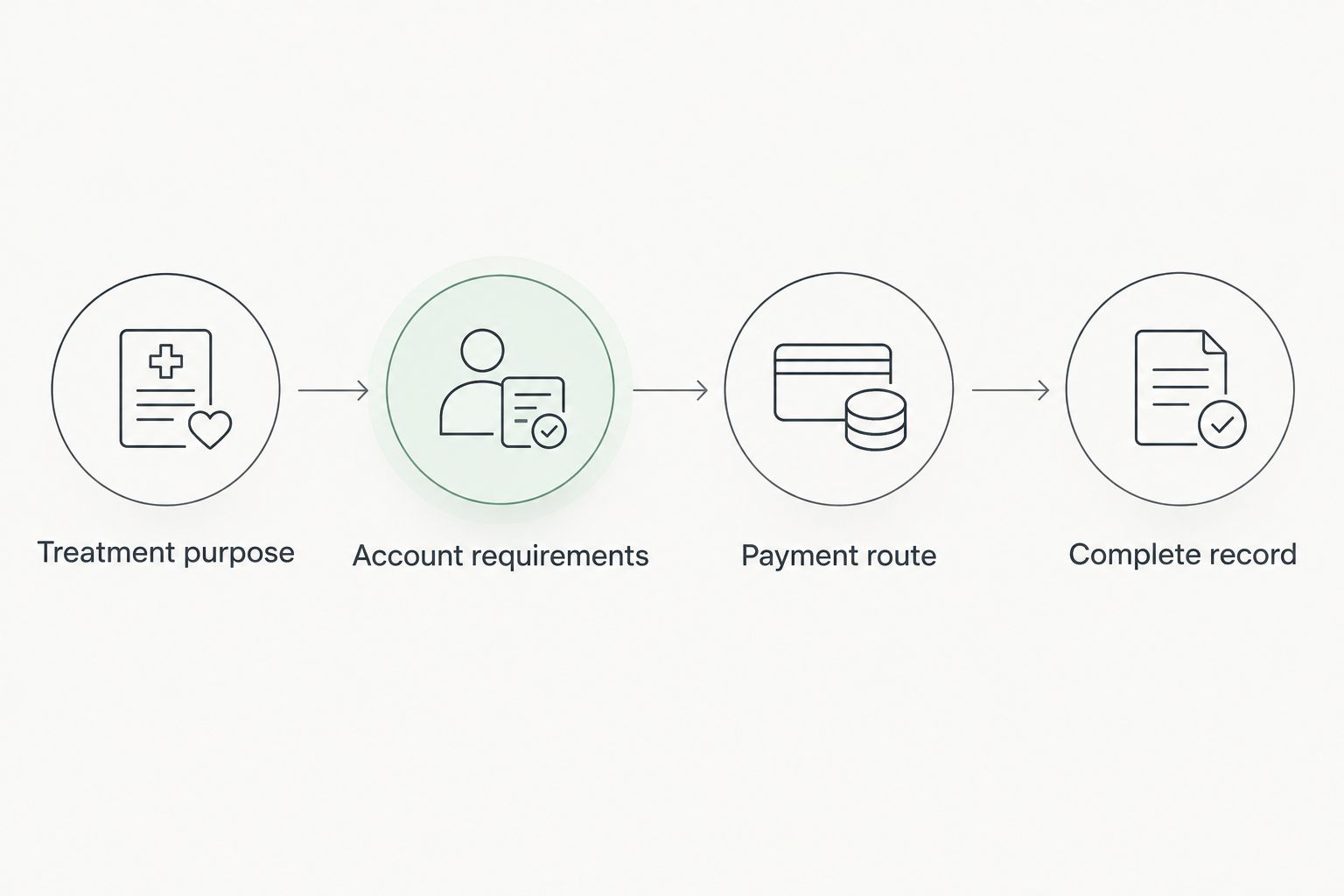
Choose treatment for its clinical purpose, then determine the lawful payment route. Reversing that order encourages unsuitable appointments and unsupported claims.
Confirm the account’s requirements
Account and documentation setup
- Find the applicable instructions. Open your account administrator’s expense guidance and, for a health FSA, your employer’s plan information. Locate the rules for documentation, coverage dates, and claim submission.
- Ask a specific eligibility question. Describe the treatment and medical purpose accurately. Ask what documentation supports that expense rather than asking only whether Botox appears on an eligible-expense list.
- Request appropriate records. Ask the treating provider for an itemized statement identifying the patient, provider, service date, treatment, and amount. If additional clinical documentation is required, request factual records supporting the medical purpose.
- Separate mixed services. If an appointment includes both qualifying medical treatment and cosmetic services, request separate line items. Do not submit the entire visit as eligible because one part qualifies.
- Check other reimbursement. Establish what insurance or another benefit has paid. You cannot receive tax-free reimbursement twice for the same expense.
Expected result: You know the account’s requirements and can identify the eligible portion of the expense, if any, before submitting payment or a claim.
Keep 3 record categories together: the clinical basis, the itemized expense record, and the reimbursement history. This organization connects why treatment occurred with what you paid and whether another source already covered it.
For a health FSA, the administrator reviews claims under the plan’s substantiation requirements. For an HSA, a custodian processing a distribution does not certify that the expense qualifies under federal tax rules. Do not confuse transaction processing with eligibility review.
For a 2026 appointment, confirm your actual coverage period and applicable deadlines. Do not assume the appointment date, invoice date, card charge date, and reimbursement date are interchangeable.
Complete payment and preserve the records
Payment and reimbursement workflow
- Select the correct route. For an eligible expense, follow your account’s direct-payment or reimbursement process. If eligibility remains unresolved, do not treat benefits-card acceptance as permission to proceed tax-free.
- Enter the actual expense details. Use the service date, provider, patient, description, and amount shown on the documentation. Follow the field names displayed by your administrator; account interfaces differ.
- Attach the required substantiation. A health FSA generally needs supporting third-party documentation. For an HSA, retain the records supporting the distribution even if the custodian does not request them during payment.
- Review the outcome. Check whether an FSA claim was approved, denied, or returned for more information. For an HSA reimbursement, confirm that your records match the distribution and that the expense was not reimbursed elsewhere.
- File the complete record. Preserve the clinical support, itemized statement, proof of payment, and relevant claim correspondence together.
Expected result: Each tax-free payment has a documented qualifying expense behind it, rather than only a card transaction.
For cosmetic treatment, use a non-benefits payment method rather than submitting an unsupported medical claim. Oasisbeauty’s cosmetic injectable services should be evaluated on your treatment goals, not an assumed tax advantage.
Reimburse an eligible expense you already paid
You can also review a qualifying expense after paying out of pocket. This is a reimbursement workflow, not a way to convert an ineligible cosmetic procedure into medical care.
For an HSA, federal rules do not impose a deadline for reimbursing a qualifying expense incurred after the HSA was established. You must retain records showing that the expense qualified, was not reimbursed elsewhere, and was not taken as an itemized deduction.
For a health FSA, reimbursement follows the plan’s coverage and claim-submission rules. An old receipt does not create eligibility outside those rules.
Use this sequence:
- Identify the service date and applicable account coverage.
- Confirm that the expense meets the medical-purpose test.
- Subtract amounts already covered by insurance or another reimbursement source.
- Follow the account’s reimbursement instructions and retain the completed record.
Best for: A documented, eligible medical expense you initially paid yourself. Limitation: Later reimbursement does not fix a cosmetic exclusion, missing coverage, or duplicate payment.
When reviewing earlier receipts during 2026, evaluate each expense separately. Do not group unrelated appointments under one medical necessity letter or assume that a later diagnosis establishes the purpose of an earlier cosmetic treatment.
Troubleshooting
The benefits card worked, but the expense was cosmetic
Stop treating card acceptance as approval. Contact the administrator or custodian about the account-specific correction process and keep the correspondence. HSA nonqualified distributions generally create taxable income and can trigger an additional 20% tax; exceptions to the additional tax include distributions after age 65, disability, or death.
The claim was denied despite a prescription
Ask for the denial reason and supporting-document requirements. A prescription does not automatically overcome the cosmetic exclusion. Appeal only when the actual clinical facts and records support eligibility.
The receipt names Botox but does not explain the service
Request an accurate itemized statement and any required supporting clinical documentation. Do not ask the provider to change the treatment description to obtain approval. The records should describe what happened, not what would make a claim easier.
Insurance paid part of the appointment
Reconcile the insurer’s payment with the provider’s bill before requesting reimbursement. Submit only the otherwise eligible amount you remain responsible for, and preserve the explanation of benefits when applicable.
Medical and cosmetic injections appear on one bill
Ask for separate line items tied to the actual services. A combined appointment does not make every injection eligible. If the provider cannot support the distinction, do not estimate an eligible portion yourself.
Customize your workflow
Build your 2026 treatment plan around separate clinical and administrative questions. Your clinician assesses whether treatment is appropriate; your benefits process addresses documentation and reimbursement. Neither replaces the other.
For recurring qualifying medical treatment, create a record folder for each service date. Reuse the organization method, not outdated clinical conclusions or a previous claim approval. A prior approval does not establish eligibility for a different procedure or cosmetic add-on.
For appearance-focused care, discuss treatment goals with Oasisbeauty without assuming an HSA or FSA subsidy. For symptoms requiring medical evaluation, start with an appropriate treating clinician rather than selecting a cosmetic procedure first.
The useful next step is a purpose-specific consultation, not a benefits-card test transaction. Bring your questions about the treatment’s intended use and request documentation only for facts the provider can support.
FAQ
Can I use HSA FSA for Botox in 2026?
You generally cannot use tax-free HSA or health FSA funds for cosmetic Botox. Treatment for a qualifying medical condition can qualify when the expense meets federal rules and applicable account requirements.
Does a letter of medical necessity make cosmetic Botox eligible?
No. A letter supports the clinical facts but does not override the cosmetic-procedure exclusion. Eligibility depends on the actual purpose and circumstances of treatment.
Can I use my HSA or FSA for dermal fillers?
Cosmetic dermal fillers generally do not qualify. Treatment meeting a recognized reconstructive exception requires a fact-specific assessment and supporting documentation.
Does an accepted HSA card mean my injections qualify?
No. Card acceptance confirms transaction processing, not qualified medical-expense status. HSA owners remain responsible for substantiating tax-free distributions.
Can I reimburse myself after paying for eligible Botox?
An HSA can reimburse a qualifying expense incurred after the account was established if you retain the required records and avoid duplicate reimbursement. A health FSA follows its plan’s coverage and claim-submission rules.
What happens if I accidentally pay for cosmetic Botox with benefits funds?
Contact the account administrator or custodian about correcting the transaction. Nonqualified HSA distributions can create income tax and an additional tax; health FSA corrections follow the plan’s procedures.
Can Oasisbeauty tell me whether my tax-free claim will be accepted?
Oasisbeauty’s treatment information does not establish your account’s tax treatment or claim outcome. Discuss clinical facts with the treating provider and reimbursement requirements with your administrator or tax adviser.
One last thing
The same injection name can describe an eligible medical expense or an excluded cosmetic expense. That is why a generic receipt, prescription, or approved card charge cannot answer the whole question. Before your 2026 appointment, write down the treatment’s purpose in plain language; if the purpose is appearance alone, do not budget for tax-free reimbursement.