The best chemical peel for hyperpigmentation starts with a diagnosis: glycolic acid is a practical option for superficial discoloration, salicylic acid fits acne-related marks, and lactic acid fits dryness-prone skin. This 2026 guide compares five peel types by the problem they address—not by how strongly they make your skin peel.
- The best chemical peel for hyperpigmentation depends on pigment depth, active acne, skin sensitivity, and diagnosis.
- Glycolic acid peels suit superficial discoloration; salicylic acid peels suit acne-related dark marks.
- Mandelic and lactic acid deserve discussion when treatment tolerance is a priority.
- Oasisbeauty is a local option for Henderson readers seeking cosmetic and aesthetic care; ask about treatment suitability.
Why this matters
Dark spots are a symptom, not a single diagnosis. Acne-related post-inflammatory hyperpigmentation, sun-induced spots, and melasma need different treatment decisions; an unidentified or changing lesion needs medical evaluation rather than exfoliation.
A peel removes or exfoliates outer skin layers through a controlled chemical injury. That process can improve some superficial discoloration, but inflammation can also produce additional pigmentation—particularly in skin prone to post-inflammatory hyperpigmentation.
The right peel is the one that addresses your pigment without creating a new inflammatory problem. Stronger does not automatically mean better, and visible shedding does not prove that treatment worked.
For local cosmetic and aesthetic care, Oasisbeauty serves clients in Henderson, Nevada. When discussing chemical peel options, start with your diagnosis, current skincare, and history of dark marks after irritation.
What makes the best chemical peel for hyperpigmentation
Use these criteria to compare recommendations in 2026. The acid name alone does not tell you how a treatment will behave: formulation, concentration, application, and your skin condition all matter.
- Correct diagnosis: The provider distinguishes melasma, acne marks, and sun-related discoloration before recommending treatment.
- Pigment depth: Superficial pigmentation is a different target from pigment located deeper in the skin.
- Inflammation control: Active acne, dermatitis, or an impaired skin barrier changes the treatment plan.
- Skin-tone experience: The provider accounts for your tendency to develop pigmentation after injury—not just your visible complexion.
- Recovery requirements: You understand the expected reaction, aftercare, and symptoms that require a call.
- Maintenance plan: Sun protection and appropriate topical care support results between treatments.
Ask what makes a particular peel suitable for you. A useful answer explains the diagnosis and risk trade-off; it does not stop at a treatment name.
Chemical peels at a glance
These rankings identify distinct consultation priorities. They do not establish that one acid outperforms every other acid for every patient.
| Peel type | Best for | Standout characteristic | Key limitation |
|---|---|---|---|
| Glycolic acid | Superficial discoloration with rough texture | Alpha hydroxy acid used for surface exfoliation | Irritation can aggravate pigmentation |
| Salicylic acid | Dark marks alongside acne and oily skin | Oil-soluble beta hydroxy acid | Dryness and irritation require attention |
| Mandelic acid | Sensitivity-conscious treatment planning | Larger molecular structure than glycolic acid | Gentle positioning does not guarantee tolerance |
| Lactic acid | Superficial uneven tone with dryness concerns | Alpha hydroxy acid with humectant properties | Still capable of stinging and barrier irritation |
| Trichloroacetic acid | Selected sun-related spots under clinician supervision | Treatment depth varies with technique and formulation | Greater injury requires more careful risk assessment |
1. Glycolic acid: best for superficial pigment and rough texture
Glycolic acid is an alpha hydroxy acid used in superficial chemical peels. It exfoliates the skin surface, making it a relevant discussion when uneven tone appears alongside roughness or surface-level discoloration.
Glycolic acid is the default consultation starting point here—not an automatic prescription. A clinician must determine whether the discoloration is an appropriate target and whether your skin can tolerate treatment.
A glycolic peel also differs from a daily glycolic skincare product. Do not combine the two on your own or treat a professional procedure as permission to intensify home exfoliation.
Glycolic acid pros:
- Addresses surface exfoliation and texture in the same treatment discussion.
- Has an established role in superficial chemical peeling.
- Offers an option for a clinician-directed pigmentation plan.
Glycolic acid cons:
- Stinging, redness, and irritation can occur.
- Excessive irritation can trigger or worsen post-inflammatory pigmentation.
- A superficial peel does not reliably address deeper pigment.
Best for: Readers whose clinician identifies superficial discoloration with texture changes and an adequately healthy skin barrier.
Ask how the provider will control exposure and recognize an excessive reaction. Your history of irritation matters more than choosing the strongest formulation.
Verdict: Hold until the pigment diagnosis and skin tolerance support glycolic acid.
2. Salicylic acid: best for dark marks alongside active acne
Salicylic acid is an oil-soluble beta hydroxy acid used in acne care and chemical peeling. Its relevance increases when acne and clogged pores continue to produce new dark marks.
Treating existing pigment without managing new breakouts leaves the underlying cycle active. A salicylic peel belongs in an acne plan, not in place of one.
Salicylic acid is the most relevant option on this list when acne is part of the pigmentation problem. The provider still needs to assess skin condition, medications, and contraindications before choosing treatment.
Salicylic acid pros:
- Connects the peel discussion to acne rather than pigment alone.
- Fits oily, congestion-prone skin as a treatment consideration.
- Addresses exfoliation within a broader breakout-management plan.
Salicylic acid cons:
- Dryness, peeling, and irritation can follow treatment.
- Salicylate allergy requires disclosure before treatment.
- It does not replace medical care for persistent or severe acne.
Best for: Readers with acne-related post-inflammatory hyperpigmentation and ongoing oily-skin or congestion concerns.
Tell the provider about acne prescriptions and other exfoliating products. Do not stop prescribed treatment independently; ask the prescribing clinician how to coordinate it with a peel.
Verdict: Hold until acne activity and medication use are reviewed together.
3. Mandelic acid: best for sensitivity-conscious planning
Mandelic acid is an alpha hydroxy acid with a larger molecular structure than glycolic acid. It is commonly discussed when treatment tolerance is a priority in a superficial exfoliation plan.
That distinction is useful, but it is not a safety guarantee. A mandelic peel can still irritate skin, and the complete formulation matters alongside the named acid.
Choose a sensitivity-focused assessment before choosing a supposedly gentle peel. Skin that burns with routine products needs evaluation, not simply a different exfoliant.
Mandelic acid pros:
- Provides an alternative acid to discuss when glycolic treatment raises tolerance concerns.
- Keeps the treatment goal focused on superficial exfoliation.
- Supports a conversation about cautious treatment selection.
Mandelic acid cons:
- The word gentle does not rule out irritation or pigment changes.
- Evidence does not justify calling it universally best for darker skin.
- More cautious treatment does not guarantee complete pigment clearance.
Best for: Readers prioritizing tolerance who have been assessed for active irritation and barrier problems.
Ask why mandelic acid suits your skin specifically. A recommendation based only on complexion overlooks prior reactions, current inflammation, and the cause of your pigmentation.
Verdict: Hold until sensitivity has been assessed; skip claims that mandelic acid is risk-free.
4. Lactic acid: best for uneven tone with dryness concerns
Lactic acid is an alpha hydroxy acid with exfoliating and humectant properties. That combination makes it relevant when superficial uneven tone occurs alongside dryness concerns.
A lactic acid peel is not a moisturizer, however. Dry, cracked, or inflamed skin needs its barrier addressed before a clinician decides whether chemical exfoliation is appropriate.
Lactic acid belongs in the discussion when dryness changes the treatment trade-off. It should not be selected on the assumption that every lactic formulation is mild.
Lactic acid pros:
- Offers surface exfoliation with an ingredient known for humectant properties.
- Gives dryness-prone readers a distinct option to discuss.
- Keeps attention on skin condition as well as pigment.
Lactic acid cons:
- Stinging and irritation remain possible.
- A damaged barrier can make exfoliation inappropriate.
- Superficial treatment does not resolve every cause of discoloration.
Best for: Readers with superficial uneven tone and dryness concerns whose clinician confirms that their skin is ready for exfoliation.
Bring your cleanser, moisturizer, and active-product list to the consultation. The aftercare routine should be clear before treatment, particularly if your skin already feels tight or uncomfortable.
Verdict: Hold until dryness is distinguished from active barrier damage.
5. Trichloroacetic acid: best for selected sun-related spots
Trichloroacetic acid, usually shortened to TCA, is used for chemical peels of different depths. Concentration and application technique affect the injury, so the label TCA does not describe one standardized treatment.
For selected sun-related discoloration, a qualified clinician can assess whether TCA is appropriate. TCA is not the default choice for diffuse pigmentation, melasma, or an unidentified dark spot.
A suspicious lesion needs diagnosis before cosmetic treatment. Do not attempt to remove a changing spot with an acid purchased for home use.
TCA pros:
- Has an established role in clinician-performed chemical peeling.
- Offers a treatment option for selected superficial sun-related discoloration.
- Allows the clinician to discuss treatment depth explicitly.
TCA cons:
- Deeper injury brings greater recovery and complication concerns.
- Pigment changes, infection, and scarring are recognized peel risks.
- Extra caution is necessary for skin prone to post-inflammatory pigmentation.
Best for: Readers with diagnosed sun-related discoloration for whom a qualified clinician recommends TCA after assessing alternatives.
Ask who performs the procedure and who manages complications. A clear recovery plan matters more than a promise of dramatic peeling.
Verdict: Skip unsupervised TCA; hold professional treatment until diagnosis and risk assessment are complete.
How to choose without chasing the strongest peel
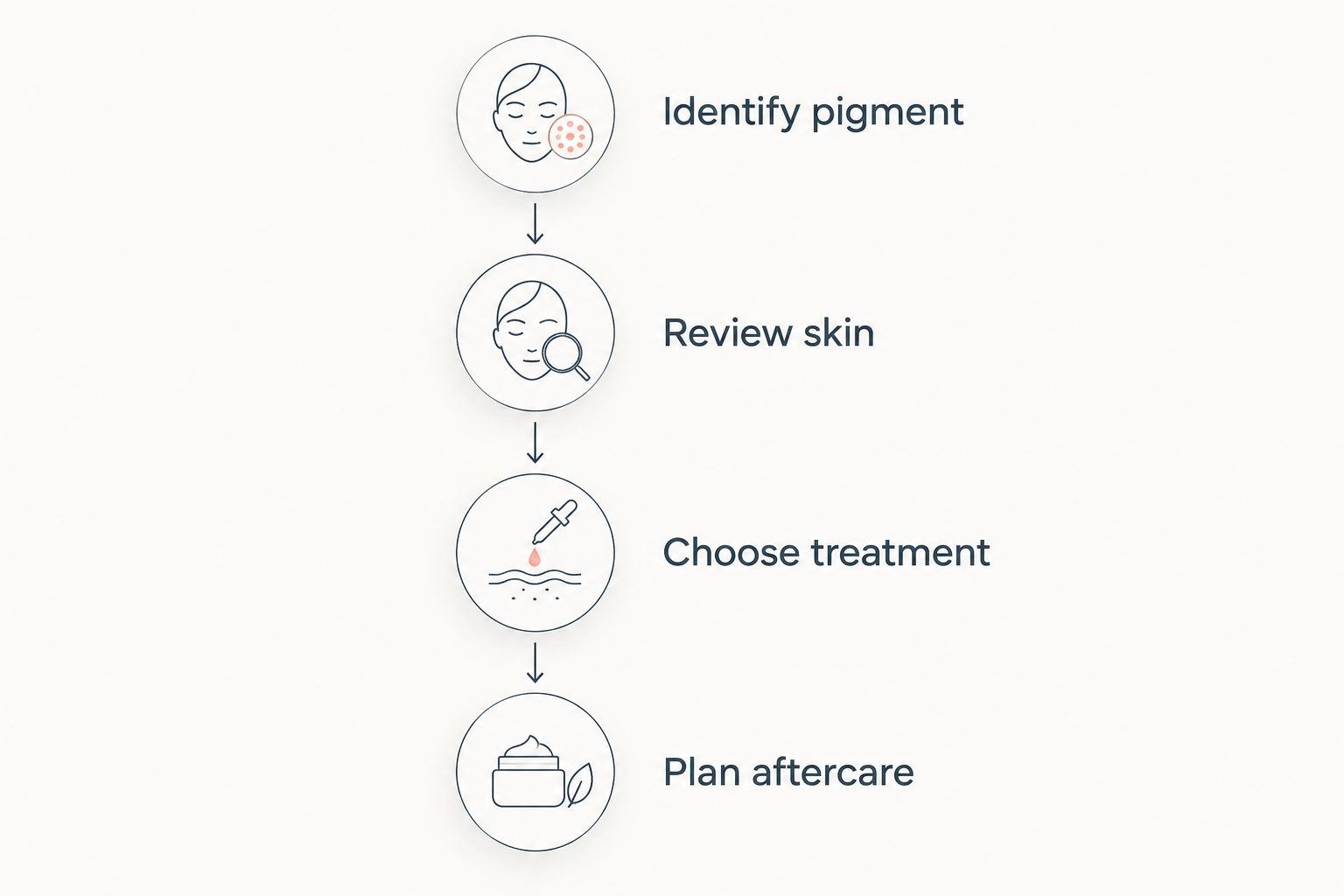
For your 2026 consultation, organize the decision around the cause of the marks. Start with the concern that continues to create pigment, then discuss how much treatment your skin can tolerate.
- Identify pigment: Have the provider distinguish acne marks, melasma, sun-related spots, and lesions requiring medical evaluation.
- Review skin: Disclose irritation, previous pigment changes, cold sores, allergies, medications, and recent procedures.
- Choose treatment: Ask why the proposed acid and treatment depth fit your diagnosis.
- Plan aftercare: Get instructions for cleansing, moisturizing, sun protection, and contacting the provider.
This sequence avoids selecting an acid first and trying to justify it afterward. It also gives you a practical way to compare recommendations from different providers.
Sun protection is part of the treatment
Chemical peeling does not remove the need to prevent further pigmentation. The American Academy of Dermatology recommends broad-spectrum, water-resistant sunscreen with SPF 30 or higher, reapplied every 2 hours outdoors and after swimming or sweating.
The FDA's consumer guidance on alpha hydroxy acids warns of increased sun sensitivity during use and for 1 week afterward. Follow your treating clinician's post-peel instructions, including any longer protection requirements.
For a 2026 treatment plan, discuss hats, shade, and your actual outdoor routine—not just which sunscreen you own. For melasma, ask about tinted sunscreen containing iron oxides, because visible light is relevant to pigment management.
Do not pick, scrub, or manually pull away peeling skin. Contact the treating provider about unexpected severe pain, blistering, spreading redness, or signs of infection rather than adding another active ingredient.
How these options were ranked
This 2026 ranking uses diagnosis fit, inflammation risk, skin tolerance, recovery demands, and maintenance needs. Each acid occupies a different use-case slot; no universal winner or head-to-head superiority claim is implied.
Glycolic acid leads as a discussion point for superficial pigment with texture concerns. Salicylic acid becomes more relevant with acne, mandelic acid with tolerance concerns, lactic acid with dryness, and TCA with selected clinician-assessed sun-related spots.
Which chemical peel should you choose?
If you are undecided, book an assessment rather than selecting an acid yourself. Ask whether a superficial glycolic peel fits your diagnosis, then change the discussion according to acne, sensitivity, dryness, or lesion type.
Oasisbeauty provides cosmetic and aesthetic care in Henderson. For chemical peel planning, ask which treatment options fit your skin and when dermatology evaluation should come first.
Discuss your skin concerns
Start with your pigmentation history, current skincare, and treatment goals.
FAQ
What’s the best chemical peel for hyperpigmentation in 2026?
The best chemical peel for hyperpigmentation depends on the diagnosis and your skin’s tolerance. Glycolic acid is a relevant discussion for superficial discoloration, while salicylic acid fits acne-related concerns; neither is universally best.
Is glycolic acid better than salicylic acid for dark spots?
Glycolic acid and salicylic acid serve different treatment priorities. Glycolic acid addresses surface exfoliation, while salicylic acid is particularly relevant when acne and oily skin contribute to new marks.
Which chemical peel is safest for darker skin?
No acid is automatically safest for every person with darker skin. Ask a provider experienced in treating your skin tone to assess your pigmentation history, inflammation risk, formulation, and treatment depth.
Can a chemical peel get rid of melasma permanently?
A chemical peel does not permanently cure melasma. Melasma can recur, and management requires attention to triggers, sun protection, and an individualized treatment plan.
Can I use a strong chemical peel at home for pigmentation?
Do not use a professional-strength chemical peel at home for pigmentation. Chemical burns, scarring, and pigment changes are recognized risks; a qualified clinician should assess treatment suitability.
How much does a chemical peel for dark spots cost?
Ask the provider for current treatment pricing after an assessment. Confirm what the proposed plan includes, including follow-up and any recommended skincare, before agreeing to treatment.
Can I get a peel if I still have acne?
Active acne does not automatically exclude every peel, but the acne needs assessment before treatment selection. A salicylic acid peel can be part of a clinician-directed plan, not a substitute for managing persistent breakouts.
Should I choose a peel or another aesthetic treatment?
Choose the treatment that fits the diagnosed cause of your discoloration. Oasisbeauty offers cosmetic and aesthetic care in Henderson; discuss your goals and whether medical evaluation is needed before selecting a procedure.
One last thing
The amount of skin you shed is not a score for pigment improvement. In 2026, judge your treatment plan by an accurate diagnosis, manageable recovery, and consistent follow-up—not by how dramatic the peeling looks.
Before consenting, ask one question: what is the plan if my pigmentation gets worse? A clear answer helps you evaluate the provider's risk management before your skin is treated.