
Best overall for localized under-chin fat: submental liposuction. Best nonsurgical option for suitable adults: deoxycholic acid injections. Best for substantial loose skin: a neck lift. This 2026 guide compares the best treatments for double chin by what actually needs correcting: fat, skin laxity, or both.
- The best treatments for double chin depend on whether fat, loose skin, or both cause the contour.
- Submental liposuction is the leading surgical choice for localized fat when skin elasticity is adequate.
- Deoxycholic acid injections treat under-chin fat without surgery but involve swelling and repeat treatment.
- A neck lift addresses substantial loose skin; energy-based tightening is not an equivalent substitute.
- Oasisbeauty serves Henderson clients seeking cosmetic and aesthetic care; confirm the proposed treatment fits your anatomy.
Why this matters
A double chin is a description, not a diagnosis. Under-chin fat, loose skin, neck muscle changes, and limited chin projection can produce similar-looking profiles, but they require different treatment plans.
Oasisbeauty is a med spa in Henderson, Nevada offering skin, body, and wellness treatments. If you start with a med-spa consultation, ask what is causing the contour before discussing a procedure. A cosmetic consultation is not a substitute for surgical evaluation when excess skin is the main concern.
The right double-chin treatment targets the tissue causing the fullness—not simply the treatment you prefer. Buying a fat-reduction procedure when loose skin dominates leaves the central problem unresolved.
What makes the best double-chin treatment?
Use these criteria to assess a double-chin treatment recommendation in 2026:
- Anatomical fit: Does the treatment address fat, skin laxity, muscle changes, or skeletal proportions?
- Extent of correction: Is the goal a modest refinement or a substantial change in neck contour?
- Skin response: Will the skin retract after fat reduction, or does excess skin need separate treatment?
- Treatment burden: Consider repeat visits, swelling, wound care, anesthesia, and restrictions—not just appointment length.
- Safety and suitability: Your clinician should review medical history, prior neck procedures, medications, and treatment-specific risks.
- Maintenance: Weight changes and aging continue after treatment. No procedure stops either process.
Bring front and side photographs to your consultation if they help explain your concern. Ask the clinician to distinguish the feature you dislike from the feature the proposed procedure can change.
Best double-chin treatments at a glance
| Treatment | Best for | Standout feature | Key limitation |
|---|---|---|---|
| Submental liposuction | Localized fat with adequate skin elasticity | Surgically removes targeted fat | Does not remove excess skin |
| Deoxycholic acid injections | Suitable adults avoiding surgery | Injectable treatment for submental fat | Swelling and repeat sessions; does not tighten loose skin |
| Neck lift | Substantial skin laxity and neck contour changes | Can address excess skin and selected underlying structures | Surgery, scars, and recovery |
| Energy-based skin tightening | Mild skin laxity | Treats laxity without skin-excision surgery | Device-dependent results; limited correction |
| Sustainable weight management | Fullness associated with overall excess body fat | Addresses overall weight rather than one area | Cannot selectively reduce under-chin fat |
These are problem-specific recommendations, not interchangeable alternatives. The highest-ranked option for fat is not the highest-ranked option for loose skin.
1. Submental liposuction: best double-chin treatment for localized fat
Submental liposuction removes fat beneath the chin through small incisions using a cannula. It is most relevant when excess fat drives the fullness and the skin has enough elasticity to adapt to the reduced volume.
Best for: Adults with localized under-chin fat who accept surgery and have an appropriate skin envelope.
Submental liposuction pros
- Directly removes the fat targeted during the procedure.
- Lets the surgeon shape the treated area rather than relying on a series of injections.
- Addresses a localized deposit that overall weight management does not necessarily resolve.
Submental liposuction cons
- Requires a surgical procedure, aftercare, and recovery.
- Does not remove excess skin or independently correct every neck contour problem.
- Carries risks including bleeding, infection, contour irregularities, and anesthesia-related complications.
Ask whether liposuction alone will leave visible skin laxity. The answer matters more than whether the incision is small. Your surgeon should also explain the planned anesthesia, postoperative support, activity restrictions, and follow-up.
Liposuction removes treated fat, but it does not prevent future weight gain or aging. Swelling also means the immediate postoperative contour is not the final result.
Verdict: Choose submental liposuction for localized fat when a qualified surgeon confirms that skin quality supports it.
2. Deoxycholic acid injections: best for avoiding surgery
Deoxycholic acid injections, marketed as Kybella in the United States, treat moderate to severe fullness associated with submental fat in adults. They disrupt fat-cell membranes in the treated area; they are not a treatment for excess skin.
Best for: Suitable adults with under-chin fat who prefer an injectable procedure and accept swelling and repeat visits.
Deoxycholic acid injection pros
- Treats submental fat without a surgical incision.
- Offers an FDA-approved injectable option for the specified adult indication.
- Allows treatment to be staged rather than performed as a surgical fat-removal procedure.
Deoxycholic acid injection cons
- Swelling, bruising, pain, numbness, and firmness can occur at the treatment site.
- Repeat sessions can create a substantial treatment burden.
- Risks include marginal mandibular nerve injury, difficulty swallowing, and tissue injury from improper injection.
The FDA-approved Kybella prescribing information permits up to 6 treatment sessions, spaced at least 1 month apart, with up to 50 injections per session. These are label limits, not a prediction of what you need. They explain why an injectable option is not automatically a quick or low-disruption option.
For a 2026 treatment decision, ask how the clinician will assess fat distribution, skin laxity, and relevant medical history. Previous surgery or treatment in the neck can affect the assessment.
Verdict: Choose deoxycholic acid injections when you are an appropriate candidate and avoiding surgery matters more than avoiding repeat swelling.
3. Neck lift: best for substantial loose skin
A neck lift is a surgical approach to excess neck skin and selected underlying contour problems. Depending on the surgical plan, it can include skin removal, fat management, and work on the platysma muscle.
Best for: Adults whose main concern is substantial skin laxity or a combination of loose skin and neck contour changes.
Neck lift pros
- Addresses excess skin that fat-reduction treatments leave behind.
- Allows a surgeon to plan correction across several contributing structures.
- Fits concerns that require more than a modest tightening effect.
Neck lift cons
- Requires surgery, incisions, and postoperative recovery.
- Carries risks including hematoma, infection, nerve injury, and scarring.
- Does not stop subsequent aging or guarantee a particular appearance.
Do not choose a neck lift solely because another treatment failed to sharpen your jawline. A surgeon first needs to determine whether the remaining concern comes from skin, muscle, fat, chin structure, or a combination.
Ask where incisions will sit and which anatomical features the proposed operation will address. A named procedure is not a complete surgical plan.
Verdict: Choose a neck-lift consultation when substantial loose skin—not just fat—is driving the double-chin appearance.
4. Energy-based skin tightening: best for mild laxity
Some radiofrequency and ultrasound treatments use energy to heat targeted tissue and stimulate a tightening response. Devices differ in treatment depth, indication, delivery method, and safety profile, so the category name alone does not establish what a procedure can do.
Best for: People with mild skin laxity who want nonsurgical treatment and accept a limited degree of correction.
Energy-based skin tightening pros
- Offers an option for selected cases of mild laxity without skin-excision surgery.
- Can focus on skin quality and tightening rather than fat removal alone.
- Provides an alternative discussion for people who do not want a surgical lift.
Energy-based skin tightening cons
- Does not reproduce the skin removal performed during a neck lift.
- Results and risks depend on the specific device, settings, and operator.
- Burns, pain, and other tissue injuries are possible; treatment is not risk-free.
Ask for the exact device name and its cleared indication. Also ask whether the procedure is noninvasive or involves needles or a device placed beneath the skin. Those distinctions change the risk discussion.
In 2026, judge a tightening recommendation by the specific treatment and your degree of laxity—not by a broad promise of a nonsurgical lift. Significant excess skin needs a surgical assessment if substantial correction is your goal.
Verdict: Consider energy-based tightening for mild laxity; skip it as a substitute for removing substantial excess skin.
5. Sustainable weight management: best when overall body fat contributes
Overall weight loss can reduce under-chin fullness when excess body fat contributes to it. Nutrition, physical activity, and medical weight-management care address overall health and weight, not a selectively targeted pocket beneath the chin.
Best for: People whose double-chin appearance accompanies overall excess body fat and who want to address weight first.
Sustainable weight management pros
- Addresses overall weight rather than treating one cosmetic area in isolation.
- Does not require a local cosmetic procedure.
- Helps establish a more stable baseline before considering contour treatment.
Sustainable weight management cons
- Cannot selectively remove under-chin fat.
- Does not correct limited chin projection or substantial excess skin.
- Does not guarantee that a genetically influenced fat distribution will disappear.
Do not pursue unnecessary weight loss simply to change your profile. If you are already at a suitable weight, a localized deposit or structural feature can remain despite further dieting.
Weight-loss medication is a medical decision based on eligibility and health needs, not a cosmetic shortcut for a small under-chin area. Discuss it with a qualified prescribing clinician.
Verdict: Prioritize sustainable weight management when overall excess body fat contributes; skip promises of targeted fat loss from chin exercises.
How these treatments are ranked
This 2026 ranking prioritizes anatomical fit, correction scope, treatment burden, and safety. It does not imply that every option has been compared head-to-head or that one procedure is best for every reader.
Oasisbeauty offers cosmetic and aesthetic care in Henderson. Treat any double-chin recommendation as an anatomy-specific decision, and confirm the exact procedure, provider qualifications, and suitability before proceeding.
Which double-chin treatment should you choose?
Start with submental liposuction if localized fat is your main concern and you accept surgery. Start with a neck-lift consultation if loose skin dominates. Discuss deoxycholic acid injections if avoiding surgery is your priority and the examination confirms suitable submental fat.
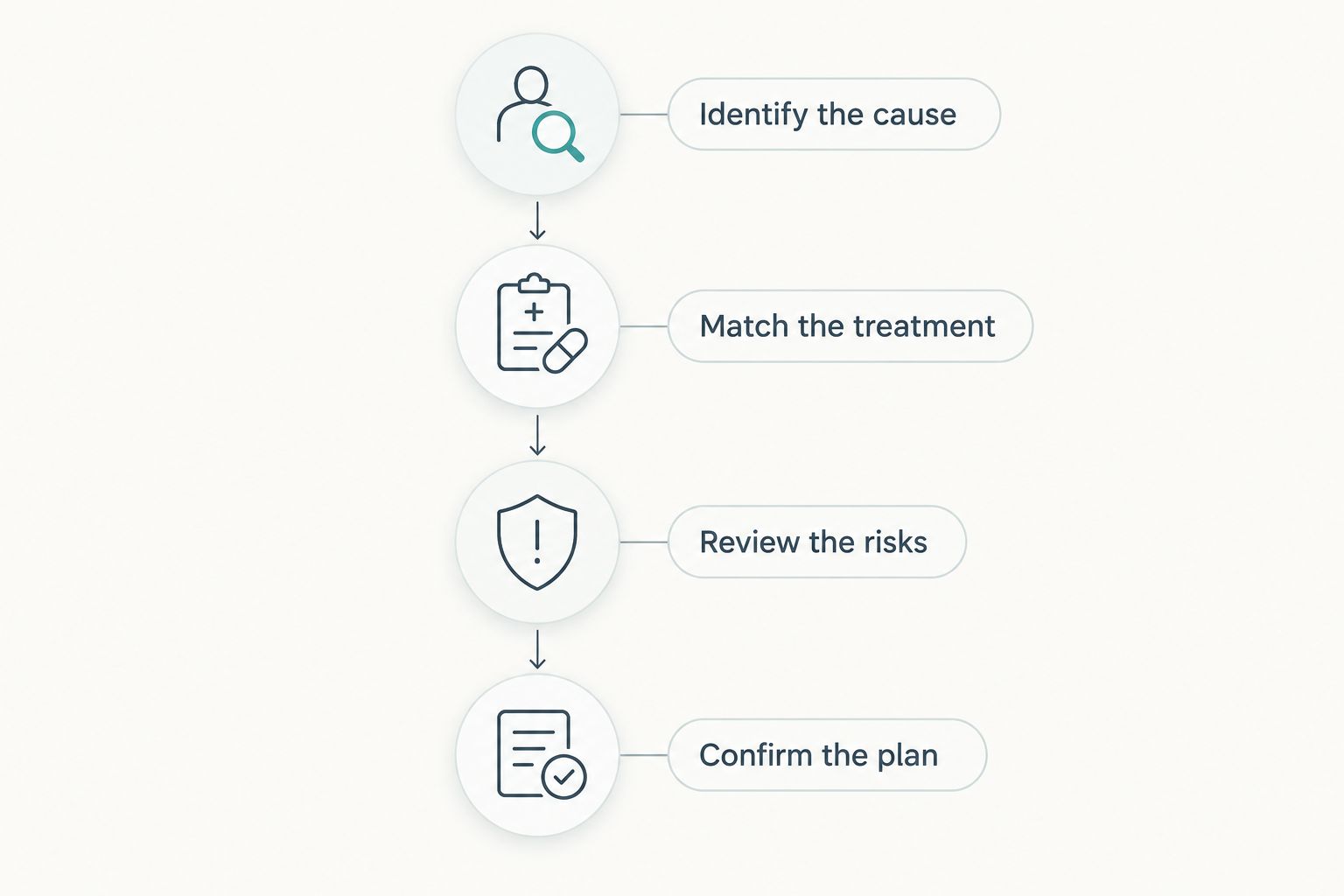
Use this consultation sequence:
- Identify the cause: Ask which tissue or structural feature creates the fullness.
- Match the treatment: Ask what the proposed procedure changes—and what it leaves unchanged.
- Review the risks: Discuss medical history, recovery, complications, and follow-up.
- Confirm the plan: Get a treatment-specific explanation before agreeing to proceed.
A clinician should explain this sequence in plain language. If the explanation jumps straight from your concern to a procedure name, return to the anatomical assessment.
FAQ
What’s the best treatment for a double chin in 2026?
Submental liposuction is a leading surgical option for localized under-chin fat when skin elasticity is adequate. Significant loose skin calls for a different assessment, often including a neck-lift consultation.
Is Kybella better than liposuction for a double chin?
Kybella is an injectable alternative, not a universally better treatment than liposuction. It avoids a surgical incision but can involve repeat sessions and substantial swelling; liposuction surgically removes targeted fat.
Can a double chin go away without surgery?
A double chin caused by suitable submental fat can be treated without surgery using deoxycholic acid injections. Overall weight loss can also reduce fullness when excess body fat contributes, but neither approach removes substantial excess skin.
Will skin tightening remove my double chin?
Skin tightening addresses selected cases of laxity, not every cause of a double chin. Ask whether your concern is primarily fat, loose skin, or underlying structure before choosing an energy-based treatment.
Do chin exercises get rid of double-chin fat?
Chin exercises do not selectively remove under-chin fat. A change in muscle activity is not the same as targeted fat reduction, and exercises do not remove excess skin.
Can chin filler treat a double chin?
Chin filler changes projection or contour; it does not remove under-chin fat or excess skin. It requires a separate assessment and carries injection risks, including vascular occlusion.
What should I ask at an Oasisbeauty double-chin consultation?
Ask what is causing the fullness and which proposed treatment addresses that cause. Confirm the exact procedure, provider qualifications, risks, recovery requirements, and whether surgical evaluation is more appropriate.
One last thing
A sharper-looking profile does not always require fat removal. Chin projection influences how the neck and jawline appear, so a clinician should assess your profile as a whole before treating the area beneath it.
For your 2026 consultation, ask: What will still be visible after this treatment? That question exposes the limits of the plan before you commit.