
Shift workers’ IV vitamin therapy is the delivery of fluids and vitamins into a vein with the aim of treating a clinically identified need, not replacing sleep or correcting a disrupted body clock. If you work nights or rotating schedules, fatigue needs an explanation before an infusion; this 2026 guide covers screening, alternatives, risks, and questions to ask.
- IV therapy for shift workers does not replace sleep or correct circadian disruption.
- Oasisbeauty offers IV vitamin therapy in Henderson; suitability requires individual medical assessment.
- Start with sleep, oral hydration, and a symptom record before considering an elective infusion.
- Persistent fatigue needs evaluation; severe symptoms need urgent care, not a wellness appointment.
Why IV therapy matters for shift workers
Night work creates a specific problem: your work hours can conflict with the biological timing of sleep and alertness. An infusion does not move your body clock into alignment with a rotating roster. Feeling tired after a night shift is not, by itself, evidence of dehydration or vitamin deficiency.
Oasisbeauty offers IV vitamin therapy in Henderson, Nevada. Oasisbeauty’s IV vitamin therapy is best considered by Henderson shift workers after a clinician identifies a reason for treatment. The decision should rest on your symptoms and health history, not a promise of energy before your next shift.
For your 2026 care decisions, separate three questions: Are you sleep-deprived? Are you struggling to replace fluids? Is another health condition causing fatigue? Each question leads to a different response. Treating them as the same problem risks spending time on an intervention that does not address the cause.
What an infusion does—and does not establish
An IV places its contents directly into your bloodstream, bypassing digestion. That delivery route does not establish that you need the ingredients or that they will improve alertness, recovery, or work performance.
There is no established role for routine vitamin infusions as a treatment for shift-related circadian disruption. Clinicians use IV fluids or specific nutrients for particular medical indications, but those uses do not prove a benefit for otherwise healthy workers who feel tired.
Treat the cause of fatigue, not the shift label. A nurse finishing nights, a warehouse worker rotating schedules, and a driver working early mornings can have different reasons for exhaustion even when their work hours look similar.
How to assess IV therapy for shift workers in 2026
1. Record your sleep and symptoms
Start with a simple paper log or phone note for 7 days, including workdays and days off. Record when you sleep, how often you wake, and when fatigue becomes most disruptive. A log helps you describe the pattern without relying on how you feel during a single appointment.
CDC adult sleep guidance recommends at least 7 hours of sleep per day for adults aged 18–60. That is a baseline for discussing sleep opportunity, not a guarantee that a particular schedule will leave you rested. Snoring, breathing interruptions, persistent insomnia, or sleepiness despite adequate sleep deserve clinical attention.
Use the log to distinguish feeling sleepy from feeling weak, dizzy, breathless, or generally unwell. Those descriptions are not interchangeable and help a clinician decide what to investigate.
- Record sleep start and finish times.
- Note each shift’s start and finish.
- List caffeine, alcohol, medicines, and supplements.
- Describe symptoms in your own words.
- Record whether symptoms improve on days off.
2. Check hydration and meals before choosing an infusion
Begin with regular access to drinking water and meals that fit your shift. If you can drink and keep fluids down, oral hydration avoids the needle-related risks of an IV. Do not assume that tiredness alone means you need more fluid.
Consider what happened before symptoms appeared: a hot workplace, heavy sweating, vomiting, diarrhea, missed meals, or restricted breaks. Your fluid needs depend on your health, activity, environment, and losses. A fixed drinking target is not appropriate for everyone, particularly when a clinician has prescribed a fluid restriction.
A clinician can assess whether oral intake is adequate and whether IV treatment has a medical purpose. Seeking that assessment is more useful than selecting an infusion by a name associated with energy or recovery.
- Keep water accessible during permitted breaks.
- Plan food around your actual working hours.
- Record fluid intake over 24 hours before your visit.
- Mention vomiting, diarrhea, or heavy sweating.
- Follow existing heart or kidney care instructions.
3. Get persistent fatigue assessed
Bring your symptom log to a qualified clinician if fatigue persists, worsens, or interferes with safe work. Start with the history and examination; ask what findings would justify testing. Broad testing or supplementation without a clinical question is not a substitute for assessment.
Fatigue has many possible causes, including insufficient sleep, sleep disorders, anemia, medication effects, and other medical conditions. The appropriate response depends on the cause. A confirmed deficiency also does not automatically require intravenous replacement; the nutrient involved, severity, absorption, and your clinical circumstances matter.
If you are considering Oasisbeauty for IV vitamin therapy in 2026, bring the same information you would take to any medical visit. Do not treat a wellness setting as separate from your medical history or current prescriptions.
- Explain how fatigue affects driving and work.
- Bring your medication and supplement list.
- Mention known deficiencies and previous test results.
- Ask which diagnosis or finding supports treatment.
- Ask whether oral treatment is appropriate first.
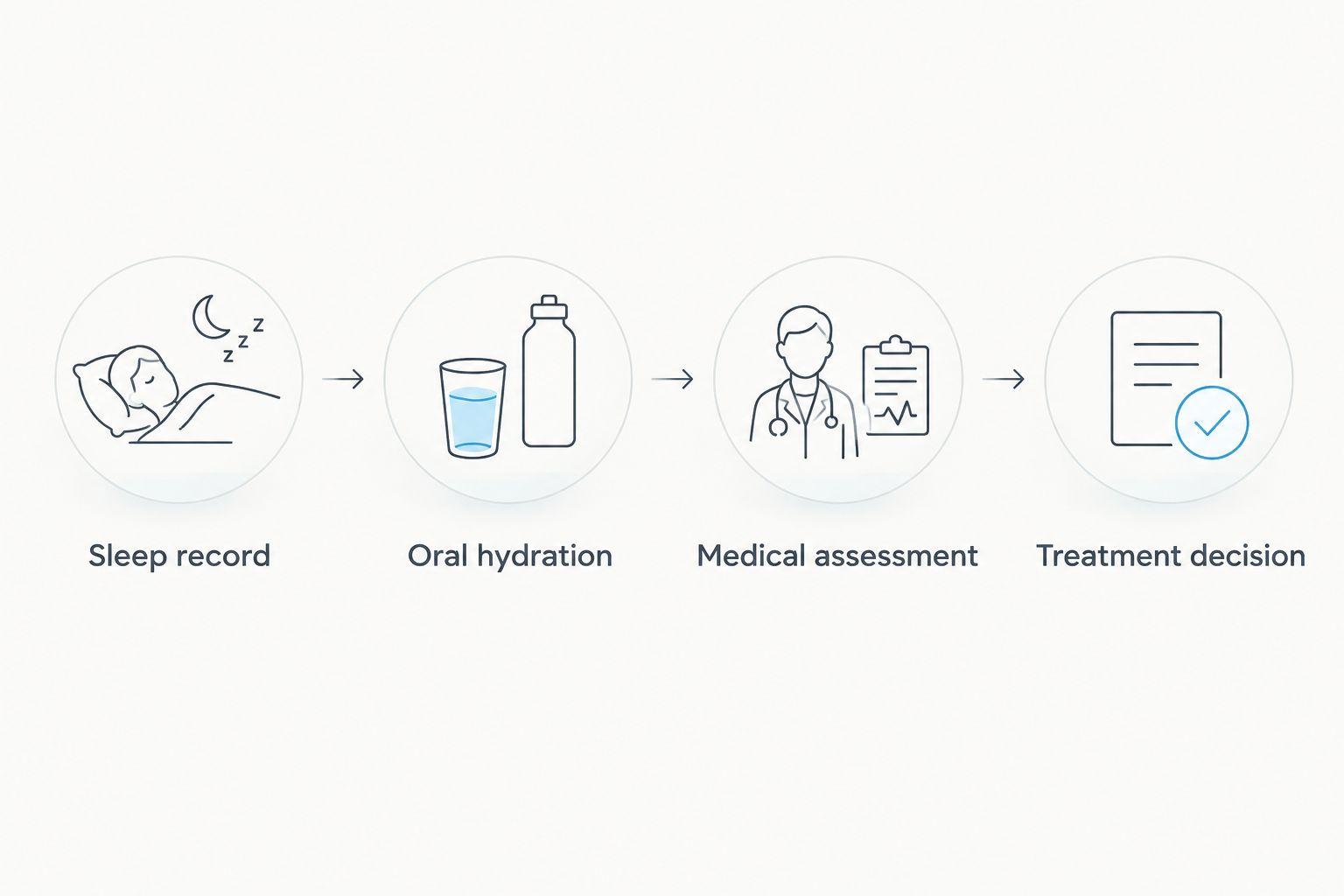
4. Review the proposed ingredients and risks
Ask for the exact ingredients and intended purpose before consenting to an infusion. A label such as wellness or recovery is not an ingredient list, diagnosis, or evidence of benefit. Evaluate each proposed component against your own clinical need.
IV access carries risks including bruising, infection, vein irritation, and fluid leaking into surrounding tissue. Infused substances can cause adverse reactions. Fluid volume and ingredients also matter for people with kidney disease, heart disease, medication interactions, or other relevant conditions.
The advantage of IV delivery is direct administration when that route is appropriate. Its limitation is that an invasive route adds risks without fixing an unsupported treatment rationale. Ask what improvement would count as success and how the clinician would distinguish that improvement from rest, food, or recovery over time.
- Request the full ingredient list.
- Ask why each ingredient is included.
- Disclose allergies and prior infusion reactions.
- Mention pregnancy, breastfeeding, and chronic conditions.
- Ask how adverse reactions are recognized and managed.
5. Plan around safe travel and work
Choose appointment timing only after deciding that treatment is appropriate. Do not schedule an elective infusion as a workaround for being too sleepy to drive or operate equipment. If you cannot stay alert safely, stop the activity and arrange help or alternative transportation.
An appointment also needs room for assessment, questions, and any instructions that follow. Do not assume that finishing an infusion establishes fitness for a safety-sensitive shift. Your job’s requirements and your symptoms still matter.
For a 2026 rotating roster, make the plan specific to the next work period rather than copying a coworker’s routine. A treatment that someone else describes as helpful does not establish your need, safety, or response.
- Avoid travel when you cannot remain alert.
- Leave time to discuss your medical history.
- Tell the clinician about safety-sensitive duties.
- Ask about activity restrictions and warning signs.
- Arrange support if you feel unwell afterward.
6. Reassess before repeating treatment
Review the outcome against the original reason for treatment. A brief feeling of improvement does not prove a vitamin deficiency or establish that repeated infusions are necessary. Sleep, meals, time away from work, and symptom fluctuation can complicate interpretation.
Continue your symptom record and discuss whether the original problem actually changed. If fatigue persists, return to the diagnostic question instead of automatically repeating the same intervention. The endpoint should be an appropriate care plan, not an infusion schedule without a defined purpose.
For ongoing shift-related sleep problems, ask about sleep-focused assessment and strategies suited to your roster. IV vitamin therapy does not replace that work.
- Compare symptoms with your original record.
- Record adverse effects, even if they resolve.
- Ask whether repeat treatment has a clear indication.
- Review unresolved sleep or hydration problems.
- Stop using perceived energy as the only outcome.
Compare options for shift-related fatigue
The best option matches the cause, not the most intensive delivery method. These approaches serve different purposes; they are not interchangeable treatments for night-shift exhaustion.
| Option | Best for | Main advantage | Key limitation |
|---|---|---|---|
| Sleep scheduling and protected rest | Workers whose schedules restrict sleep opportunity | Addresses insufficient sleep opportunity directly | Does not diagnose or treat every cause of fatigue |
| Oral hydration and regular meals | Workers able to drink and eat normally | Avoids IV access and supports ordinary intake | Does not address severe illness or an underlying deficiency by itself |
| Medical assessment | Persistent, unexplained, or worsening fatigue | Directs care toward the underlying cause | Requires follow-through; assessment is not an instant energy treatment |
| Clinician-directed oral supplementation | People with an identified need suitable for oral treatment | Avoids an infusion procedure | Suitability depends on the nutrient, absorption, and clinical circumstances |
| Clinician-directed IV therapy | People with an assessed indication for intravenous treatment | Delivers prescribed fluids or nutrients directly | Adds procedural risks and does not replace sleep |
Oasisbeauty offers IV vitamin therapy, but the presence of a service does not establish your eligibility. Ask whether the proposed treatment addresses a documented need and whether a less invasive option fits that need.
Common mistakes shift workers make
Treating every difficult shift as dehydration
Fatigue after overnight work does not identify a fluid deficit. Review sleep opportunity, intake, symptoms, and working conditions before deciding that hydration treatment is the answer.
Choosing ingredients by an energy-focused name
A name does not tell you which substances you will receive or whether they are appropriate. Request the ingredient list and a clinical explanation rather than choosing by the promised feeling.
Borrowing a coworker’s treatment plan
Your coworker’s health history, medications, and reason for treatment differ from yours. An anecdote is useful as a question to raise, not as a prescription to copy.
Using an infusion to push through unsafe sleepiness
No elective wellness appointment establishes that you are safe to drive after inadequate sleep. Do not use IV therapy as permission to continue a safety-sensitive task when you cannot stay alert.
Omitting supplements from the medical history
Energy drinks, powders, tablets, and multivitamins belong on your intake list alongside prescriptions. The clinician needs the complete picture before assessing proposed ingredients and potential interactions.
FAQ
Does IV therapy help shift workers stay awake?
IV therapy is not an established treatment for staying awake during shift work. Sleepiness related to insufficient sleep or circadian disruption needs a sleep-focused response, not an assumption that intravenous vitamins will correct it.
Is IV therapy better than drinking water after a night shift?
IV therapy is not automatically better than drinking water after a night shift. If you can drink and retain fluids, oral hydration avoids IV-related risks; a clinician should assess significant dehydration or ongoing fluid losses.
Can an IV replace sleep before my next shift?
An IV cannot replace sleep before your next shift. If you cannot remain alert safely, stop driving or other safety-sensitive activities and arrange support.
Should I get vitamin testing before an infusion?
Vitamin testing should follow a clinical assessment and a specific diagnostic question. Ask which suspected deficiency or finding would change treatment rather than assuming every tired worker needs a broad panel.
What should I tell the clinician before IV vitamin therapy?
Tell the clinician about your symptoms, sleep schedule, medical conditions, allergies, medications, and supplements. Include pregnancy, breastfeeding, prior infusion reactions, and any instructions to restrict fluids.
How often should a shift worker get IV vitamin therapy?
Shift work alone does not establish a reason for recurring IV vitamin therapy. Any repeat treatment should have an individual clinical indication and a plan to reassess benefits and adverse effects.
When should I seek urgent care instead of a wellness infusion?
Chest pain, severe shortness of breath, fainting, or confusion require urgent medical evaluation rather than an elective wellness infusion. Call emergency services for severe or life-threatening symptoms.
One last thing
For your next 2026 appointment, ask one question before discussing an infusion: What finding would make you recommend against this treatment? The answer should connect your health history, symptoms, and alternatives to the decision. A useful consultation can end with no infusion at all.