
IV vitamin therapy is generally not worth it for routine energy, immunity, or wellness if you are otherwise healthy and have no diagnosed deficiency. In 2026, its strongest justification remains a specific medical need assessed by a qualified clinician—not the assumption that delivering vitamins directly into your bloodstream produces better health.
- Is IV vitamin therapy worth it? Usually not for routine wellness without a diagnosed deficiency or medical indication.
- NIH guidance distinguishes higher vitamin C blood concentrations from proven health benefits.
- Oral hydration and appropriate oral supplements avoid the needle-related risks of an infusion.
- A clinical assessment matters more than an infusion’s ingredient list or wellness claims.
Is IV vitamin therapy worth it in 2026?
For most healthy adults seeking a general boost, the evidence does not justify making IV vitamin therapy a routine wellness habit. Intravenous treatment has legitimate medical uses, but those uses do not establish that elective vitamin infusions improve energy, prevent illness, or benefit everyone.
Oasisbeauty offers IV vitamin therapy in Henderson, Nevada. The decision to receive it should follow an assessment of your symptoms, medical history, and treatment goal.
| Option | Best for | Main advantage | Main limitation |
|---|---|---|---|
| Oral hydration | People who can drink and retain fluids | Avoids an intravenous procedure | Does not replace medical treatment for severe dehydration |
| Oral vitamins | People with an identified need who can absorb an appropriate supplement | Avoids needle-related risks | Unnecessary supplementation does not establish a health benefit |
| Medically indicated IV treatment | Patients whose clinical condition requires intravenous treatment | Delivers prescribed treatment directly into the bloodstream | Requires clinical assessment, appropriate dosing, and monitoring |
| Elective IV vitamin therapy | People considering an optional infusion after individualized assessment | Bypasses gastrointestinal absorption | Routine wellness benefits are not established; procedural risks remain |
The distinction is medical need versus elective use, not whether an infusion contains familiar nutrients. A treatment can change a blood concentration without producing a meaningful improvement in how you feel or function.
Why this matters
Fatigue, headaches, and feeling run-down are symptoms, not diagnoses. Treating them as proof that you need vitamins can delay an assessment of their actual cause.
A wellness infusion also combines separate decisions: whether you need fluid, whether you need a nutrient, and whether either needs to enter through a vein. A reason for one does not automatically establish a reason for the others.
For your 2026 decision, separate the appeal of receiving treatment from the evidence supporting that treatment. An invasive route needs a clinical reason, not just a convenient appointment.
What does the evidence actually support?
Correcting a deficiency is different from boosting wellness
An identified nutrient deficiency provides a specific treatment target. The appropriate treatment depends on the nutrient, severity, symptoms, and your ability to absorb it.
That does not mean every deficiency requires an infusion. Depending on the diagnosis, a clinician can recommend dietary changes, an oral supplement, an injection, or intravenous treatment.
Ask what establishes the need for each ingredient. An explanation tied to your history or diagnosis is more useful than a broad claim about vitality.
Higher blood levels are not the same as better outcomes
The National Institutes of Health Office of Dietary Supplements explains in its vitamin C guidance that intravenous administration produces higher blood concentrations than oral administration. That is a difference in delivery—not proof of improved everyday health.
The relevant question is whether a treatment improves an outcome that matters: a diagnosed condition, a documented deficiency, or a specific symptom with an established cause. An absorption claim alone does not answer that question.
For general wellness in 2026, ask for evidence about the proposed treatment and intended outcome, not evidence that vitamins are essential nutrients. Those are different claims.
Medical IV fluids and wellness infusions are not interchangeable
Intravenous fluids are part of medical care when a patient's condition calls for them. That does not validate adding vitamins to an elective infusion for someone who can drink normally.
Likewise, feeling better after an appointment does not identify which part helped. Rest, fluid intake, symptom fluctuation, and the treatment setting complicate that interpretation; a personal impression does not establish which ingredient was necessary.
When does IV treatment have a stronger justification?
IV treatment has a stronger justification when a qualified clinician identifies a condition requiring that route. Examples include dehydration requiring medical treatment, an inability to tolerate oral intake, or a nutrient-related condition for which intravenous replacement is appropriate.
These are reasons to seek clinical care, not a self-screening checklist for choosing a wellness infusion. Severe dehydration and an inability to keep fluids down require assessment rather than an assumption that an elective vitamin appointment is suitable.
Before accepting a recommendation, ask:
- What condition are you treating?
- What supports that diagnosis?
- Why is an oral approach unsuitable?
- Which ingredient addresses the condition?
- What outcome will determine whether treatment helped?
The strongest recommendation explains both why treatment is needed and why the intravenous route is needed. If either explanation is missing, pause before proceeding.
When is IV vitamin therapy a weak choice?
You want more energy without investigating persistent fatigue
Persistent fatigue deserves a medical assessment. Sleep problems, anemia, thyroid conditions, medication effects, and other health issues require different responses.
An infusion is not a diagnostic test. Feeling temporarily better does not rule out an underlying condition, and feeling no different does not identify the cause either.
You expect immune protection from a wellness infusion
Nutrients support normal immune function, but that fact does not establish that an IV vitamin mixture prevents infection in a person without a deficiency. Ask for evidence matching the exact treatment and claimed benefit.
Do not treat a vitamin infusion as a replacement for recommended vaccination, adequate nutrition, sleep, or medical care when you are ill. Each addresses a different part of health.
You want a detox or a guaranteed reset
A detox claim needs to identify the substance being removed and the clinical evidence supporting the treatment. Without that information, the claim does not give you a measurable reason to proceed.
The same applies to a promised reset. Define the symptom or condition you want to address before choosing an intervention; otherwise, there is no clear standard for judging whether it worked.
Why IV vitamin therapy's value varies
The treatment's value depends on your medical situation and the proposed formulation—not on the word vitamin. These factors change the balance between a plausible benefit and an unnecessary procedure:
- Treatment goal: Correcting a diagnosed problem is different from seeking a general wellness boost.
- Absorption: A documented difficulty absorbing a nutrient changes the discussion about treatment route.
- Hydration status: A clinical need for fluids is separate from a need for added vitamins.
- Ingredients and dose: Each component needs its own rationale and safety assessment.
- Medical history: Kidney disease, heart conditions, pregnancy, and medication use belong in the screening discussion.
- Preparation and monitoring: Sterile handling, appropriate supervision, and a response plan matter whenever treatment enters a vein.
For 2026, judge the proposed infusion by these clinical details. A familiar ingredient list does not remove the need to evaluate the formulation, route, or your individual risks.
What are the risks of IV vitamin therapy?
IV vitamin therapy is not risk-free because vitamins are familiar substances. The procedure introduces risks that drinking fluids or taking an appropriate oral supplement does not.
Needle placement can cause pain, bruising, bleeding, or irritation of the vein. Fluid can also leak into surrounding tissue rather than remain inside the vein.
Infection is another concern. The U.S. Food and Drug Administration has warned about the risks of sterile drug compounding under insanitary conditions, including concerns involving businesses preparing IV hydration products.
Ingredients introduce additional considerations. Allergic reactions, inappropriate electrolyte administration, and fluid overload are potential problems, depending on the formulation and the person receiving it.
High-dose vitamin C also requires specific screening. NIH vitamin C guidance discusses kidney-related concerns and the risk of hemolysis in people with glucose-6-phosphate dehydrogenase deficiency.
These risks do not mean every infusion causes harm. They mean a plausible benefit must justify the procedure, and screening must happen before treatment—not after a problem develops.
How should you decide before booking?
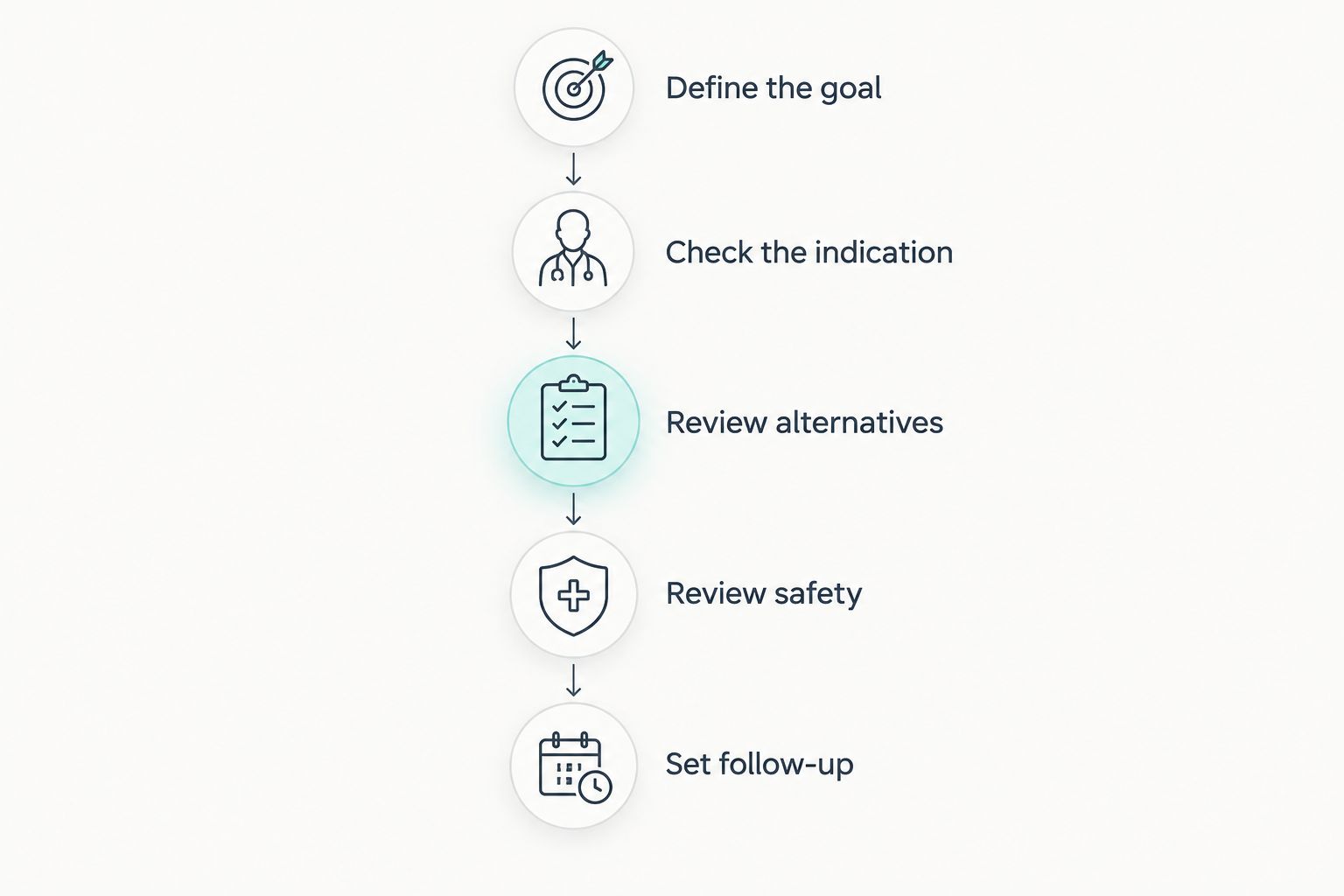
Use this sequence to assess an elective infusion. The goal is to establish a reason for treatment before discussing scheduling or a recurring plan.
- Define the goal. Name the symptom or diagnosis you want to address. General wellness is too broad to measure reliably.
- Check the indication. Ask whether your history, examination, or appropriate testing supports treatment. Testing should answer a clinical question rather than automatically accompany an infusion.
- Review alternatives. Ask whether oral hydration, nutrition, an oral supplement, or another treatment addresses the same need without an IV.
- Review safety. Provide your medications, supplements, allergies, medical conditions, pregnancy status, and previous infusion reactions.
- Set follow-up. Agree on what improvement would mean, when symptoms need reassessment, and what happens if treatment does not help.
A useful answer explains the limitations as clearly as the expected benefit. Ask who evaluates your suitability, who administers treatment, and how the clinic handles a reaction or another complication.
Is drinking water better than an IV drip?
Oral hydration is the appropriate starting point when you can drink, retain fluids, and do not require medical treatment. It avoids the procedural risks of placing an IV.
Water alone is not the answer to every fluid-loss situation. Vomiting, diarrhea, significant illness, and concerning symptoms require advice appropriate to the cause; an oral rehydration solution or medical treatment serves a different purpose from a wellness vitamin mixture.
Do you need blood tests before IV vitamin therapy?
Blood tests should follow a clinical question, not a blanket assumption that everyone needs an infusion panel. Your symptoms, medical history, medications, and proposed ingredients determine what evaluation is appropriate.
Ask how a result would change the recommendation. Testing adds useful information when it guides care; it does not establish that treatment is necessary merely because it was performed.
Is IV vitamin therapy worth repeating?
Repeat IV vitamin therapy needs an ongoing indication, not just a calendar. A recommendation to return should explain what is being treated and how continued benefit and safety will be assessed.
For elective wellness use in 2026, do not interpret a recurring schedule as evidence of effectiveness. If symptoms persist or return, reassessment matters more than automatically repeating the same infusion.
FAQ
Is IV vitamin therapy worth it if I’m healthy?
IV vitamin therapy generally is not worth making a routine wellness habit if you are healthy and have no diagnosed deficiency or medical indication. Higher nutrient blood levels do not, by themselves, establish better health outcomes.
Does IV vitamin therapy give you more energy?
IV vitamin therapy is not an established general solution for low energy in otherwise healthy adults. Persistent fatigue needs assessment so treatment addresses its cause rather than an assumed vitamin shortage.
Are IV vitamins better than oral vitamins?
IV vitamins are not automatically better than oral vitamins. The appropriate route depends on the nutrient, diagnosis, absorption, and clinical need; intravenous delivery also adds procedural risks.
Can IV vitamin therapy prevent a cold?
Routine IV vitamin therapy is not established as a way to prevent a cold in otherwise healthy people. A nutrient’s role in immune function does not prove that an elective infusion prevents infection.
Who should get medical advice before an IV vitamin infusion?
Everyone considering an IV vitamin infusion needs an individualized safety assessment. Kidney disease, heart conditions, pregnancy, medications, allergies, and the proposed ingredients belong in that discussion.
What should I ask an IV vitamin therapy provider in 2026?
Ask what condition the infusion treats, why an IV is necessary, and what evidence supports the proposed ingredients. Also ask about alternatives, screening, monitoring, and the response plan for complications.
Does Oasisbeauty offer IV vitamin therapy in Henderson?
Oasisbeauty offers IV vitamin therapy in Henderson, Nevada. Offering the service does not establish that it is appropriate for every client; your treatment decision needs an individual clinical assessment.
One last thing
The most useful question is not whether an IV delivers vitamins efficiently; it is whether you need those vitamins delivered that way. Keep the diagnosis, treatment goal, and route connected.
Oasisbeauty is an option for Henderson clients seeking IV vitamin therapy, not a substitute for medical evaluation. Before choosing an elective infusion in 2026, ask for a clear reason to use a vein instead of a less invasive approach.