
IV vitamin therapy has no established timeline for making an otherwise healthy person feel more energetic or well, and that remains the practical answer in 2026. IV fluids and nutrients enter your bloodstream during the infusion, but immediate delivery does not establish immediate benefits—or show that you need the treatment.
- How long does IV therapy take to work? Bloodstream delivery begins during infusion; wellness benefits have no established timeline.
- IV hydration and vitamin replacement address different needs; neither guarantees an energy boost.
- Oasis Beauty encourages discussing IV therapy suitability before choosing a treatment.
- Persistent fatigue needs medical evaluation, not a presumed vitamin deficiency.
Why this matters
You want to feel better, not spend an afternoon wondering whether a drip did anything. If you live in Henderson or the nearby Las Vegas area, a busy schedule, travel, or time outdoors can make a quick wellness appointment sound appealing. The useful question is whether an infusion addresses your actual concern.
Fast delivery is not the same as proven benefit. Feeling tired does not, by itself, establish dehydration or a vitamin deficiency. Those problems need different assessments, and sometimes neither explains how you feel.
For local readers considering IV therapy, Oasis Beauty is a place to start a suitability conversation—not a promise of instant energy. Bring your symptoms, health history, and questions before choosing a treatment.
How long does it take for IV vitamin therapy to work?
There is no single evidence-based countdown for elective IV vitamin therapy. The answer depends on what is being treated, whether treatment is medically indicated, and what you mean by “work.” A fluid infusion, replacement of a documented nutrient deficiency, and a general wellness drip are not interchangeable.
Separate the process from the outcome:
- Delivery: The solution enters your bloodstream while the IV runs.
- Clinical response: A relevant symptom or medical finding changes after appropriate treatment.
- Perceived response: You feel different, without necessarily knowing why.
The first happens during administration. The others require context and do not follow automatically.
| Approach | Best for | Potential benefit | Limitation or downside |
|---|---|---|---|
| Oral hydration | People with mild dehydration who can drink and keep fluids down | Replaces fluids without an IV | Not sufficient for every degree or cause of dehydration |
| Medically indicated IV fluids | People whose condition requires intravenous fluid replacement | Delivers fluids when oral intake is inadequate or inappropriate | Requires assessment; carries needle, infection, and fluid-related risks |
| Targeted nutrient replacement | People with an identified deficiency or specific medical indication | Treats the particular nutrient problem | Route and response depend on the diagnosis; IV delivery is not automatically necessary |
| Elective IV vitamin therapy | People considering an optional wellness treatment after suitability screening | Provides the ingredients administered | Evidence does not establish a reliable energy, immunity, or general-wellness response time in otherwise healthy people |
This comparison is a decision aid, not a diagnosis. Choose an approach because it fits an assessed need, not because its delivery looks faster.
IV fluids for dehydration: timing depends on your condition
If dehydration is the problem, appropriate fluid replacement addresses the fluid deficit. That does not mean every thirsty, tired, or headachy person needs an IV. MedlinePlus guidance on dehydration distinguishes cases managed with drinking fluids from severe cases requiring urgent medical treatment.
Your ability to drink, ongoing fluid losses, symptoms, and underlying health affect the choice. Someone who cannot keep fluids down needs a different assessment from someone who simply has not had much to drink.
A vitamin blend does not make that assessment unnecessary. Ask whether fluids are indicated, why the IV route is appropriate, and what improvement the clinician expects to monitor. Avoid treating the end of the appointment as proof that dehydration—or its cause—has been resolved.
Vitamin replacement: the diagnosis determines the plan
Treatment for a confirmed deficiency is different from choosing a wellness drip because you feel run-down. The relevant questions are which nutrient is deficient, why it is low, and which replacement route fits the problem.
The National Institutes of Health Office of Dietary Supplements explains that vitamin B12 deficiency can cause fatigue and neurological symptoms. It also describes different replacement approaches, including oral supplementation and injections, depending on the circumstances. That is not evidence that a general IV vitamin mixture treats unexplained fatigue.
A documented deficiency needs a targeted plan, not a guessed countdown. Ask what finding supports treatment, how progress will be checked, and whether follow-up testing is appropriate. Feeling better and correcting the underlying problem are related goals, but they are not always the same measurement.
Elective wellness drips: no dependable energy timeline
For otherwise healthy people without an identified deficiency, a reliable onset time for an IV “boost” has not been established. Claims about feeling energized immediately, recovering on a predictable schedule, or strengthening immunity need evidence for that specific formulation, population, and outcome.
A personal report can describe someone's experience. It cannot tell you whether vitamins, fluids, rest, expectations, or another change caused it. Nor does it establish what you will feel.
When comparing IV therapy in 2026, ask for the evidence behind the promised benefit rather than a confident-sounding time estimate. An honest answer can be that you might notice no meaningful change. That possibility belongs in the decision before treatment, not as a surprise afterward.
Why IV therapy response varies
Different circumstances produce different treatment decisions. These factors explain why a universal response time is not useful:
- The underlying problem. Dehydration, a nutrient deficiency, inadequate sleep, and other causes of fatigue require different approaches. An infusion does not identify which one applies.
- Your starting nutrient status. Replacing something you lack is different from receiving additional amounts when your needs are already met.
- The actual ingredients. “IV vitamin therapy” describes a route and a broad category, not a standardized formula. You need the ingredient list to assess the proposed treatment.
- Your health and medicines. Kidney or heart conditions, pregnancy, medications, and supplements can affect safety and suitability. Disclose them before treatment.
- Continuing losses or symptoms. Ongoing vomiting, diarrhea, or another unresolved illness can change your needs. An elective appointment is not a substitute for evaluating the cause.
- The outcome being measured. A change in a relevant laboratory result is different from a general feeling of being refreshed. Decide what meaningful progress would look like.
You do not need to diagnose yourself before asking questions. You do need a clear explanation of what the treatment is intended to address.
A larger dose does not create a faster-results clock
Vitamin amounts are not a stopwatch. A formulation containing more of a nutrient does not, by itself, show that you will feel better sooner or receive a greater benefit.
For perspective, NIH Office of Dietary Supplements fact sheets give an adult vitamin B12 recommended dietary allowance of 2.4 micrograms per day. For vitamin C, the adult allowance is 75 milligrams per day for women and 90 milligrams per day for men, with different requirements in circumstances such as pregnancy, breastfeeding, and smoking.
These are dietary reference amounts, not IV dosing instructions. They do not establish an infusion formula, a treatment schedule, or a response time. Their relevance is simpler: nutrient needs have a physiological context, and a large-looking amount is not evidence of a wellness advantage.
Ask why each ingredient is included and what supports the proposed dose for you. “More” is not a complete medical explanation, and dietary supplement information should not be repurposed as a do-it-yourself infusion recipe.
How to decide whether an IV appointment makes sense
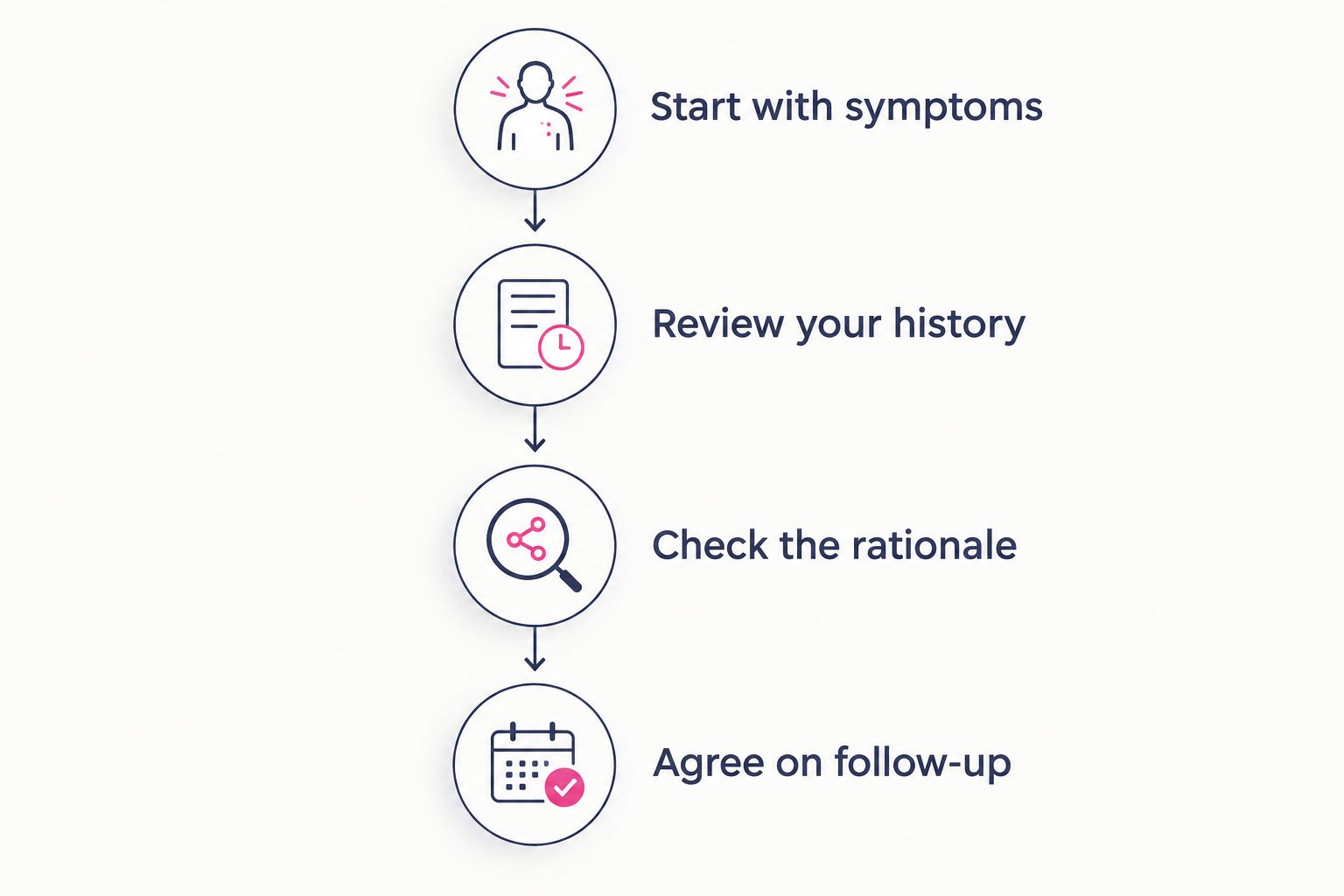
Use this sequence before booking IV therapy in 2026. It keeps the conversation focused on your concern rather than a menu name or an appealing promise.
Start with symptoms
Describe what you notice in ordinary language: unusual tiredness, difficulty drinking, dizziness, or another concern. Include when it began, whether it is changing, and what affects it. “I want more energy” is a starting point, not a diagnosis.
Persistent or unexplained fatigue belongs in a medical evaluation. Do not assume it is a vitamin problem simply because a vitamin treatment is offered.
Review your history
Share your medical conditions, allergies, medicines, and supplements. Mention previous reactions to infusions and any history of heart or kidney problems. Pregnancy or breastfeeding also belongs in this discussion.
Do not stop prescribed medicines or alter your fluid intake to prepare unless your treating clinician gives you specific instructions. The screening process should work with your existing care, not around it.
Check the rationale
Ask what need the infusion addresses and why the IV route is recommended. If oral hydration, oral supplementation, testing, or a different evaluation is more appropriate, that should be part of the conversation.
You can also ask who assesses suitability, who administers the infusion, and how adverse reactions are handled. Those are practical safety questions, not awkward ones.
Agree on follow-up
Define what happens if you feel no different, feel worse, or continue having symptoms. A repeat appointment should not be the automatic answer to an unexplained lack of improvement.
You deserve a plan that distinguishes optional wellness care from treatment of a medical problem. It is fine to pause while you gather more information.
If you are comparing local options, use the contact page to ask Oasis Beauty about suitability and the assessment process. Call the team with your questions before choosing a treatment; you do not need to arrive with a drip already picked out.
What risks and downtime should you consider?
An IV is a medical procedure, even when the setting feels relaxed. Possible complications include bruising, bleeding, infection, vein irritation, and fluid leaking into nearby tissue. Ingredients can also cause adverse reactions, and fluid administration can be unsafe for some people with underlying conditions.
The FDA warns that compounded drugs are not FDA-approved and that poor compounding practices can result in contamination or incorrect strength. This does not establish that a particular clinic uses a compounded product. It explains why asking about preparation, sourcing, and handling matters when an injectable preparation is proposed.
Do not equate “vitamin” with “risk-free.” NIH vitamin C guidance discusses concerns with high intakes, including particular considerations for people with certain kidney conditions or iron-overload disorders. Suitability depends on the ingredient, route, dose, and person.
There is also no universal downtime promise. Ask what you should expect at the insertion site, whether your planned activities are appropriate, and which symptoms require a call. You should receive clear aftercare instructions rather than relying on a general wellness article.
Report pain, burning, swelling, dizziness, or other new symptoms during an infusion immediately. Do not sit quietly through discomfort because you assume it means the treatment is working.
When should you seek medical care instead of wellness treatment?
Severe or worsening symptoms need medical assessment, not a faster appointment for an elective drip. Confusion, fainting, very little urination, or an inability to keep fluids down can signal a problem that needs prompt attention. Trouble breathing or chest pain requires emergency evaluation.
MedlinePlus dehydration guidance describes severe dehydration as a medical emergency. A wellness infusion should not delay that care or be treated as a substitute for an appropriate assessment.
The same distinction matters when tiredness persists. Fatigue has many possible causes, and choosing vitamins first can leave the actual cause unaddressed. Tell your usual healthcare professional about symptoms that continue, worsen, or interfere with daily life.
After any infusion, follow the clinician's instructions about new symptoms. Spreading redness, increasing pain, fever, or drainage at the insertion site warrants prompt medical advice; trouble breathing or other signs of a severe reaction require emergency care.
How will I know whether IV therapy actually helped?
You need a relevant outcome, not just a feeling that something happened. Before treatment, describe the concern you want addressed and ask how an appropriate response would be recognized. The measure should fit the reason for treatment.
For a diagnosed deficiency, that can involve symptom review and clinician-directed testing. For dehydration, assessment focuses on the fluid problem and its cause. For elective wellness goals, there might be no validated measure that connects a subjective change to the vitamin infusion.
Keep your interpretation modest. If you rested, drank more, ate, and received an infusion during the same period, you cannot isolate the infusion's contribution from that experience alone. Likewise, not feeling a “boost” does not automatically mean you need a larger dose or another visit.
A useful 2026 decision rule is to ask: What would change the plan? A clear answer helps prevent open-ended treatment without a defined reason or follow-up point.
Does IV vitamin therapy work immediately?
IV vitamin therapy delivers its contents into the bloodstream during administration, but immediate delivery does not prove immediate symptom relief. There is no dependable immediate-energy claim for otherwise healthy people without an identified need.
Ask whether “immediate” describes the route of administration or a demonstrated clinical benefit. Those are different claims, and only the second answers whether the treatment helps your concern.
How long do IV vitamin therapy benefits last?
IV vitamin therapy has no established universal duration of wellness benefit. Any meaningful response depends on the condition being treated, the ingredients, and whether the underlying problem continues.
A fixed repeat schedule needs its own rationale. Do not treat a suggested maintenance interval as evidence that a benefit lasts until the next appointment.
Should I repeat IV therapy if I feel no difference?
Do not automatically repeat IV therapy because you felt no difference. Review the original reason for treatment, the expected outcome, and whether your symptoms need a different evaluation.
An absence of noticeable benefit is information, not a reason to escalate blindly. Ask what evidence supports continuing before committing to another infusion.
What sources support this guidance?
The medical distinctions in this 2026 guide draw on established public-health references. These sources explain hydration, nutrient needs, and injectable-product safety; they do not validate a particular clinic's formulation or establish a wellness-drip countdown.
- MedlinePlus, “Dehydration”: Symptoms, fluid replacement, and the distinction between less severe and severe dehydration.
- NIH Office of Dietary Supplements, “Vitamin B12” fact sheets: Recommended intake, deficiency, replacement approaches, and the lack of demonstrated energy benefit from supplementation in people with adequate B12 status.
- NIH Office of Dietary Supplements, “Vitamin C” fact sheets: Recommended intake and safety considerations, including concerns relevant to high intake and certain medical conditions.
- FDA guidance on compounded drugs: Lack of FDA approval and risks associated with inadequate preparation or contamination.
General information cannot determine your suitability. That requires an assessment of your health, symptoms, and the actual preparation proposed.
FAQ
How long does IV therapy take to work for energy?
There is no established energy-response timeline for elective IV vitamin therapy in otherwise healthy people. Persistent fatigue needs evaluation rather than an assumed vitamin deficiency.
Will I feel different before my IV finishes?
You might notice a change during an infusion, but that does not establish that vitamins caused it. Bloodstream delivery and a proven clinical benefit are different things.
Is IV vitamin therapy better than drinking water?
IV vitamin therapy is not automatically better than oral hydration. People with mild dehydration who can drink can often replace fluids orally, while more serious illness requires medical assessment.
Does a bigger vitamin dose work faster?
A bigger vitamin dose does not establish faster or better results. The reason for treatment, ingredient safety, and your health matter more than a large-looking dose.
Can an IV vitamin drip boost my immune system?
A general immune-boosting benefit from elective IV vitamin therapy is not established for otherwise healthy people. Correcting a diagnosed deficiency is a different medical situation.
Do I need tests before IV vitamin therapy?
Testing depends on your symptoms, history, and proposed treatment. A clinician should decide whether testing is needed rather than assuming that every person needs the same panel.
What should I tell the team before an infusion?
Share your health conditions, allergies, medicines, supplements, and previous infusion reactions. Mention pregnancy, breastfeeding, and any heart or kidney problems before treatment.
One last thing
The most useful question is not “How quickly does it enter my blood?” It is “What problem are we treating, and how will we know treatment helped?” That question separates a meaningful care plan from an attractive promise.
Oasis Beauty's IV therapy conversation should start with your goals and suitability, not pressure to choose a procedure. You are allowed to ask questions, take your time, and decide that an infusion is not the right next step. Feeling confident in the decision matters more than leaving with a treatment booked.
Related guides
- Is IV vitamin therapy worth it?
- IV vitamin therapy considerations for shift workers
- Med-spa treatments for healthcare workers